
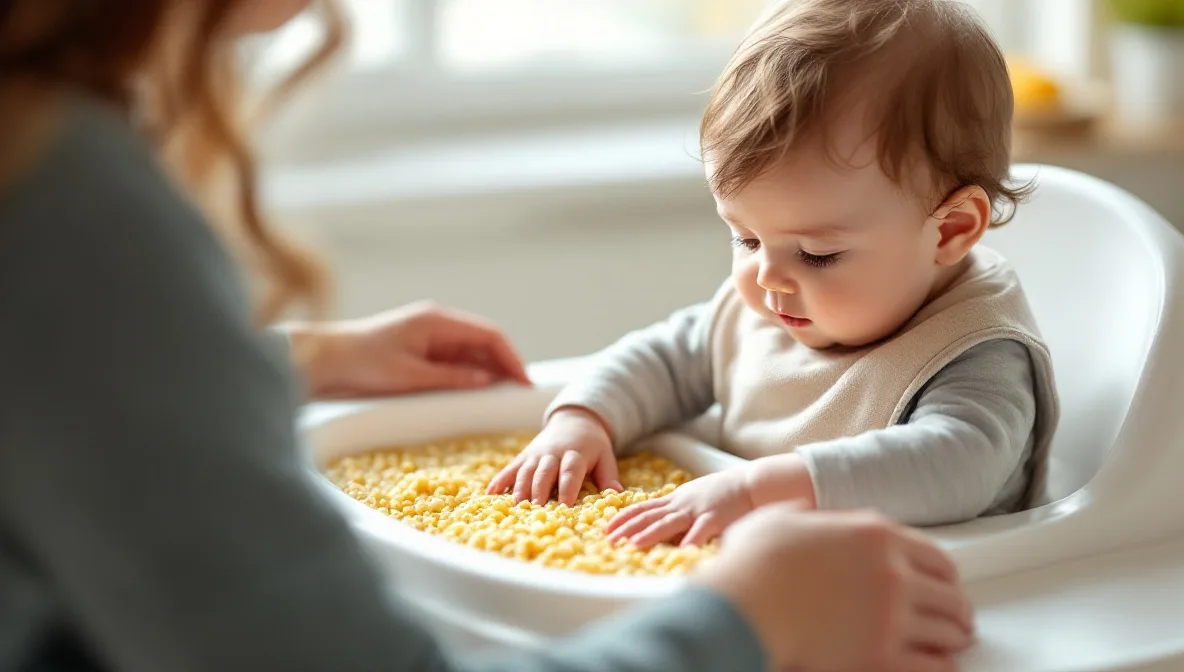
Taste safe sensory play for 9-month-olds is oral exploration made intentional—every spoon, grain, and texture your baby mouths must be genuinely edible and age-appropriate. At this stage, your infant's pincer grasp is strengthening (those thumb-and-finger attempts), and the urge to taste-test everything is developmentally normal and powerful. This guide offers seven tested recipes for edible sensory bins and activities, plus texture-matching strategies that align with your baby's emerging fine motor skills and safe oral exploration habits.
Key Takeaways
- Taste safe sensory play uses only edible, non-toxic materials your baby can safely mouth without worry.
- Grain size and texture matter: larger pieces (pearl couscous, small pasta shapes) suit 9-month-old pincer grasp development better than tiny seeds.
- Food-grade tools and careful ingredient checks prevent contamination and allergic reactions.
- Montessori sensory bins teach texture discrimination and support gross and fine motor skill growth simultaneously.
- Supervision remains essential—taste safe does not mean unattended exploration.
Why Taste Safe Sensory Play Matters at 9 Months
At 9 months, your baby is in the thick of oral exploration. The mouth is still the primary learning tool, and attempting to taste everything is a sign of normal cognitive curiosity, not defiance. Taste safe sensory activities let you say yes to that impulse while controlling what enters your child's body. This approach removes the constant tension between safety and developmental need.
Beyond oral comfort, these activities build fine motor control (picking, squeezing, transferring); texture discrimination (soft vs. crunchy, smooth vs. bumpy); and hand-eye coordination. A 9-month-old practicing the pincer grasp with pearl couscous or soft pasta shapes is training the exact muscle groups needed for self-feeding and, later, writing. Sensory play is not frivolous—it's legitimate developmental work.
Texture Matching: What Grain Sizes Work Best for 9-Month-Olds
The key difference between taste safe sensory bins that succeed and those that cause frustration is grain size alignment with your baby's developing grasp. A 9-month-old's pincer grasp is emerging but imprecise. Small seeds or lentils (which a 12-month-old might easily pinch) will be dropped constantly, causing your baby to lose interest. Larger, softer grains let little hands succeed more often.
| Material | Grain or Piece Size | Best Age Range | Pincer Grasp Readiness |
|---|---|---|---|
| Pearl couscous (Israeli couscous) | 6–8 mm spheres | 8–10 months | Perfect; easy to grip, soft to mouth |
| Small pasta shapes (ditalini, elbow) | 8–10 mm | 9–12 months | Ideal; hollow or curved aids grip |
| Cooked barley | 5–6 mm grains | 10+ months | Good; slightly slippery but safe |
| Puffed cereal (unflavored, plain) | 8–10 mm | 8–12 months | Excellent; dissolves easily, lightweight |
| Lentils or split peas (whole) | 4–6 mm | 12+ months | Too small for 9 months; choking risk |
At 9 months, avoid tiny seeds, whole lentils, and anything smaller than a pea. Your baby's grasp isn't precise enough yet, and even taste safe materials pose a choking risk if your child can't hold them deliberately. Pearl couscous and small pasta are the sweet spot: soft enough to mouth safely if accidentally swallowed, large enough for little hands to manipulate, and interesting enough to hold attention.
Seven Taste Safe Sensory Recipes and Step-by-Step Setup
1. Pearl Couscous Sensory Bin
Ingredients: 2 cups pearl couscous, 1 cup water, 1 teaspoon coconut oil (optional, for texture softness).
- Boil water in a small pot.
- Stir in pearl couscous and coconut oil; remove from heat, cover, and let sit 5 minutes.
- Spread on a rimmed baking sheet to cool completely (about 15 minutes).
- Once cool, fluff with a fork and transfer to a low, wide shallow bin or tray.
- Supervise your baby as they dig, pinch, and mouth the soft, bouncy pearls.
2. Edible Play Dough (Cream of Tartar Base)
Ingredients: 1 cup all-purpose flour, ½ cup salt, 2 tablespoons cream of tartar, 1 cup water, 1 tablespoon vegetable oil, food coloring (optional, see safety note below).
- Mix flour, salt, and cream of tartar in a medium saucepan.
- Add water and oil; stir over medium heat for 3–5 minutes until the mixture forms a ball.
- Remove from heat, cool, and knead on a clean surface.
- Add 1–2 drops of food coloring and knead until color is even (optional).
- Store in an airtight container; lasts 2–3 weeks if kept dry.
This dough is soft, moldable, and safe even if your baby swallows a small amount. It smells subtly salty, which may deter excessive tasting.
3. Gelatin Sensory Jell-O Bin (Jiggle Texture)
Ingredients: One 3-ounce packet unflavored gelatin (not pre-sweetened Jell-O), 1 cup unsweetened fruit juice or water, optional: 1–2 drops natural food coloring.
- Heat liquid to a boil; remove from heat.
- Whisk in gelatin until fully dissolved.
- Add food coloring if desired; pour into a shallow, rimmed bin.
- Refrigerate 4 hours or until set to a jiggle consistency.
- Let baby squish, pinch, and mouth the cool, wobbly texture under close supervision (because it's slippery).
Check that your gelatin packet contains no additives or sweeteners, and always supervise—gelatin can pose a minor choking risk if your baby tries to swallow large chunks.
4. Soft Cooked Pasta Sensory Activity
Ingredients: 8 ounces small pasta shapes (ditalini, elbow, small shells), water for cooking, 1 teaspoon olive oil (prevents sticking).
- Boil pasta in salted water until very soft (3–5 minutes longer than package direction).
- Drain and toss with olive oil while still warm.
- Spread on a baking sheet to cool completely.
- Transfer to a shallow bin or tray once cool.
Soft pasta teaches texture discrimination (cooked vs. dry) and is genuinely edible, so accidental tasting is harmless. Avoid long pasta strands like spaghetti at 9 months.
5. Natural Yogurt and Fruit Sensory Smash
Ingredients: 1 cup plain, full-fat natural yogurt, ½ cup soft fruit (ripe banana, very soft berries, or stewed apple), optional: 1 teaspoon pure vanilla extract.
- Mash fruit into small, soft pieces (no large chunks).
- Stir fruit into yogurt until combined; add vanilla if desired.
- Spread into a shallow bin or place dollops on a clean high-chair tray.
- Let your baby squish, pinch, and taste freely.
This is a tasty, messy, genuinely edible experience. The cool temperature and creamy texture appeal to teething discomfort too.
6. Oobleck (Cornstarch Slime—Edible Version)
Ingredients: 1 cup cornstarch, ¾ cup water, 1 tablespoon honey (optional, for slight sweetness and thickening).
- Mix cornstarch and water in a shallow bin.
- Stir in honey if using.
- The mixture will feel solid when pressed but liquid when held still—classic oobleck viscosity.
- Supervise closely; let your baby plunge hands in and feel the non-Newtonian texture.
Cornstarch oobleck is entirely food-safe and teaches cause-and-effect (pressure changes texture). Cornstarch is bland, so it does not encourage excessive mouthing.
7. Soft Bread and Texture Exploration Tray
Ingredients: One slice whole-grain or white bread, torn into small, manageable pieces; optional: ½ teaspoon softened unsalted butter or nut butter (check allergen history first).
This is the simplest option: let your baby mouth, squeeze, and tear soft bread under supervision. If you add butter or nut butter, mix it into small pieces so no large, slippery chunks exist. This activity directly supports baby-led weaning sensory play and real feeding skills.
Food Coloring Safety and Natural Alternatives
Many parents want to add color to sensory play, but food coloring safety matters at 9 months. According to expert sensory play guidance, gel and liquid food coloring are considered safe for taste safe activities in small quantities—one or two drops per cup of mixture is sufficient. However, if you're uncertain or your baby has allergies or sensitivities, natural alternatives exist.
- Beet juice: Creates soft pink to deep red; use 1–2 tablespoons per cup of dough or gelatin.
- Turmeric powder: Yields yellow or golden hues; use ¼ teaspoon per cup (it stains, so warn caregivers).
- Spinach juice: Produces pale to medium green; blend fresh spinach with a little water, strain, and use 2–3 tablespoons per cup.
- Cocoa powder: Offers brown tones; use ½ teaspoon per cup (adds mild chocolate aroma, which may invite more tasting).
Natural colorings are slower to develop and may appear muted, but they align with a taste safe philosophy and eliminate any worry about synthetic dyes.
Setting Up a Messy Sensory Bin Safely
The setup is as important as the recipe. A thoughtfully arranged environment prevents frustration and maximizes learning. Place a large, washable mat or old sheet beneath and around your sensory bin to contain mess. Use a low, wide, shallow bin (8–12 inches wide, 3–4 inches deep) so your baby can reach the bottom and see their hands clearly. Avoid tall or narrow containers that encourage mouthing the edges rather than exploring the contents.
Always supervise from arm's reach. A 9-month-old should never explore taste safe sensory materials alone, even though they are edible. Keep a damp cloth and a trash bin nearby to manage drips and cleanup in real time. If your baby loses interest after 10–15 minutes, that's normal—remove the bin and revisit it later or on another day. Rotating sensory activities every few days keeps novelty high and prevents boredom.
Check the bin before each use for contamination: pet hair, dust, or forgotten toys have no business in a taste safe space. If your baby has food allergies, verify that all ingredients are certified free from those allergens and are prepared on allergen-free surfaces if necessary. Use separate utensils and bins if cross-contamination is a concern in your household.
Frequently Asked Questions
What are safe sensory play ideas for a 9-month-old that they can mouth?
Pearl couscous, soft cooked pasta, natural yogurt with mashed fruit, edible play dough, gelatin bins, cornstarch oobleck, and soft bread are all genuinely mouthable options. The key is choosing ingredients your baby could safely swallow in small quantities. Always supervise to ensure only intentional, small tastes occur rather than large mouthfuls.
Is cooked pasta safe for a 9-month-old sensory play?
Yes, soft cooked pasta is safe for sensory play when cooked until very tender and cooled completely. Use small shapes like ditalini or elbow pasta rather than long strands, and avoid adding salt or seasoning. Your baby can mouth, squish, and even swallow small pieces without harm, making it ideal for taste safe sensory bins.
How do you make edible play dough for babies?
Mix 1 cup flour, ½ cup salt, 2 tablespoons cream of tartar, 1 cup water, and 1 tablespoon oil in a saucepan. Stir over medium heat for 3–5 minutes until a ball forms; cool and knead. Add food coloring if desired. This dough is completely edible (though salty, which discourages heavy tasting) and lasts 2–3 weeks in an airtight container.
What textures are best for sensory play with infants who mouth?
Soft, slightly larger pieces (6–10 mm) suit 9-month-olds best: pearl couscous, small pasta, puffed cereal, and creamy substances like yogurt. Avoid tiny seeds, whole nuts, or anything smaller than a pea, as your baby's pincer grasp isn't precise enough yet. Mixing soft and slightly crunchy textures teaches discrimination while staying safe.
Can I use food coloring in sensory play for a 9-month-old?
Yes, gel or liquid food coloring is safe in minimal quantities (1–2 drops per cup of mixture). Natural alternatives like beet juice, turmeric, or spinach juice also work if you prefer to avoid synthetic dyes. Always use coloring sparingly and never as a reason to encourage tasting.
Is jelly or Jell-O safe for baby sensory bins?
Unflavored gelatin set in juice or water is safe, but avoid pre-sweetened Jell-O packets (which contain additives). Cool gelatin offers excellent texture exploration and is gentle to mouth, but supervise closely—large chunks can pose a choking risk if your baby attempts to swallow them whole. Keep pieces small by gently breaking the set gelatin into bite-sized jiggles.
How do you set up a messy sensory bin for a baby safely?
Use a wide, shallow bin (3–4 inches deep) placed on a washable mat or old sheet to contain mess. Always supervise from arm's reach. Keep surfaces clean before filling, check the bin for contamination before each use, and have a damp cloth nearby for quick cleanup. Rotate activities every few days to maintain interest, and remove the bin after 15–20 minutes if your baby loses focus.
Taste safe sensory play transforms your 9-month-old's natural urge to explore everything orally into a guided, developmentally rich experience. By matching grain sizes to your baby's emerging pincer grasp, choosing genuinely edible ingredients, and staying present during play, you're building fine motor strength, texture awareness, and confidence all at once. Start with pearl couscous or soft pasta, keep your setup simple and well-supervised, and watch your baby discover that learning is delicious.

Comments 0
Please Sign in to leave a comment.
No comments yet. Be the first to share your thoughts!