
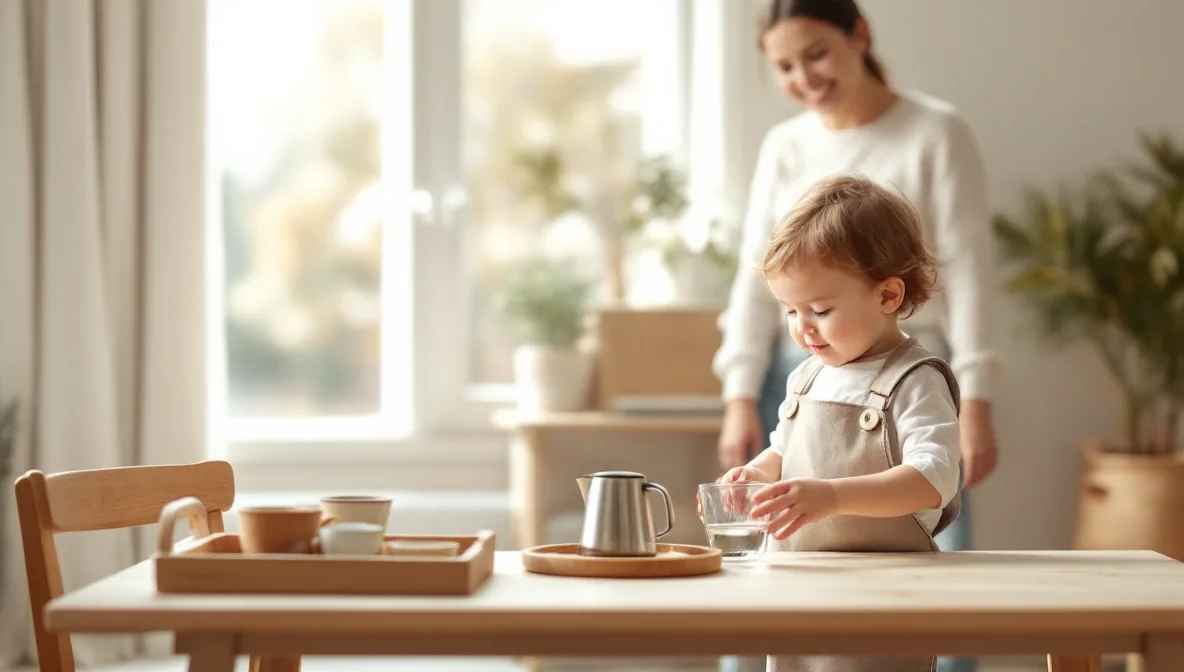
Montessori practical life activities for toddlers at home are simple, real-world tasks that teach your child to care for themselves and their environment while building focus, coordination, and independence. These aren't crafts or flashcards—they're the genuine work of daily living, adapted to small hands and developing abilities. By inviting your toddler (typically ages 18 months to 4 years) to participate in everyday routines, you unlock a powerful form of learning that costs almost nothing and transforms how your child sees themselves.
Key Takeaways
- Practical life activities develop fine motor skills, concentration, and independence in toddlers through real, purposeful work.
- Set up a prepared environment with child-sized tools, low shelves, and accessible materials so your toddler can choose and work independently.
- Focus on care of self (dressing, washing) and care of environment (sweeping, wiping) activities that match your child's current abilities.
- Model the activity slowly and clearly once or twice, then step back and let your child repeat and refine at their own pace.
- Expect mess, repetition, and seeming "slowness"—this is how toddlers build neurological pathways and genuine competence.
What Are Montessori Practical Life Activities?
In the Montessori approach, practical life activities are intentional, child-led work using real materials and tools that serve a genuine purpose in daily living. Unlike a game or activity set up purely for learning, a child pouring their own water at snack time or wiping a table is doing something real—something that matters in the household.
Dr. Maria Montessori believed that toddlers have an innate drive to mimic and participate in the adult world around them. By honoring that drive and giving children meaningful work, you're not just keeping them busy—you're building their neural pathways for coordination, concentration, and self-regulation. Research in child development supports this: studies show that toddlers who engage in self-care and environmental care tasks develop stronger executive function and independence.
Why Practical Life Matters for Toddler Development
Toddlers aged 2 to 3 years are in what Montessori educators call the "sensitive period for order." Your child notices details, loves repetition, and craves the chance to do things "themselves." This window is brief and precious—by age 4 or 5, the drive to participate in practical tasks naturally softens.
When your toddler carries a small basket, clips clothespins on a line, or scrubs vegetables for dinner, several things happen at once:
- Fine motor skills strengthen—grasping, pinching, twisting, and pouring all build the hand strength and dexterity needed later for writing.
- Concentration deepens—a toddler absorbed in pouring water practices sustained focus in a way screen time never achieves.
- Independence blooms—completing a task without constant help from a parent builds genuine confidence and competence.
- Order and calm develop—toddlers thrive when they understand routines and see that actions have logical consequences.
- Social-emotional growth occurs—your child feels valued, capable, and part of the family's real work.
Setting Up a Prepared Environment at Home
The foundation of practical life activities is a prepared environment—a space thoughtfully arranged so your toddler can access materials and work with some independence. You don't need much, but intentionality matters.
Essential Elements of a Prepared Environment
| Element | What It Looks Like | Why It Works |
|---|---|---|
| Child-sized furniture | A low wooden table, small chair, or step stool (12–18 inches high) | Your toddler can pull up a chair, see the table at eye level, and work without frustration or depending on you to lift them. |
| Low, open shelves | Shelves 24–36 inches high with 3–5 trays or baskets visible | Your child sees what's available, chooses independently, and learns to return materials to their place. |
| Real, toddler-safe tools | Child-sized scissors, small pitchers, soft-bristle brushes, small sponges, real dishes | Real tools feel purposeful and build actual competence, not pretend skills. |
| Rotating materials | Introduce 2–3 new activities every 2–3 weeks; keep 6–8 choices available at once | Variety holds interest, and rotation prevents overwhelm while allowing deep focus on fewer tasks. |
| Beauty and order | Neutral colors, minimal clutter, everything in a basket or tray, labels with pictures | A calm, organized space invites concentration and makes cleanup intuitive. |
You can purchase child-sized Montessori materials, but you don't have to. Many families find that wooden step stools (£15–30), small metal pitchers (£8–12), and child-friendly kitchen tools from any supplier work beautifully. The goal is accessibility and real function, not expense.
Core Montessori Practical Life Activities for Toddlers
Here are tried-and-tested activities organized by category, with realistic age recommendations and what skills each builds:
Care of Self
- Dressing and undressing (18 months+) – Start with removing socks and hats, progress to pulling on elastic-waist pants or a shirt. Builds body awareness and independence. Keep a low hook or basket with a few outfits within reach.
- Hand and face washing (18 months+) – Use a low sink or a small basin on a child-height table. Your toddler pumps soap, splashes, and wipes with a small towel. Establishes hygiene habits and fine motor control.
- Brushing teeth (2 years+) – With a small cup and soft toddler toothbrush nearby, your child can begin to participate in tooth care. Model first, then let them "try" before you finish.
- Eating with utensils (18 months+) – Offer a small fork and spoon at meals. Don't rush; expect mess. This builds the pincer grip and hand–eye coordination essential for later writing.
Care of Environment
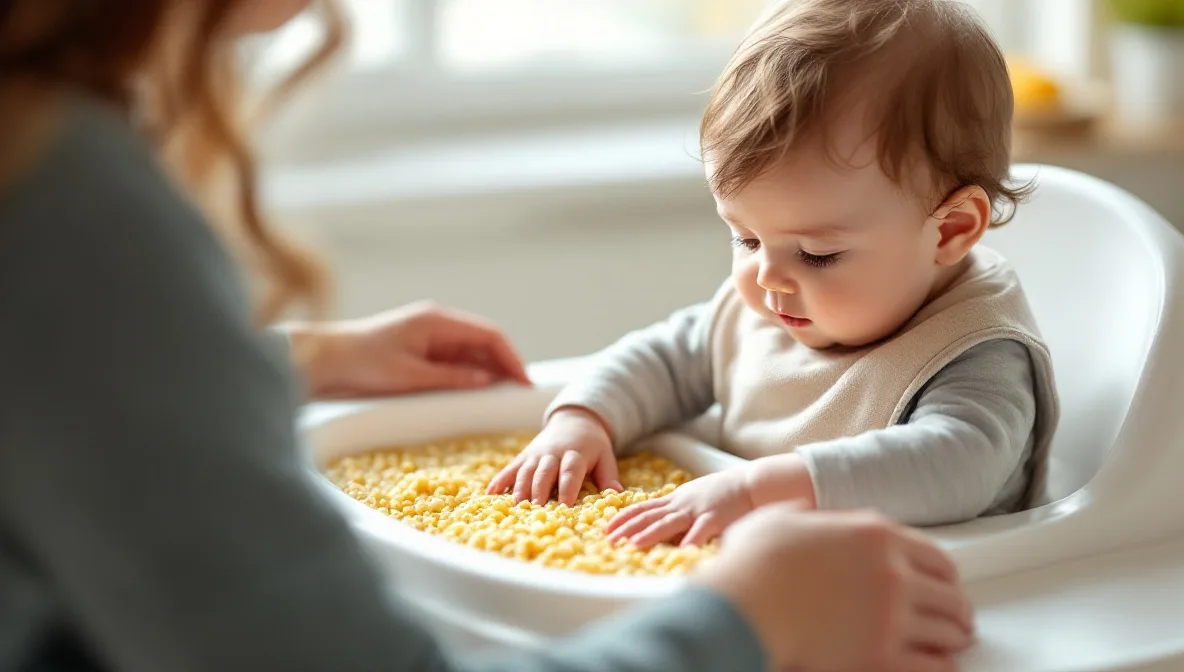
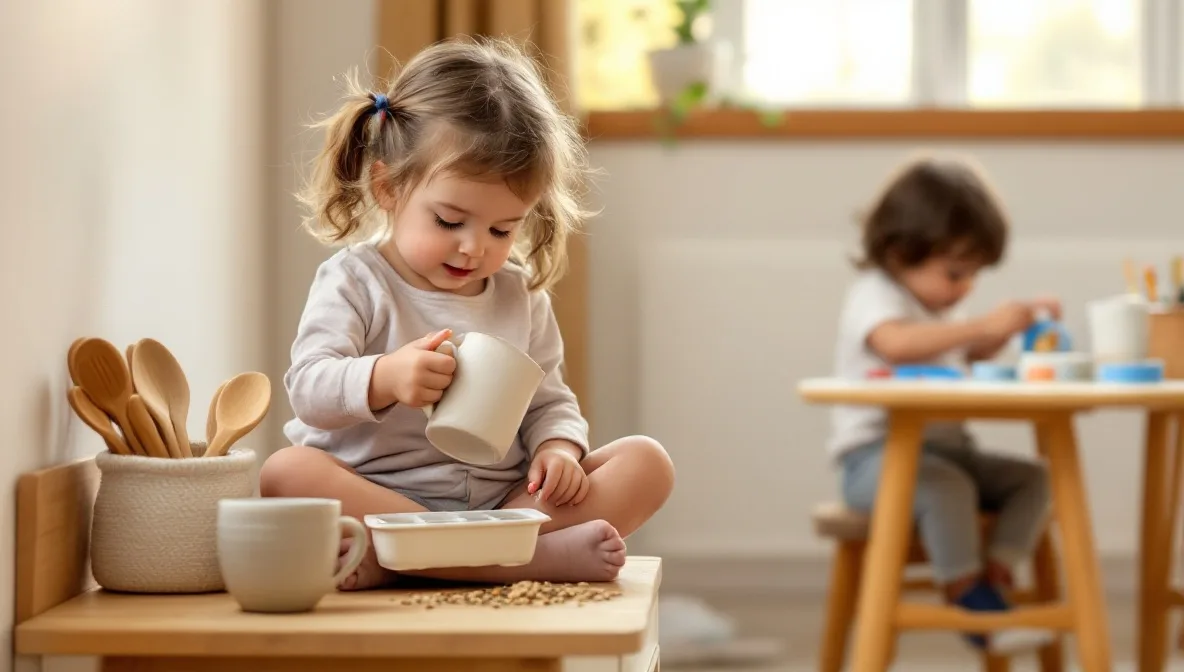
- Pouring activities (20 months+) – Start with dry goods (rice, lentils) into a shallow tray, then progress to water. A small metal pitcher and glass teach hand control and concentration beautifully.
- Sweeping (2 years+) – A child-sized soft-bristle broom and small dustpan let your toddler sweep small areas. Place a small pile of cereal or crumbs and let them sweep it into the pan and dump it into a bin.
- Wiping surfaces (18 months+) – Give your child a damp sponge and let them wipe low shelves, the table leg, or a plastic step stool. Spray bottles designed for toddlers (pump-action, not trigger) are safer.
- Washing dishes (2 years+) – Use a low basin with warm water, a few plastic dishes, and a soft cloth. Your toddler dunks, scrubs, and places clean dishes in a small rack. Supervision is essential.
- Folding cloth (20 months+) – Start with cloth napkins or small scarves. Fold them in half together, and let your child practice the motion. Builds spatial awareness and fine motor refinement.
- Care of plants (2 years+) – A child-safe watering can and a low plant pot let your toddler water a sturdy, non-toxic plant (like a snake plant or spider plant). Teaches nurturing and responsibility.
How to Present a Practical Life Activity
The way you introduce an activity shapes whether your toddler engages with focus or loses interest. Montessori educators emphasize slow, deliberate modeling without verbal instruction—let your hands show the work.
The Montessori Three-Step Presentation
- First introduction: Set up the activity at a low table with your toddler beside or facing you. Perform the activity slowly and deliberately, paying attention to each small movement. If you're pouring, go slowly, pause between pours, let the water level rise visibly. Don't talk much—your movements speak. This might take 2–4 minutes.
- Invite participation: Say something simple: "Would you like to try?" Then step back. Your child may imitate immediately or watch first. Both are fine. If they struggle, you can gently guide a hand, but don't take over. Resist the urge to correct or rush.
- Observe and repeat: Over the next days and weeks, your child will return to this activity again and again. Each time, their movements become more refined, their focus deeper. Let them repeat without comment. Mastery comes through repetition, not praise.
A common mistake is over-explaining or praising too much ("Good job pouring!"). In Montessori, the work itself is the reward. When you step back and let your child feel their own competence, you build internal motivation far stronger than any sticker chart.
Managing Mess and Expectations
Practical life activities are messy, slow, and sometimes repetitive in ways that test parental patience. Your toddler may spend 15 minutes pouring water back and forth while you watch water splatter across the floor. This is not a waste of time—this is learning.
Set realistic expectations:
- A 2-year-old wiping a table will miss spots and take twice as long as you would. That's development in action.
- Water will spill. Rice will scatter. Small cloths will be wrung out unevenly. Have towels and a small broom nearby, and let your child help clean up the spill as part of the work.
- Your toddler may repeat the same activity 20 times over two weeks. They're building neural pathways, not getting bored.
- Some days your child won't want to participate, and that's fine. Offer without pressure. The invitation is always open.
Creating a home environment where mess is expected and cleanup is part of the process itself removes shame and builds resilience. Your toddler learns that mistakes and spills are normal, manageable parts of real work—a lesson far more valuable than perfection.
Frequently Asked Questions
At what age can toddlers start practical life activities?
Most toddlers show readiness for simple activities around 18 months, such as wiping, washing hands, or removing socks. However, every child is different—watch for signs of interest in imitating your work and the ability to focus for 2–3 minutes. By age 2, most toddlers are ready for a wider range of activities, and by age 3, they thrive on longer, more complex tasks.
Do I need to buy Montessori materials, or can I use regular household items?
You absolutely can use household items. Child-sized kitchen utensils, small baskets, regular sponges, and wooden spoons work beautifully. The principle is real, purposeful work with safe tools—not branded Montessori materials. Many families spend under £50 setting up a complete practical life environment using items from home, charity shops, and affordable retailers.
What if my toddler doesn't want to do practical life activities?
Not every toddler is drawn to the same activities at the same time, and that's normal. Offer the invitation without pressure, and let your child choose. If your 2-year-old ignores the pouring activity but loves sweeping, follow their interest. Also, some toddlers engage more fully when a parent is also working nearby (not hovering, but present)—modeling normalized participation in household tasks.
How do I handle frustration or meltdowns during practical life activities?
Frustration is part of learning. If your toddler becomes upset because they can't pour neatly or the cloth won't fold right, stay calm and offer help without taking over: "I see this is tricky. Would you like my hand?" Keep sessions short (10–15 minutes) so fatigue doesn't escalate frustration. Some days, your child simply isn't ready—that's fine. Try again tomorrow.
Can practical life activities help with focus and attention span?
Yes. Repetitive, purposeful work is one of the most powerful ways to build concentration in young children. A toddler absorbed in pouring water or wiping a shelf is practicing sustained focus naturally. Over weeks and months, you'll notice your child able to stick with an activity longer—a skill that transfers to everything, including sitting at mealtimes or listening to a story.
The beauty of montessori practical life activities for toddlers at home is their simplicity and realness. You're not creating "educational moments"—you're simply inviting your child to be part of the family's genuine work. In doing so, you give them something far more valuable than skills: you give them a sense of competence, belonging, and purpose. Start small, trust the process, and watch your toddler blossom into a capable, confident little person.

Comments 0
Please Sign in to leave a comment.
No comments yet. Be the first to share your thoughts!