
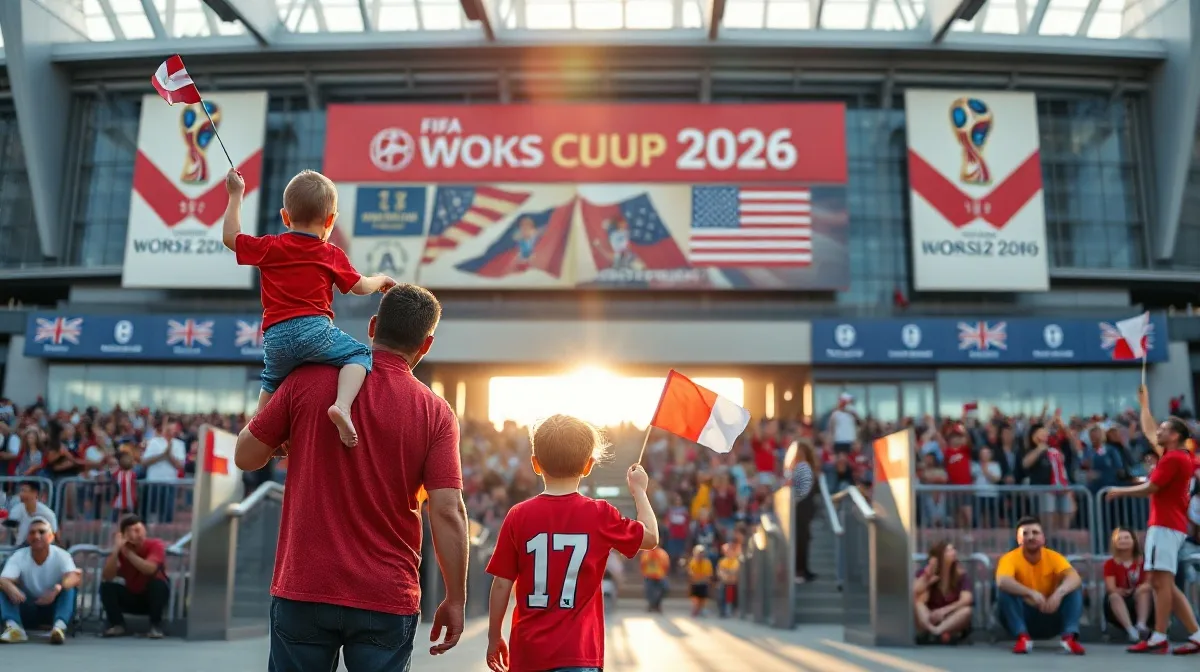
If you're serious about taking kids to 2026 World Cup tips that actually work on match day, you've landed in the right place. The FIFA World Cup 2026 spans 16 host cities across the United States, Canada, and Mexico — a sprawling, once-in-a-generation event that your children will remember for the rest of their lives. This guide walks you through every practical detail, from buying the right tickets to surviving a three-hour match with a five-year-old who needs the bathroom at the worst possible moment.
Key Takeaways
- Children under two years old can attend as baby in arms for free, but a separate ticket is required for every child who occupies a seat.
- Arrive at least 90 minutes before kick-off to clear security, find family restrooms, and settle in before the noise peaks.
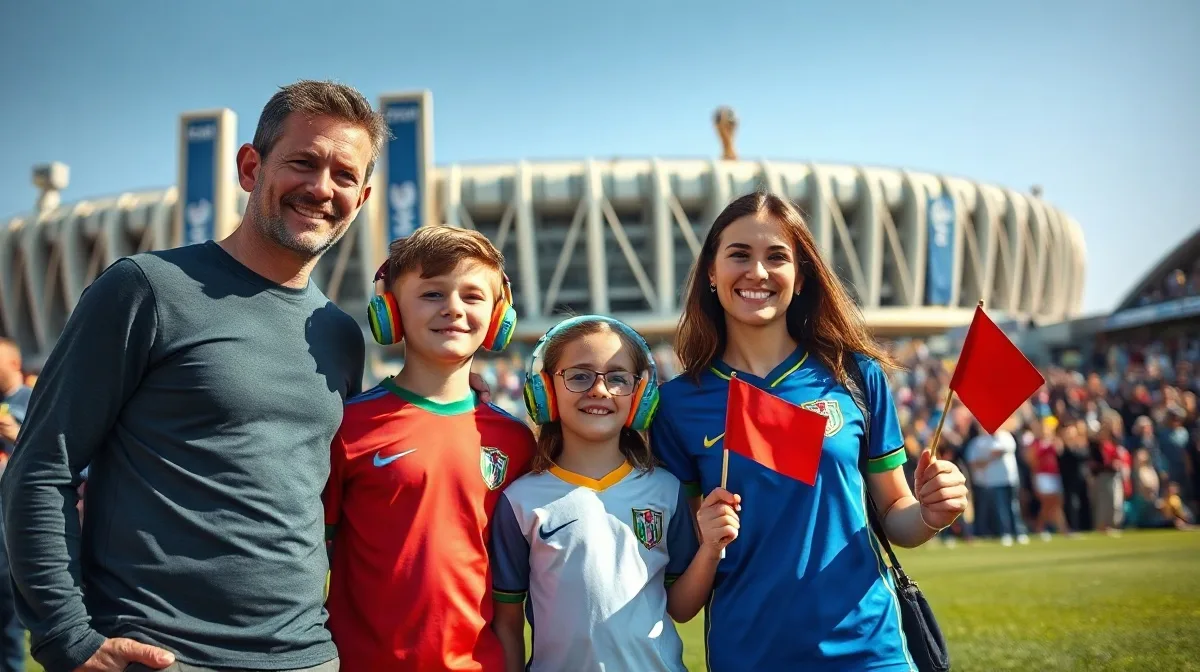
- Noise-canceling headphones designed for children are essential kit for toddlers and sensory-sensitive kids at any World Cup stadium.
- FIFA's clear bag policy applies at every venue — a single clear bag no larger than 12" x 6" x 12" per person keeps entry smooth.
- Family zones and accessible seating exist at most 2026 venues, but you must request them at the point of purchase through the FIFA ticketing app.
World Cup 2026 Kids Tickets: What Every Parent Must Know
The question parents ask most often is whether children need their own ticket. Yes — any child who will sit in a seat requires a paid ticket, regardless of age. The only exception is FIFA's baby-in-arms policy: one child under 24 months old may attend free of charge per accompanying adult, provided the child sits on the adult's lap for the entire match and does not occupy a seat. If you have two children under two, you need two adults, or you purchase a seat for the second child.
Youth ticket categories vary by match tier. Group-stage matches generally offer the most affordable options, while knockout rounds — especially the semi-finals and final at MetLife Stadium in New Jersey — carry significantly higher price points. According to SeatGeek's FIFA World Cup family guide, resale prices for high-demand fixtures can climb well above face value, so purchasing through official channels is always the safest and most transparent route.
All purchases and ticket management run through the FIFA ticketing app. Download it early, link every family member's profile (including children), and screenshot your QR codes before you leave home — stadium Wi-Fi can be unreliable under 80,000 fans.
Family Seating and Stadium Zones
Not all seats are created equal when you have a six-year-old who can't see over the head of the adult in front. Family seating at World Cup 2026 is available at each of the 11 US host stadiums, and most venues have dedicated family zones positioned in the lower tiers where sightlines are less obstructed. When you purchase through the FIFA ticketing app, filter by "accessible" or contact FIFA's customer service line to request family-friendly sections specifically.
The 2026 venues range from AT&T Stadium in Arlington (capacity 80,000+) to Levi's Stadium in Santa Clara and BC Place in Vancouver. Larger open-air stadiums tend to offer better natural airflow on hot days, which matters enormously if you're bringing a baby or a child prone to overheating. Check each stadium's official page for their specific family zone location — configurations differ.
Stadium Security, Clear Bags, and Stroller Policy
Stadium security at a FIFA World Cup is thorough. Plan for metal-detector wands, bag checks, and potential pat-downs. The clear bag policy is non-negotiable: one clear plastic bag per person, maximum dimensions 12" x 6" x 12", plus a small clutch no larger than 4.5" x 6.5". This applies to everyone, including children carrying their own snacks.
Strollers: What to Expect
Most World Cup 2026 stadiums do not permit strollers inside the seating bowl. Some venues offer stroller check-in near the accessible entrances, but availability is not guaranteed, and leaving a $500 pram with a volunteer is a decision many parents regret. A compact baby carrier or hip carrier is far more practical and clears security without a second glance. If your toddler is between 18 and 36 months, a lightweight umbrella stroller that folds to under 36 inches is the easiest compromise — fold it, carry it through security, and use it in the concourse.
What to Pack: The Family Match-Day Checklist
- Noise-canceling headphones or ear protection rated for children (look for NRR 22+ decibel reduction — stadium crowd noise regularly exceeds 100 dB)
- Sunscreen SPF 50+ and a wide-brim hat for day matches at open-air venues
- Snacks your child will actually eat — concessions lines can be 20 minutes long at peak times
- A portable charger (power bank) — FIFA ticketing is entirely digital, so a dead phone is a real problem
- A change of clothes for children under five, sealed in a small zip-lock inside your clear bag
- A written note with your phone number tucked into your child's shoe or clipped inside their shirt — crowds of 70,000+ make separation a genuine risk
- Reusable water bottles (empty, to fill at stadium fountains — most 2026 venues have free water stations)
According to the Kickoff Adventures World Cup 2026 family travel guide, families who pre-plan their concourse route and locate the nearest family restrooms before the match begins report significantly less stress during the game itself. Spend your first 15 minutes after entry on a quick recon lap — find the bathrooms, the nearest concession stand, and the first-aid station.
Managing Noise, Crowds, and Sensory Overload
A World Cup match is genuinely loud. Crowd noise at packed stadiums during a goal celebration can spike above 120 dB — comparable to a jet engine at close range. According to the American Academy of Pediatrics, sounds above 85 dB can cause hearing damage with prolonged exposure. Ear protection is not optional for children under 12; it is a health safeguard.
For children with sensory processing differences or anxiety, consider arriving during the warm-up period (usually 60–75 minutes before kick-off) when the atmosphere builds gradually rather than overwhelming all at once. Many families find that sitting on the end of a row near an aisle — easier to access if a quick exit is needed — makes a significant difference to their child's comfort level. Talk through what will happen before you arrive: the singing, the referee's whistle, the air horns. Preview videos of stadium atmospheres on YouTube the night before so nothing is a complete shock.
Day-of Logistics: Timing, Transport, and Staying Together
Arriving at least 90 minutes before kick-off is the single most important logistics decision you'll make. Security queues at World Cup 2026 venues are expected to be substantial, particularly for high-profile fixtures. The additional time gives you a buffer for slow children, unexpected bathroom stops, and the inevitable moment someone drops their snacks at the gate.
For transport, public transit is almost always faster than driving on match days. Each 2026 host city has a designated transit plan — Seattle's Link Light Rail, for example, stops directly at Lumen Field, while Dallas/Fort Worth's AT&T Stadium is served by TRE train services with expanded match-day schedules. The ParentMap Seattle World Cup 2026 guide covers transit specifics for families attending matches in the Pacific Northwest and is a strong model for how to research each individual host city.
Keeping Your Group Together
Designate a meeting point at a fixed, landmark location inside the stadium — a specific gate number or a large sponsor sign — before you enter. For children aged four to ten, a bright-colored lanyard with your name and phone number works better than verbal instructions. Some families use budget GPS trackers clipped inside a child's backpack for additional peace of mind in large crowds.
A Quick Comparison: Which Age Group Needs What
| Child's Age | Ticket Required? | Top Priority | Key Gear |
|---|---|---|---|
| Under 2 (baby in arms) | No (one per adult) | Feeding schedule, shade | Baby carrier, ear muffs, sun hat |
| 2–4 years | Yes | Nap timing, lap space | Ear protection, snacks, comfort toy |
| 5–8 years | Yes | Sightlines, bathroom proximity | Ear protection, face paint, flag |
| 9–12 years | Yes | Engagement, merchandise budget | Portable charger, team jersey, snacks |
| 13+ years | Yes | Independence within sight | Phone, digital ticket access, meet-up plan |
Frequently Asked Questions
Can you bring kids to World Cup 2026 matches?
Yes, children of all ages are welcome at World Cup 2026 matches. The event is a family-friendly occasion, and many stadiums offer accessible facilities, family restrooms, and lower-tier seating areas suited to parents with young children.
What is FIFA's baby-in-arms policy for World Cup 2026?
One child under 24 months old may attend free of charge as a baby in arms, accompanying one adult ticket holder, as long as the child sits on the adult's lap and does not occupy a seat. If you have two infants under two, you'll need a second adult or a purchased seat for the second child.
Do children need their own ticket for the World Cup?
Yes — every child who will occupy a seat must have their own valid ticket, purchased through the official FIFA ticketing app. The only exception is the baby-in-arms allowance for children under 24 months.
Are strollers allowed inside World Cup stadiums?
Most 2026 host stadiums do not allow strollers into the seating bowl, though some offer stroller check-in at accessible entrances. A soft-structured baby carrier or a compact umbrella stroller that folds flat is the most practical solution for families with infants or toddlers.
What should I pack when taking kids to a World Cup game?
Your essentials are: noise-canceling ear protection for every child, sunscreen SPF 50+, a sealed clear bag with snacks and a change of clothes, a fully charged portable charger for digital tickets, and a written contact card secured on your child. Keep it all within the FIFA clear bag policy dimensions — 12" x 6" x 12" maximum per person.
Taking kids to the 2026 World Cup is absolutely worth every ounce of planning. The more deliberately you prepare — tickets secured early through the FIFA ticketing app, ear protection packed, logistics mapped the night before — the more freely you can enjoy watching your child's face light up when 75,000 people erupt at a goal. These are the moments that make the effort unforgettable.
Comments 0
Please Sign in to leave a comment.
No comments yet. Be the first to share your thoughts!