
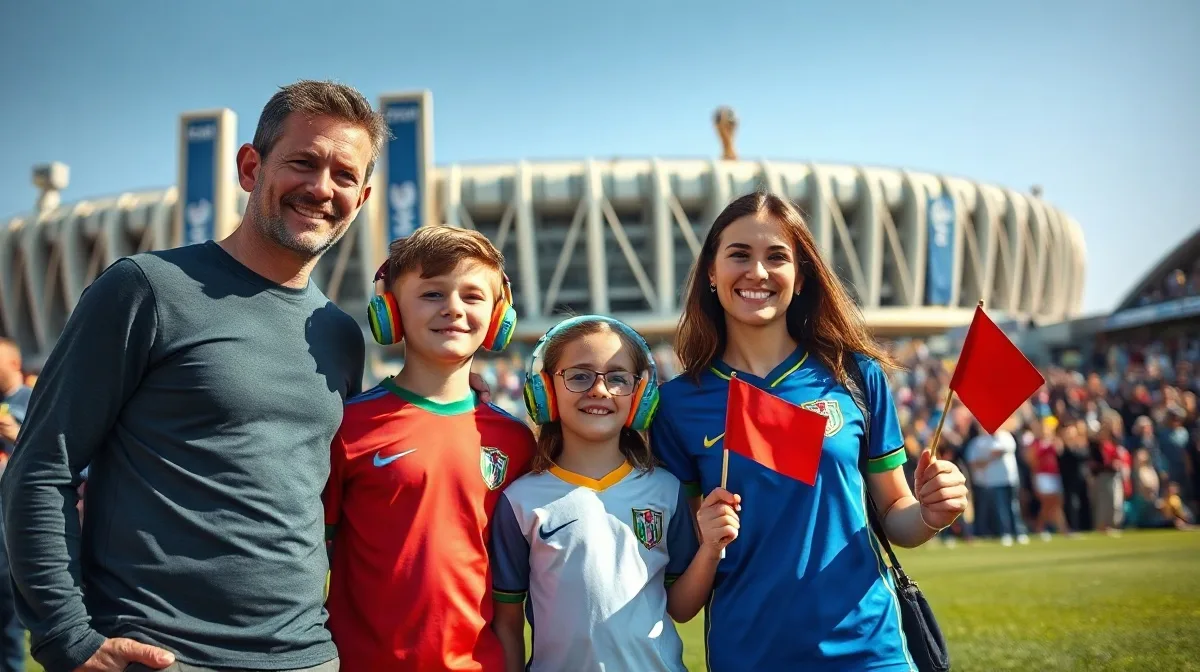
Is the 2026 World Cup safe for kids? The honest answer is: yes, with the right preparation — but there are real risks that no travel blog should gloss over. Spread across 16 host cities in the United States, Canada, and Mexico, the FIFA World Cup 2026 will be the largest tournament in the event's history, and bringing your children along can be an unforgettable experience. This guide walks you through everything you need to know, from stadium ticketing rules and crowd safety to heat exposure, prohibited items, and a child-safeguarding concern that deserves a frank conversation before you book your flights.
Key Takeaways
- Children under a certain age can attend free as "baby in arms," but older kids require their own full ticket — and the rules differ by match category.
- Modern FIFA stadium security protocols are robust, but large crowds, extreme summer heat, and elevated noise levels create genuine physical risks for young children.
- Human trafficking risk at major sporting events is a documented concern; the U.S. Department of Homeland Security has launched a specific campaign for the 2026 tournament.
- A simple pre-match preparation checklist — ear protection, hydration, a meeting point, and an ID plan — reduces the most common family safety incidents dramatically.
- Planning around your child's age, stamina, and temperament matters as much as planning around the match itself.
Ticketing Rules and Age Policy: What Every Parent Must Know
One of the first practical questions parents ask is whether kids need their own ticket. For the 2026 FIFA World Cup, children aged two and under are admitted free as "baby in arms" — provided they sit on a parent's lap and do not occupy a separate seat. Any child aged three and above requires a purchased ticket in their own name. FIFA enforces this strictly at the turnstile, so do not assume a toddler will slip through unchecked.
Ticket categories run from Category 1 (the most expensive, closest to the pitch) down to Category 4 (resident tickets for fans in host nations). Families should note that Category 4 tickets are available only to verified residents of the host country and cannot be transferred. For everyone else, Category 3 tickets typically represent the best value for a family, offering good sightlines without the Category 1 premium. Check the 2026 World Cup family travel planning guide for updated breakdowns on pricing tiers and resale policies as they are confirmed by FIFA.
Purchase only through FIFA's official ticketing platform. Third-party resellers carry the risk of counterfeit tickets, and with your kids in tow, showing up at a stadium gate with an invalid ticket is a situation you really do not want to navigate.
Stadium Security: What to Expect at the Gates
FIFA 2026 matches will be held in venues that include AT&T Stadium in Arlington, MetLife Stadium in New Jersey, SoFi Stadium in Los Angeles, and BC Place in Vancouver — all of which already operate under NFL- or MLS-level security protocols. That means bag checks, metal detector wands or walk-through scanners, and a clear-bag policy similar to those used in North American professional sports.
Prohibited Items to Know Before You Pack
The following items are typically prohibited at FIFA World Cup stadiums, and trying to bring them in with children in tow only slows your entry and raises stress levels:
- Hard-sided backpacks or bags larger than 30 cm × 20 cm × 15 cm (exact dimensions TBC by FIFA)
- Glass containers, including baby-food jars — decant puree into a soft silicone pouch instead
- Noisemakers such as vuvuzelas or air horns
- Selfie sticks, tripods, and professional camera lenses over 10 cm
- Laser pointers and flares
- Umbrellas with pointed metal tips
Sealed, empty soft water bottles are generally permitted and strongly recommended for children. Confirm the exact prohibited items list on FIFA's official site closer to match day, as stadium-specific rules can vary.
Heat, Noise, and Physical Safety: The Risks Parents Underestimate
The 2026 tournament runs from June 11 to July 19. Matches in cities like Dallas, Miami, and Los Angeles will take place during peak summer heat, with surface temperatures on asphalt concourses frequently exceeding 40 °C (104 °F). According to the American Academy of Pediatrics, children are more vulnerable to heat illness than adults because their bodies produce more heat relative to their surface area and sweat less efficiently. For a child under five, a three-hour match in a sun-exposed upper tier is a genuine heat-stress risk.
A Practical Heat and Hydration Plan
Arrive at least 90 minutes before kick-off so your family can enter during lower-crowd periods, find shade, and let children acclimatize. Bring electrolyte sachets alongside water — plain water alone does not replace the sodium lost through sweat in extreme heat. Dress children in light, moisture-wicking fabrics, and apply SPF 50+ sunscreen 30 minutes before leaving your accommodation. If your child shows signs of heat exhaustion (pale, clammy skin, rapid heartbeat, confusion), locate a first-aid station immediately; all FIFA World Cup venues are required to have dedicated medical facilities on site.
Noise is a second underestimated hazard. A packed World Cup stadium routinely exceeds 100 decibels — comparable to a chainsaw. The National Institute on Deafness recommends hearing protection for sustained exposure above 85 dB, and children's ear canals amplify sound pressure more than adults' do. Foam earplugs rated NRR 29 or higher, or child-sized earmuffs, are an essential item in your match-day bag.
Crowd Safety and Getting Separated: Build a Plan Before You Go
Stadiums hosting 2026 matches will accommodate between 45,000 and 92,000 spectators. In a crowd that size, even a momentary lapse of attention can mean a lost child. Give every child aged five and above a laminated card or a written note tucked inside their shoe with a parent's local phone number, the stadium name, and a pre-agreed meeting point (most large venues designate an official family meeting area — find it on your arrival).
For children under five, a temporary tattoo or a permanent-marker note on their forearm with your contact number adds a back-up layer that has genuinely helped reunite families at large events. Many parents also use GPS tracker wristbands, which work reasonably well in open stadium concourses. Practice saying "find a police officer or a person in a yellow vest" with your child before match day so the instruction is automatic under stress.
Child Safeguarding and Human Trafficking: The Risk No One Wants to Discuss
This is the section that most travel guides skip, but it matters. Major international sporting events historically see a spike in human trafficking activity in and around host cities. The U.S. Department of Homeland Security has specifically addressed this: their Know2Protect campaign for the 2026 FIFA World Cup provides resources for parents and travelers on recognizing and reporting exploitation. This is not a reason to stay home, but it is a reason to brief your children — age-appropriately — on the rule that no adult they do not know should ever ask them to go anywhere alone.
In practical terms: keep children within arm's reach in crowded fan zones and transit hubs, not just inside the stadium. Host city metro stations and fan fests attract tens of thousands of people and have less formal security than the venue itself. Teach older children (aged eight and above) to identify uniformed security staff, police officers, and official FIFA volunteer vests so they know exactly who to approach if something feels wrong.
Host City Transit and Getting There Safely With Kids
Traveling to the stadium with children in tow is often more chaotic than the match itself. All 11 U.S. host cities have confirmed enhanced transit plans for match days, including dedicated shuttle routes and additional metro frequency. Avoid driving to the stadium on match day — parking zones will be overwhelmed, and walking long distances from a remote lot in summer heat with young children is precisely how the day falls apart before it begins.
Research your host city's specific transit plan early. Dallas/Fort Worth, for example, operates a free game-day rail shuttle from downtown stations to AT&T Stadium. New York/New Jersey games at MetLife Stadium are served by NJ Transit trains from Penn Station. Book accommodation within walking distance of a direct transit stop, not just within distance of the stadium — the difference matters enormously with tired children on the return journey at 11 p.m.
For families traveling internationally to U.S. host cities, the 2026 World Cup excitement is building for young soccer fans worldwide, and early accommodation and transit booking — ideally six to twelve months out — is no longer optional; it is essential.
At-a-Glance: Is Your Child Ready for a World Cup Match?
| Child's Age | Ticket Required? | Key Safety Considerations | Our Recommendation |
|---|---|---|---|
| 0–2 years | No (baby in arms) | Heat stress, noise, disrupted sleep, feeding logistics | Attend only if you have a private, shaded, quiet exit route plan |
| 3–5 years | Yes | Heat exhaustion, crowd separation, sensory overload | Choose an evening kick-off in a cooler city; leave at halftime if needed |
| 6–9 years | Yes | Crowd separation, noise, stamina over 3-hour event | Good age with preparation; practice the lost-child plan at home |
| 10–12 years | Yes | Noise, hydration, awareness in crowded transit | Excellent age; involve them in safety planning so they feel empowered |
| 13+ years | Yes | Peer influence, transit independence, phone-battery management | Strong candidates for a semi-final or final atmosphere |
Frequently Asked Questions
Is the 2026 World Cup safe for kids?
Yes, for most families with adequate preparation it is a safe and extraordinary experience. The main risks — heat, crowd separation, noise, and the broader safeguarding environment in host cities — are all manageable when you plan specifically for them rather than treating it like an adult-only trip that children are coming along to.
What age can children attend World Cup 2026 matches?
There is no minimum age restriction set by FIFA, so technically even newborns can attend. However, children aged two and under must sit on a parent's lap as "baby in arms," while children aged three and above require a purchased ticket. From a practical safety standpoint, most pediatric health professionals would caution against bringing children under three to a full-length match in summer heat.
Do kids need their own ticket for the 2026 World Cup?
Children aged three and older need their own ticket assigned to them by name. Only children aged two and under are admitted free as "baby in arms" without a seat. Tickets must be purchased through FIFA's official platform and are non-transferable, so ensure each child's name is correctly entered at the time of purchase.
What safety risks should parents consider at World Cup stadiums?
The four most significant risks for children are heat illness (particularly in Dallas, Miami, and LA venues during June–July), noise-induced hearing discomfort in crowds exceeding 100 dB, crowd separation in stadiums of 45,000–92,000 people, and the broader child-safeguarding environment in and around host city fan zones and transit hubs. Each is preventable with targeted planning.
How can I keep my child safe in a crowded World Cup stadium?
Establish a clear meeting point at the venue entrance before you enter, give every child over five a laminated card with your local contact number, and for younger children write your number on their forearm. Arrive early to avoid peak entry surges, stay close in concourse areas, and brief children on identifying official security staff. A GPS tracker wristband adds a valuable back-up layer for children under eight.
Taking kids to FIFA World Cup 2026 can genuinely be the family trip of a lifetime — the atmosphere, the global celebration of the sport, the shared memory of watching a World Cup goal live will stay with your children for decades. Keep the focus keyword in mind as you plan: is the 2026 World Cup safe for kids — and the answer you want to give from experience, not hope, is yes. Pack the ear protection, memorize the meeting point, talk to your kids about safeguarding, and go enjoy the beautiful game together.

that great that help me a lot of