
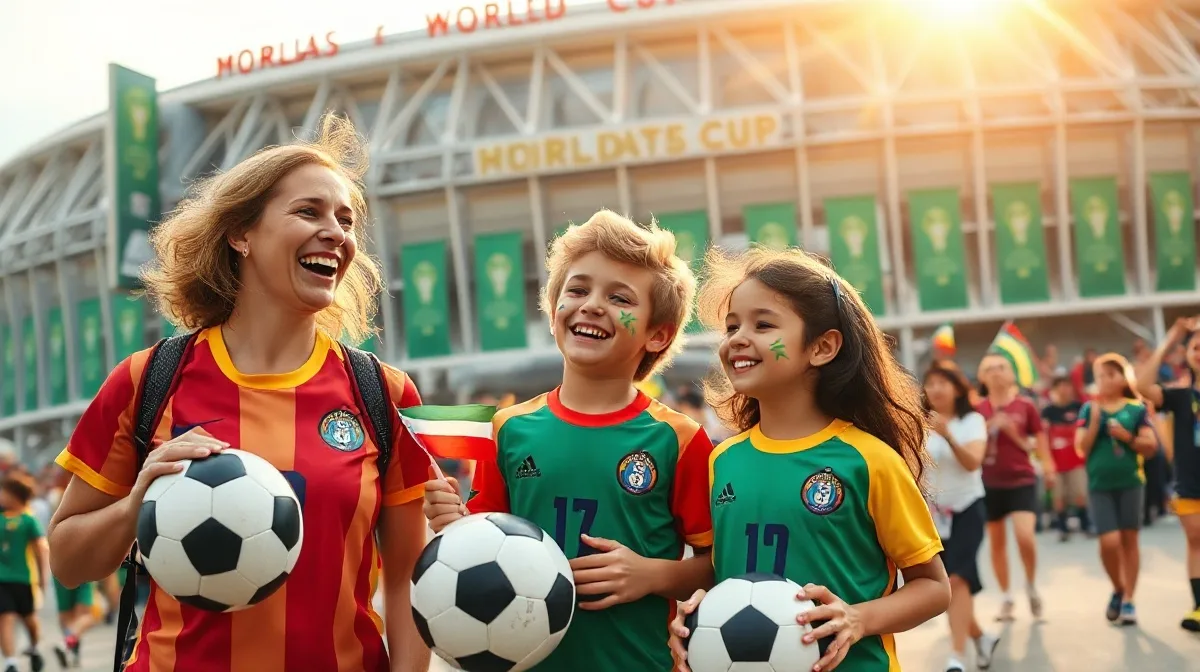
If you've been wondering is the 2026 World Cup safe for kids, the short answer is yes — with the right preparation it can be a genuinely rewarding family experience. The tournament runs from June 11 to July 19, 2026, across 16 host cities in the United States, Canada, and Mexico, making it the largest World Cup in history and one of the most logistically complex family travel events you'll ever attempt. This guide cuts through the noise and gives you concrete, honest answers about crowd safety, child welfare, travel planning, and how to get the most out of every match day.
Key Takeaways
- The 2026 World Cup spans three countries and 16 cities — early planning is essential for families with children.
- Official host cities have invested heavily in family zones, medical services, and crowd-management infrastructure.
- Child safety at large public events requires specific precautions, including ID wristbands, meeting points, and sun-safety protocols.
- Some venues and match days are better suited to families than others — choosing wisely makes a significant difference.
- Federal agencies like the DHS are actively coordinating child protection measures around the tournament.
What the Host Cities Are Actually Doing for Family Safety
Hosting a World Cup in 2026 means managing crowds of 60,000 to 94,000 per match, and the 16 host cities have been preparing for years. Cities like Los Angeles, New York/New Jersey, Dallas, Toronto, and Mexico City have all submitted detailed public-safety plans to FIFA that cover emergency medical access, secure family fan zones, child-friendly entry gates, and multilingual staff at every venue.
Fan zones — large outdoor viewing areas near stadiums — are a particular highlight for families. Many will have dedicated under-12 areas with lower crowd density, clean restroom facilities, and first-aid tents. If your child is between 4 and 10 years old, a fan zone experience may actually be less stressful than sitting inside the full stadium, especially for early-round group-stage matches.
Federal Child Protection Coordination
It's worth knowing that the United States Department of Homeland Security has an active campaign specifically tied to this event. The DHS Know2Protect initiative for the 2026 FIFA World Cup focuses on preventing child exploitation and trafficking at major sporting events — a real risk that serious parents should acknowledge. The campaign provides reporting tools, hotlines, and public education materials so families can recognize and report suspicious behavior immediately.
Is the 2026 World Cup Safe for Kids Inside the Stadium?
Stadium safety is where parents have the most questions. Generally speaking, children aged 5 and older can manage a full 90-minute match comfortably, provided you plan for the logistics. Matches typically run around two hours including warm-ups, half-time, and post-match delays. Add travel time and security queues — which can be 45 to 90 minutes at a major World Cup match — and you're looking at a full four to six-hour outing.
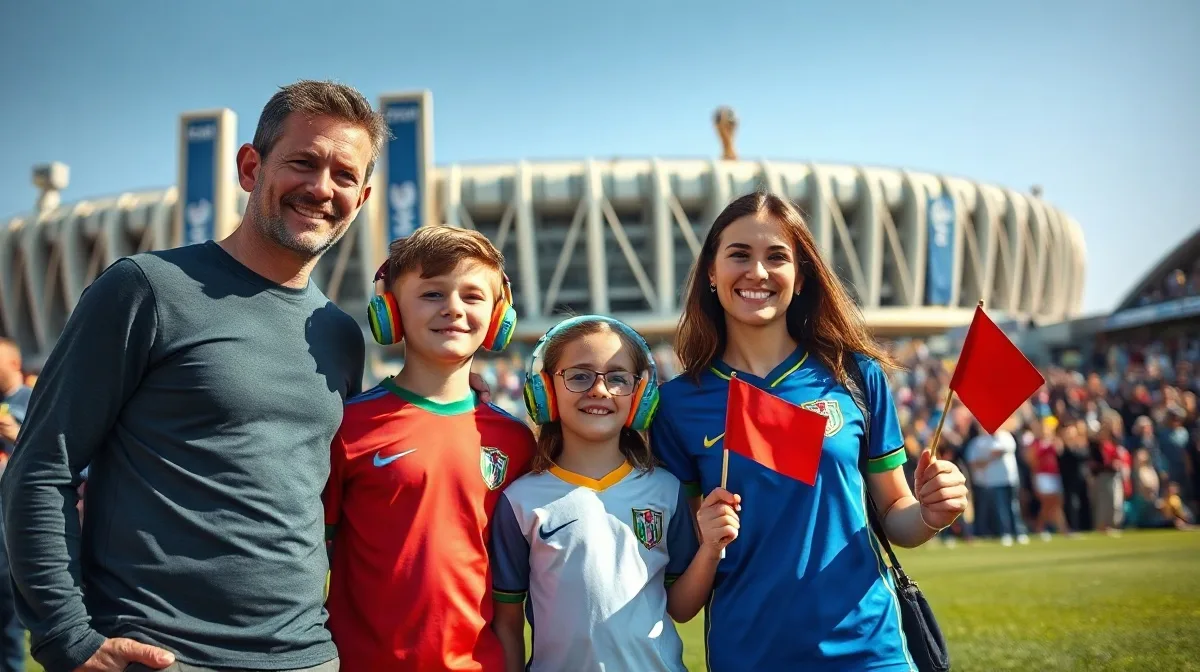
FIFA requires all 2026 venues to comply with accessibility and family accommodation standards. Designated family sections with seats away from the loudest supporter sections exist at most stadiums. Noise levels in a packed stadium can exceed 100 decibels, so bringing children's ear defenders or foam earplugs for kids under 8 is genuinely good practice, not overcaution. The American Academy of Pediatrics recommends limiting children's exposure to sounds above 85 dB to protect developing hearing.
Tickets, Age Requirements, and Lap Children
Children aged 2 and under generally do not require a separate ticket but must sit on a parent's lap. Children 3 and older need their own seat and ticket. Double-check FIFA's official ticketing rules for your specific match, as certain high-demand games — semifinals, the final — may have stricter policies. Purchasing through official FIFA channels is the only guaranteed way to avoid counterfeit tickets, which can leave families stranded at the turnstile.
Practical Safety Checklist for Match Day With Kids
The difference between a memorable family outing and a stressful one usually comes down to preparation. Use this checklist before every match day:
- ID wristband or card: Write your phone number on a wristband and put it on every child under 12. If you're in a non-English-speaking city, include a translation.
- Agree on a meeting point: Choose a visible, fixed landmark outside the stadium entrance before you go in — a flagpole, a sponsor board, a statue — and rehearse it with your child.
- Hydration and snacks: Matches in June and July across US and Mexican venues can see temperatures above 35°C (95°F). Bring a refillable water bottle and arrive hydrated; children dehydrate faster than adults.
- Sun protection: Apply SPF 50 sunscreen 20 minutes before entering open-air seating areas. Reapply at half-time. Wide-brim hats are allowed in most venues.
- Quiet exit strategy: Know which gate leads to the quietest exit and consider leaving five minutes before the final whistle to avoid the main crush.
- Charge your phone fully: You'll need maps, translation apps, and emergency contacts. Carry a small power bank.
Choosing the Right Match and City for Your Family
Not all matches — or all cities — are equal when it comes to family comfort. Group-stage matches between smaller nations tend to draw calmer crowds than knockout-round games involving football powerhouses. If you're traveling with children under 8, a group-stage match in a city like Kansas City, Seattle, or Vancouver is a very different proposition from a quarterfinal in Los Angeles or New York.
This family travel guide for World Cup 2026 breaks down each host city by family-friendliness, transport ease, and proximity to child-friendly attractions — worth bookmarking early in your planning process.
At-a-Glance: Host City Family Suitability
| Host City | Family-Friendly Rating | Notable Family Feature | Crowd Intensity (Typical) |
|---|---|---|---|
| Kansas City, USA | ★★★★★ | Compact city, easy transport, lower costs | Moderate |
| Vancouver, Canada | ★★★★★ | Outdoor lifestyle, safe public transit, bilingual services | Moderate |
| Seattle, USA | ★★★★☆ | Strong soccer culture, ferry access, parks nearby | Moderate–High |
| Dallas, USA | ★★★★☆ | Large stadium with family sections, good road access | High |
| New York/New Jersey, USA | ★★★☆☆ | Iconic setting, but crowded transit and high costs | Very High |
| Mexico City, Mexico | ★★★☆☆ | Passionate atmosphere, altitude considerations for young kids | Very High |
Using the World Cup to Spark a Real Love of Soccer in Your Child
Beyond safety logistics, there's a compelling developmental reason to bring kids to this event. Watching elite sport live — the pace, the skill, the collective energy of tens of thousands of people — creates lasting impressions that no screen can replicate. Research in sports psychology consistently shows that children who attend live elite-level sport before age 12 are significantly more likely to pursue the sport themselves throughout adolescence.
This piece on why 2026 is the year to get kids into soccer makes a compelling case for channeling World Cup excitement into local club enrollment — something worth planning alongside your match tickets. If your child comes home buzzing, have a local junior soccer program ready to sign them up.
Health Considerations Parents Often Overlook
June and July heat is the single most underestimated risk for children at outdoor sporting events. Kids lose body water at a faster rate than adults and are slower to recognize their own thirst. At venues in Dallas, Los Angeles, and Mexico City, ambient temperatures during afternoon kickoffs can genuinely be dangerous for children under 5 without active cooling measures.
Choose evening kickoffs wherever possible when traveling with children under 7. Evening matches — typically 9 p.m. or 10 p.m. local time — are cooler but may run past midnight with travel home, which creates a different kind of fatigue challenge. There's no perfect solution; it's about choosing the lesser compromise for your child's age and temperament.
Also note that Mexico City sits at 2,240 metres (7,350 feet) above sea level. Children, particularly those under 8, can experience mild altitude sickness — headaches, nausea, lethargy — within the first 24 to 48 hours of arrival. Give your family at least two full days to acclimatize before attending any event.
Frequently Asked Questions
Is the 2026 World Cup safe for kids traveling internationally?
Yes, with preparation. The three host countries — the USA, Canada, and Mexico — all have robust tourist infrastructure and English or French-language support available. The key risks (heat, crowds, petty theft) are manageable with basic precautions like hydration planning, secure bags, and age-appropriate match choices.
What age is appropriate for a child to attend a World Cup match?
Most pediatric and child development experts suggest age 5 or 6 as a reasonable minimum for attending a major stadium event, as children this age can follow the game, tolerate crowd noise with hearing protection, and understand basic safety instructions. Younger children can enjoy fan zones outside the stadium without the full sensory intensity.
How do I protect my child from getting lost at a World Cup venue?
Put a labeled ID wristband on every child under 12 with your mobile number and hotel name. Agree on a specific, visible meeting point outside the stadium before entering, and walk your child to it physically — not just pointing at it. Many experienced World Cup families also use a shared family location app like Life360 with older children aged 8 and above.
Are there dedicated family areas at 2026 World Cup stadiums?
FIFA has required all host venues to provide accessible, family-designated seating sections. These areas are positioned away from the loudest ultras and supporter groups, and tend to have better sightlines for shorter audience members. Availability varies by match, so select family seating explicitly during the ticket purchasing process.
What should I do if my child feels unwell at a World Cup match?
Every FIFA venue is required to have trained first-aid personnel and medical stations accessible from all seating areas. Locate the nearest medical point as soon as you arrive — don't wait until there's a problem. For heat-related symptoms (dizziness, excessive sweating, confusion), move to a shaded area immediately, offer cool water in small sips, and alert stadium staff who can radio medical support directly to your location.
The bottom line: is the 2026 World Cup safe for kids? Absolutely — for families who plan ahead, choose their matches wisely, and take age-appropriate precautions. The tournament is a genuinely once-in-a-generation opportunity to share something extraordinary with your children, and the memories built there have a way of lasting a lifetime. Start planning early, stay informed, and enjoy every moment of it.

Comments 0
Please Sign in to leave a comment.
No comments yet. Be the first to share your thoughts!