

Montessori activities for 12 month old budget setups don't require expensive toys or commercial kits—you likely have everything you need in your kitchen and home already. At this age, your child is building independence, concentration, and fine motor skills through hands-on exploration, and the Montessori approach gives you a framework to guide that learning with intention and minimal cost. This guide shows you exactly how to create a rich learning environment for your one-year-old without breaking the bank.
Key Takeaways
- Use household items like wooden spoons, plastic containers, and dried pasta to create sensory and motor activities
- Set up low, accessible shelves so your 12-month-old can choose and explore independently
- Rotate activities every 1–2 weeks to maintain focus and prevent overstimulation
- Observe your child's interests and follow their lead rather than directing the play
- Montessori on a budget works just as well as pricey alternatives when you understand the principles
Why Montessori Matters at 12 Months
At 12 months, your child is entering a critical period for independence and practical life skills. Montessori philosophy emphasizes letting children learn through self-directed exploration in a prepared environment, rather than through adult-led instruction. This isn't just feel-good parenting—research on early childhood development shows that allowing toddlers to make choices and complete tasks builds confidence and neural pathways for concentration.
The beauty of budget-friendly Montessori is that it strips away the marketing and gets to the core truth: your child learns best by doing real things with real materials. A wooden spoon is just as valuable a learning tool as a $40 commercial toy if presented in the right way.
Essential Montessori Principles for Budget Activities
Before diving into specific activities, understand the few non-negotiable principles that make Montessori work, even with zero spending.
Preparation of the Environment
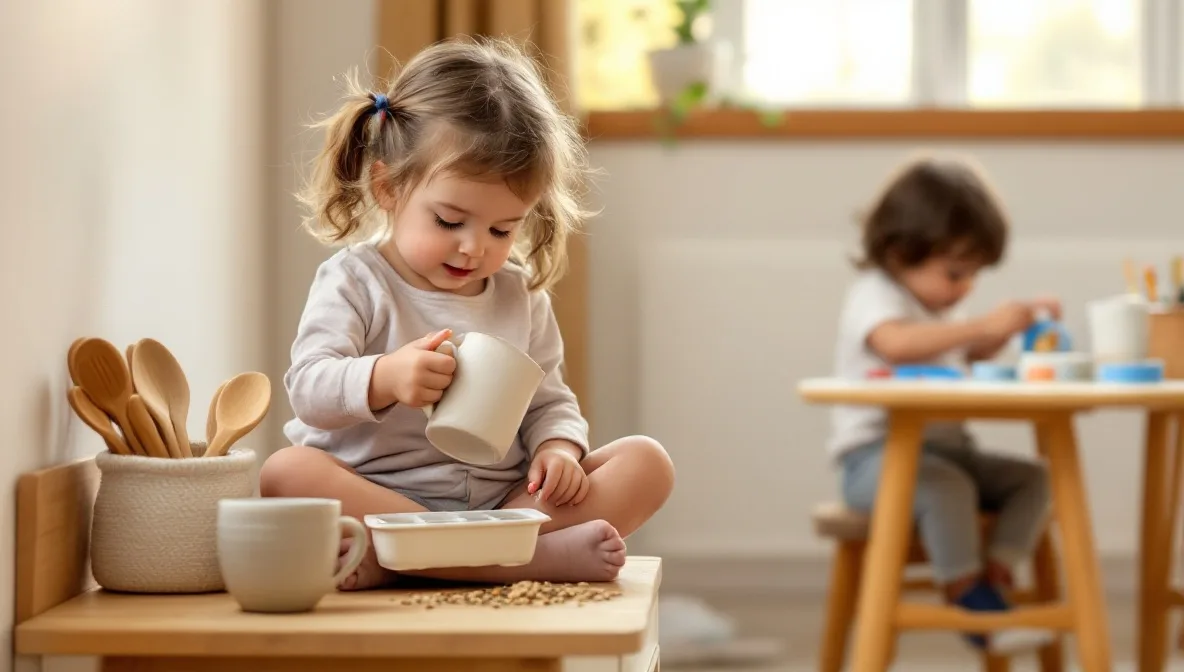
Your 12-month-old needs a child-height shelf or low basket where they can reach and choose activities without asking for help. This could be a cardboard box, a low bookshelf, or even a cloth on the floor with activities arranged in small baskets or trays. The key is accessibility: if your child can't reach it independently, they can't practice autonomy.
Observation Over Direction
Instead of telling your child how to use an activity, watch and wait. If they put a wooden spoon in a bowl and bang it, that's perfect—they're exploring cause and effect. Resist the urge to show them the "correct" way. This is how intrinsic motivation develops.
Real, Not Pretend
At 12 months, avoid plastic play food or toy versions of adult tools. Your child learns more from a real wooden spoon and real (unbreakable) bowls than from bright plastic imitations. This authenticity signals to their brain that they are doing real work, not playing.
Budget-Friendly Montessori Activities You Can Start Today
Sensory Bins with Kitchen Staples
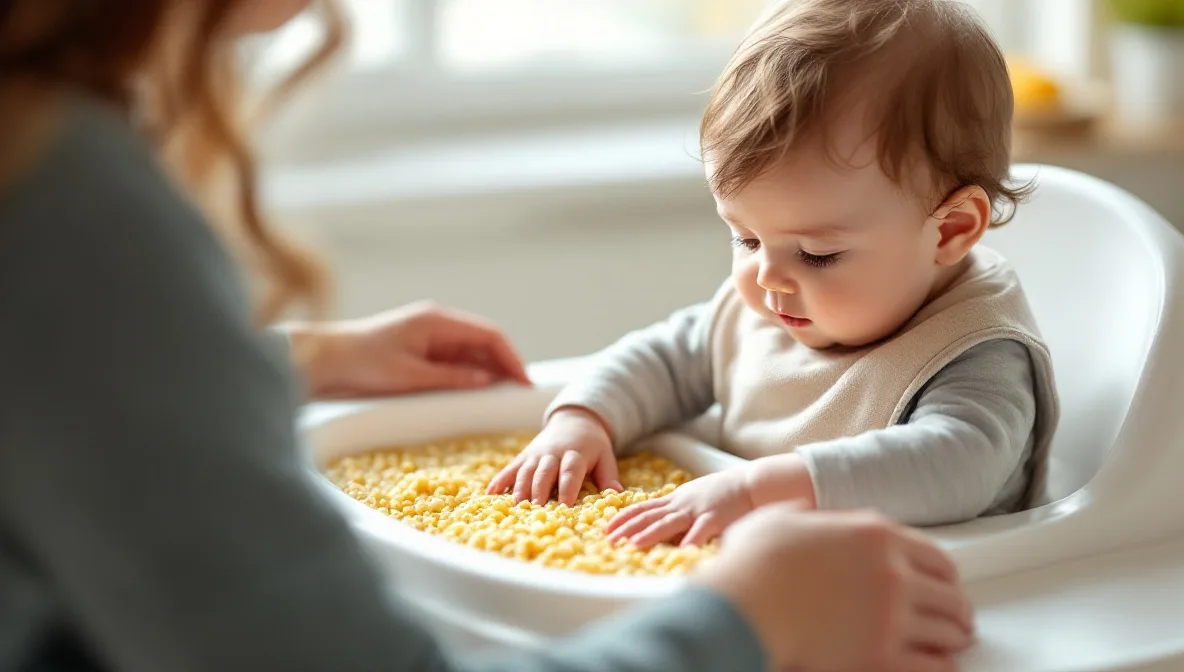
Fill a shallow, low basket or bin with one safe item at a time: dried pasta shapes, wooden beads, smooth stones, or dried beans. Your child will pour, grasp, transfer between containers, and develop fine motor control. Rotate the contents every 1–2 weeks to sustain interest. Keep a small tray nearby with a scoop (a wooden spoon works) and a second container for pouring practice.
Water and Pouring Practice
Fill a shallow tray with a small jug of water and two cups. Your 12-month-old will spend 10–15 minutes pouring water back and forth, building wrist strength and hand coordination. Always supervise this activity, but don't hover—sit nearby and observe. Use a small towel under the tray to contain spills.
Treasure Baskets of Household Items
Gather 5–7 safe, interesting items from around your home: a wooden spatula, a metal measuring cup, a cloth napkin, a plastic brush, a wooden clothespin, a smooth rock. Place them in a low basket. Your child will pick each item up, examine it, mouth it, and pass it back. This mimics the discovery phase of learning and requires no preparation on your part beyond safety-checking the items.
Object Permanence Games
Hide a toy or object under a blanket or cloth in front of your child and let them find it. This simple game—free and 2 minutes long—supports cognitive development. You can also fill a shoebox with a hole cut in the top; your child will enjoy dropping items through the hole and shaking the box to hear them move inside.
Practical Life: Sweeping and Wiping
Scatter a few small pieces of food or paper on your kitchen floor. Give your 12-month-old a small child-sized broom or a soft-bristled hand brush and dustpan. They will sweep (however clumsily) and feel like they're doing real work alongside you. This builds confidence and participation in family life. Similarly, give them a small cloth and a bowl of water to wipe a low table or chair.
Sound and Musical Exploration
Metal pots, wooden spoons, and plastic containers become musical instruments. No tuning required—your child is exploring sound, cause and effect, and motor control. Provide 2–3 safe items and let them bang away for as long as interest holds.
Setting Up Your Low Shelf (The Foundation)
A low shelf is the centerpiece of a Montessori home for a 12-month-old. It doesn't have to be fancy or store-bought; a sturdy cardboard box turned sideways, a plastic crate, or a wooden shelf from a thrift store works perfectly. Here's how to arrange it:
- Keep 4–6 activities visible on the shelf at any time, each in its own small basket or tray
- Change activities every 1–2 weeks based on your child's interest and skill level
- Group related items: all water-pouring supplies together, all sensory materials in one basket
- Keep the shelf uncluttered—every item should have a home and purpose
- Place the most engaging activity at eye level; place the easiest activities at the top for quick success
For inspiration on creating a budget-friendly Montessori setup, parents in the Montessori community on Reddit share real examples of low-cost environments, and detailed activity guides for this age range are freely available online.
What NOT to Buy: Save Your Money
Many commercial Montessori products are designed to look appealing to parents, not to improve learning for toddlers. Before spending money, ask yourself: Does my child already have access to something similar at home? The honest answer is usually yes.
| Expensive Item | Free or Cheap Alternative | Why It Works Just as Well |
|---|---|---|
| Fancy shape-sorting toy ($25–$50) | Shoebox with holes, items to post | Same concept, zero cost, more durable |
| Wooden sensory balls ($30+) | Plastic containers, safe balls you own | Texture and grasping are the goal, not brand |
| Montessori-branded pouring set ($40+) | Measuring cups, pitchers, bowls from kitchen | Identical motor-skill outcome, real-life relevance |
| Subscription activity kits ($15–$30/month) | Rotating your own household items | Novelty comes from rotation, not purchase price |
| Toy kitchen ($100+) | Child-height step stool + your real kitchen | Learning from real life is more motivating |
Safety First: Checks for Budget Activities
The only area where you cannot cut corners is safety. Before your 12-month-old touches any household item, ensure it is free from sharp edges, small parts that could be choking hazards, and toxic materials. Dried beans, pasta, and small beads should only be used under direct supervision; put them away immediately after play.
Check for splinters on wooden items, test the stability of any shelf or basket your child might pull up on, and remove any items with loose glitter, paint, or varnish. If you have any doubt about whether something is safe, don't include it—your instinct is your best guide.
Frequently Asked Questions
How often should I change the activities on my child's shelf?
Rotate activities every 1–2 weeks, or sooner if your child loses interest. Watch for signs of mastery—if they're completing an activity with ease and not spending much time on it—and swap it out for something new. This keeps the environment fresh without requiring you to buy anything.
Can I use plastic toys if that's all I have?
Yes. While Montessori emphasizes natural materials, a plastic container and wooden spoon will teach the same fine motor skills as a designer sensory toy. The principle matters more than the material—your child learns through exploration and repetition, regardless of whether the spoon cost $2 or $20.
What if my 12-month-old ignores the activities I set up?
That's completely normal at this age. Offer an activity once and step back. If they don't engage after a few minutes, remove it without comment and try again in a day or two. Every child develops at their own pace, and forcing engagement works against the Montessori philosophy. Follow your child's lead.
Do I need to buy a special Montessori shelf, or will any low shelf work?
Any sturdy, child-accessible shelf works perfectly. A cardboard storage box, a plastic crate, or a wooden unit from a secondhand store will serve your child just as well as a $200 Montessori-branded shelf. What matters is that your child can reach the activities safely and independently.
Is Montessori on a budget really as effective as expensive programs?
Absolutely. Montessori research and parenting resources consistently show that the framework—prepared environment, observation, real materials, and child-led learning—is what drives development, not the price tag. Many experienced Montessori educators and parents operate on minimal budgets and achieve excellent results.
The truth is, your 12-month-old doesn't care how much you spent on their activities. They care about being trusted to explore, having choices, and working with real materials that feel purposeful. By setting up a simple, thoughtfully arranged space with items you already own, you're giving them exactly what they need to thrive. Start with one low shelf, a few safe household items, and your patient observation—that's everything a Montessori approach requires, and it costs almost nothing.

Comments 0
Please Sign in to leave a comment.
No comments yet. Be the first to share your thoughts!