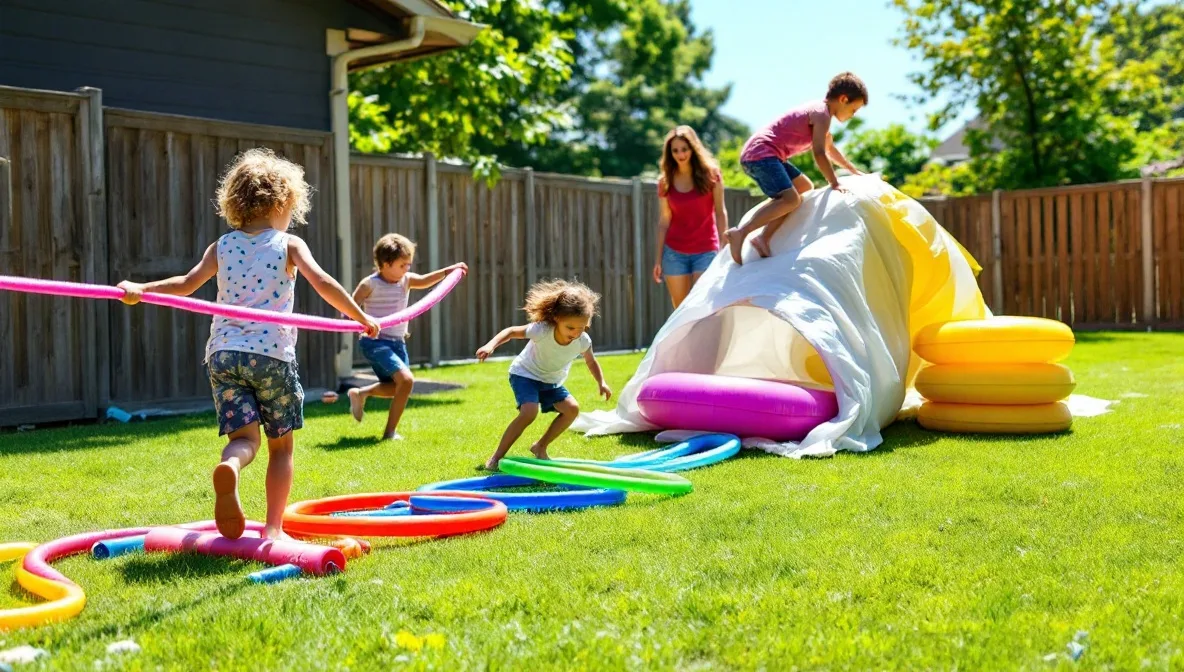
How to make a backyard obstacle course for kids doesn't require fancy equipment or a degree in engineering—just some creativity, household items, and a few dollar-store finds. In the next 30 minutes, you'll have a course that keeps children entertained for hours while building the balance, strength, and confidence that matter most during their active years. This guide walks you through proven DIY builds, safety tips, and a seasonal challenge system to rotate obstacles weekly all summer long.
Key Takeaways
- Build 6–8 obstacle stations using items you already own: pool noodles, hula hoops, PVC pipe, cones, and rope.
- Dollar-store and budget-friendly materials cost under $50 for a full course that works for ages 3–12.
- Rotating obstacles weekly keeps the challenge fresh and develops gross motor skills, balance, and perseverance.
- A simple badge or checklist system gamifies the experience and motivates kids to try new stations.
- Toddlers (ages 2–4) need modified, low-height versions; school-age kids thrive on timed challenges and variety.
Why Backyard Obstacle Courses Build Real Skills
An obstacle course isn't just playtime—it's deliberate physical development. Gross motor skills like climbing, jumping, balancing, and crawling strengthen large muscle groups and improve coordination. According to child development research, kids who regularly navigate varied terrain and obstacles show better spatial awareness, body control, and confidence in unfamiliar physical situations.
When children repeat challenging movements, they also develop perseverance and courage. They learn that falling doesn't mean failure; it means the next attempt matters. A simple backyard obstacle course for kids builds these qualities naturally, without pressure or competition—just the joy of mastering something hard.
Materials You Already Have (Plus a Dollar-Store Run)
You don't need specialized equipment. Here's what works:
| Obstacle Type | Household Items | Dollar-Store Alternatives |
|---|---|---|
| Balance beam | Rope on ground, 2×4 board, pool noodle | Foam pool noodle ($1–2), painter's tape |
| Tunnel/crawl | Blanket over chairs, PVC hoops | Hula hoops ($2–3), plastic sheeting |
| Jumps | Pool noodles, stacked cushions, rope | Foam cones ($1–2), pool noodles |
| Weaving/slalom | Garden stakes, cones, pool noodles | Plastic cones ($3–5), foam noodles |
| Stepping stones | Pillows, paper plates, chalk circles | Foam stepping pads ($4–6 per set) |
| Web obstacle | String, rope, clothesline | Yarn ($1–2), low-cost rope |
Total budget: $30–50 for a full course. Many families already own 60% of these items; a single dollar-store trip rounds out the rest.
Building 6 Essential Obstacle Stations
1. Balance Beam Walk
Lay a pool noodle on the ground in a straight line, or tape a chalk line across the grass. Challenge kids to walk heel-to-toe without stepping off. For toddlers (ages 2–4), use a wider, lower line; school-age kids (5+) can walk it backward, hop along it, or close their eyes for 3 steps. This develops balance and proprioception—their sense of where their body is in space.
2. Slalom Weave (Cone Zigzag)
Place 5–6 plastic cones or garden stakes in a zigzag line 18 inches apart. Kids run or skip through, weaving left and right. Time them: "Can you beat 12 seconds?" Slalom courses teach directional control and agility while staying fun. Use pool noodles stood upright and secured with tape if cones aren't available.
3. Army Crawl Tunnel
Drape a blanket or sheet over two chairs, leaving 2–3 feet of clearance. Kids crawl underneath on hands and knees (or belly-down for a true army crawl). This low obstacle builds shoulder strength and coordination. For toddlers, raise the blanket higher; for older kids, make it a timed challenge or add a "cargo" (stuffed animal) they must carry through.
4. Hula Hoop Hop Station
Lay 6–8 hula hoops in a row on the ground. Kids hop through each one on both feet, then single-leg hop, then lateral hops. Add variation weekly: hop backward, skip between hoops, or jump on every other hoop. Hula hoops teach rhythm, coordination, and lower-body power.
5. Spider Web Tunnel (String Web)
Weave yarn or rope between two stakes or fence posts in a loose web pattern (roughly 1–2 feet apart). Kids duck, crawl, and step through without touching the yarn. This engages problem-solving, spatial awareness, and careful movement—great for building patience and focus alongside balance.
6. Stepping Stone Leap
Arrange 8–10 foam pads, pillows, or paper plates in a path across the grass. Kids jump or step from one to the next without touching the ground. Space them 18–24 inches apart for ages 5+; closer for toddlers. This builds explosive power and focus.
Easy Obstacle Course Ideas for Toddlers and Mixed Ages
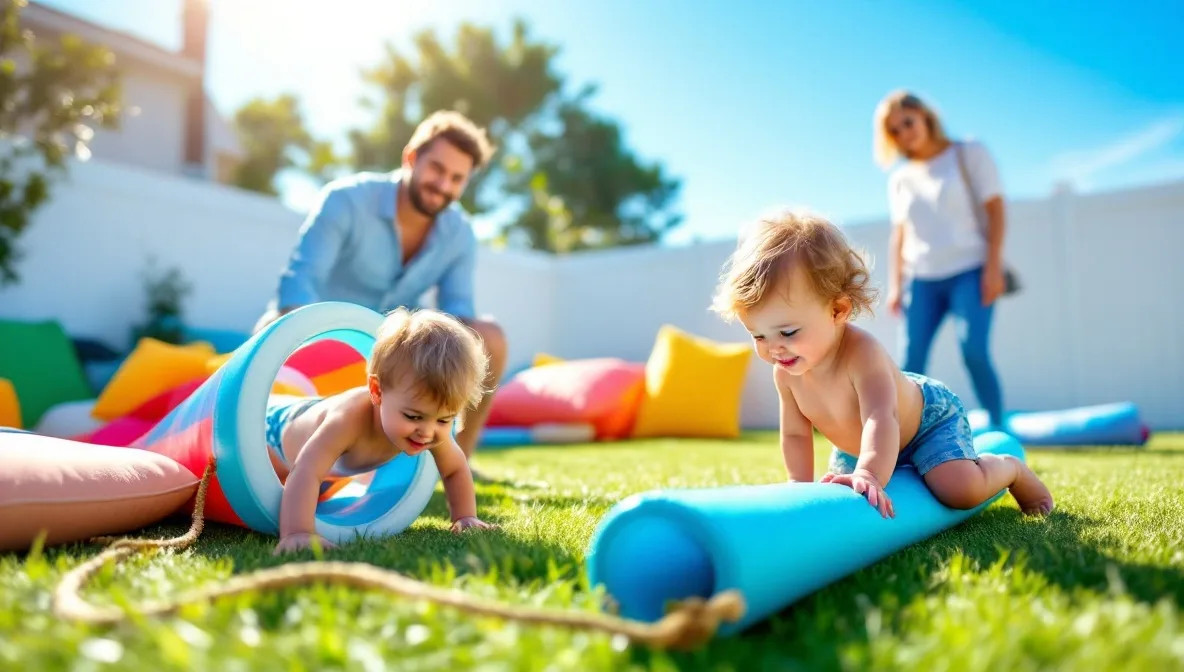
If your group includes toddlers (ages 2–4) alongside school-age kids, modify heights and distances, and always supervise closely. Lower tunnels to waist height, space stepping stones closer, and skip the spider web. Toddlers develop gross motor skills on a slower timeline—they're still perfecting their balance and coordination. Let them repeat stations multiple times; success breeds confidence.
For mixed ages, run separate timing rounds rather than competitive races. Toddlers finish their course at their pace while older siblings time their own runs. Everyone wins by completing the course.
The Summer Challenge System: Rotate Weekly for Fresh Fun
Here's the unique angle that keeps backyards buzzing all summer: rotate obstacles weekly, and award simple "challenge badges" for completion.
- Week 1 (June): Build stations 1–3 (balance, slalom, tunnel). Kids complete each station and earn a "Balance Master" badge.
- Week 2 (mid-June): Swap the slalom for a double-jump hurdle. Replace the tunnel with a hula hoop hop. Kids earn a "Hopper" badge.
- Week 3 (late June): Add the spider web, stepping stones, and a new "frontal crawl" station (kids crawl forward on their front, army-style, through chalk lines). Earn a "Web Walker" badge.
- Week 4 (July): Combine all favorites into a mega-course. Time the full circuit and aim for a personal best. Award a "Summer Champion" badge.
- Week 5–8: Repeat with new twists—backward routes, eyes-closed sections, or obstacle races with friends.
Print simple badges from home or cut them from cardboard. Kids tape them to a "summer wall" in their room. This gamification keeps motivation high without pressure—the goal is mastery and fun, not competition.
Setup Tips and Safety Essentials
Before kids run the first course, check these points:
- Clear the space: Remove rocks, sticks, and sprinkler heads. Soft grass is ideal; concrete requires padding or is best avoided.
- Secure all equipment: Tape pool noodles down, stake cones firmly, ensure blankets won't slip on chairs.
- Supervise young kids closely: Ages 2–5 should have a parent or older sibling watching from a few feet away.
- No pressure to go fast: Let kids set their own pace. A child hesitating at a jump isn't failing—they're being smart.
- Hydration and shade: Keep water and a shaded rest spot nearby. Obstacle courses are intense; heat and dehydration happen quickly.
- Test it yourself: Walk through your own course before kids try it. You'll spot hazards they might miss.
For further inspiration and detailed builds, Hands On As We Grow offers a library of obstacle course designs that adapt to different ages and materials.
Frequently Asked Questions
What are some easy DIY obstacles for a backyard kids obstacle course?
The simplest are balance beam walks (pool noodle on ground), hula hoop hops, slalom weaves using cones, blanket tunnels, stepping stone jumps, and spider web yarn obstacles. All use items you own or can buy for a dollar or two. These six stations create a full, varied course that builds balance, coordination, and strength.
How do you make a cheap obstacle course for kids using dollar store items?
Buy pool noodles ($1–2), hula hoops ($2–3), plastic cones ($3–5 per set), foam stepping pads, yarn, and painter's tape. Total: $30–50. Combine with household rope, blankets, and chairs to fill gaps. This budget covers an obstacle course for kids with household items that rivals courses costing three times as much.
What gross motor skills does a backyard obstacle course help develop?
Obstacle courses build balance, coordination, strength, body awareness (proprioception), agility, and power. Kids also develop confidence, persistence, and problem-solving—they learn to adjust their approach when a station feels hard. These gross motor skills form the foundation for sports, play, and physical confidence throughout childhood.
Can toddlers do an obstacle course and what obstacles are safe for them?
Yes, with modifications. Toddlers (ages 2–4) thrive on simple, low-height stations: wide balance lines, low tunnels (waist-height or higher), short stepping stone jumps, and hula hoop steps. Skip narrow webs and tall hurdles. Supervise constantly, expect slow, careful movement, and celebrate every attempt. Success at this age builds confidence for school-age challenges.
How do you set up a slalom or spider web obstacle for kids?
For slalom: place 5–6 cones or stakes in a zigzag line 18 inches apart. Kids run or skip through, weaving left-right-left. For spider web: weave yarn or rope between two stakes or fence posts 1–2 feet apart in a loose, overlapping pattern. Kids duck, step, and crawl through gaps without touching the yarn. Both teach agility and directional awareness.
Bring It Together This Summer
Building a DIY backyard obstacle course for kids is one of the easiest, cheapest ways to fill summer with active, joyful learning. You'll spend an hour setting up, thirty dollars on materials, and gain weeks of entertainment that literally builds your child's strength, balance, and courage. Start with three stations this week, rotate in new ones as summer progresses, and watch your kids return again and again—not because you made them, but because they chose to master something challenging. That's the real victory.

Comments 0
Please Sign in to leave a comment.
No comments yet. Be the first to share your thoughts!