
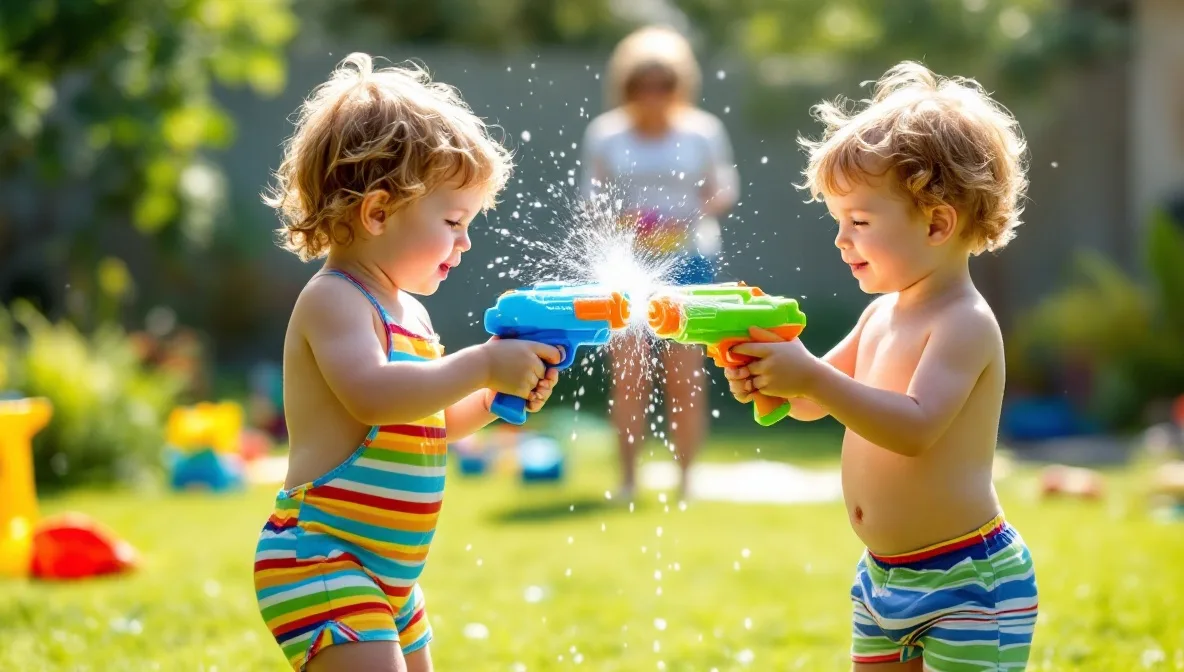
Are water guns safe for kids under 5? The short answer is: it depends on the toy's design, your child's maturity level, and how closely you supervise. Water guns marketed for toddlers and preschoolers can be safe, enjoyable outdoor toys—but conventional water pistols and larger blasters pose real choking, eye injury, and aspiration risks for this age group. This guide walks you through the hazards, age-appropriate options, and practical safety steps so your child can enjoy water play without preventable harm.
Key Takeaways
- Children under 3 should avoid water guns entirely; kids 3–5 need small, simple models with soft, rounded parts and no small detachable pieces.
- The biggest risks are choking on trigger mechanisms or nozzles, water aspiration (inhaling water), and eye/face injuries from pressurized jets.
- Always supervise water play, teach your child not to aim at faces, and choose toys that meet ASTM F963 safety standards.
- Soft-spray guns and water wands are safer alternatives to pistol-shaped blasters for young children.
- Even safe toys require proper storage and regular inspection for cracks or broken parts.
Why Age Matters: Developmental Risk Factors
Children under 5 lack the physical coordination, impulse control, and oral-motor awareness that make water gun play genuinely safe. A 2-year-old's natural reflex is to put objects in her mouth—and trigger mechanisms, nozzles, and caps on conventional water guns are choking hazards that fit entirely in a toddler's mouth. A 4-year-old may understand "don't spray faces," but may forget in an instant of excitement or retaliation.
Additionally, young children don't yet grasp the risk of water aspiration (inhaling water into the airway). A forceful spray to the face can startle a child, cause them to gasp and inhale water, or trigger aspiration into the lungs—a medical emergency that requires immediate attention. According to pediatric safety research, drowning and near-drowning incidents in children under 5 are preventable with proper supervision and age-matched equipment choices.
Main Safety Risks for Water Guns and Young Children
Choking Hazards
The most common safety concern is that small, detachable parts—trigger guards, nozzle caps, and internal seals—can detach or be deliberately removed by curious hands. The U.S. Consumer Product Safety Commission (CPSC) mandates that toys for children under 8 must not have parts smaller than 1.25 inches in diameter; yet many water guns fail this standard. Always inspect any water gun before giving it to a child under 5, and choose models explicitly labeled for ages 3+ or older if the package shows no small, loose components.
Eye and Face Injuries
High-pressure water jets can cause corneal abrasion, subconjunctival hemorrhage (bleeding under the eye), and blunt-force trauma to delicate facial structures. A child's eye socket and orbital bones are still developing; even a "soft" spray can cause injury if aimed directly at the face. Injuries may not appear immediately, so a child who's been sprayed in the eye should be evaluated by a pediatrician or eye specialist.
Water Aspiration and Respiratory Risk
When a water gun sprays forcefully into a child's mouth or nose, water can be inhaled into the trachea and lungs instead of swallowed. Signs of aspiration include coughing, wheezing, difficulty breathing, or fever hours or days later (as fluid can lead to pneumonia). This is rare but serious and expert toy safety reviews emphasize the importance of face-safe water play.
Water Gun Safety Standards and What to Look For
Not all water toys are created equal. Here's what legitimate safety certifications mean for your purchase:
| Standard or Certification | What It Means | Relevant for Kids Under 5? |
|---|---|---|
| ASTM F963-22 (Consumer Product Safety Standard) | Toy must not have parts smaller than 1.25" that fit in a choking tube; no sharp edges; non-toxic materials. | Yes—essential baseline. |
| Age Label 3+ | Manufacturer claims the toy is safe for ages 3 and up if used as intended. | Yes, but verify no small parts yourself. |
| CE Mark (EU) or Health Canada Approval | Third-party safety testing in those regions. | Yes—look for these if buying internationally. |
| Pressure Rating (psi) | Lower is safer; under 50 psi for young children is preferable. | Yes—ask the retailer or check the product manual. |
When shopping, look for water guns with soft, silicone triggers; rounded nozzles; and sealed, non-removable caps. Avoid anything that looks or functions like a real firearm, as this can blur a child's understanding of weapons and safety.
Age-Appropriate Water Toy Options
Ages 0–2: Skip Water Guns Entirely
Children under 3 should not play with water guns. Instead, offer water play mats, splash pads, or bath toys where water splashes gently and there are no pressurized jets or choking hazards. Supervised tub or pool play with a parent is the safest water experience at this age.
Ages 3–4: Small, Soft-Spray Options Only
If you want to introduce water play tools, choose models designed specifically for toddlers:
- Water wands or rain sticks—simple tubes that spray gentle water arcs; no trigger mechanism.
- Soft silicone spray bottles—repurposed small spray bottles with extra-soft nozzles; low pressure.
- Labeled 3+ water guns with oversized triggers and soft nozzles—for example, some mainstream brands offer toddler-sized blasters in bright colors, with soft foam construction.
- Water balloon fillers or buckets—a gentler way to splash; requires coordination but reduces pressurized jet risk.
Ages 5 and Up: Graduated Options
Once a child reaches 5, they can handle larger, more conventional water guns—but supervision and clear rules (never aim at faces, no spraying indoors) remain essential. Comprehensive guides to outdoor water guns for kids emphasize that supervision and rules are the real safety layer, regardless of toy design.
Supervision and Safety Rules: The Parent's Role
Even the safest water gun requires active, attentive supervision. Here's a practical checklist:
- Supervise from arm's length. Never leave a child under 5 playing with a water gun unsupervised, even for a few minutes. Keep an eye on water-related games and intervene if they escalate or if a child is sprayed in the face.
- Establish and reinforce one simple rule: no spraying faces. Say it clearly, explain why (water can go in their eyes and ears and make them sick), and enforce it consistently. Model the behavior yourself—don't spray a child's face, even "playfully."
- Never allow water guns indoors or near stairs or hard surfaces. A slip on wet flooring can cause a head injury; water on stairs is a serious fall risk. Outdoor play only, on grass or concrete.
- Teach safe handling. Show your child how to carry the gun with the nozzle pointing down or away, and never to point it at another person unless that person has agreed to play.
- Rotate play sessions. Limit water gun play to 20–30 minutes; then offer a different activity. This prevents exhaustion, loss of focus, and accidents.
- Check weather and sun safety. Play in early morning or late afternoon to avoid peak sun. Apply sunscreen before water play, as water reflects UV rays and can increase burn risk.
Storage, Maintenance, and When to Retire a Water Gun
A safe toy can become unsafe if it breaks or is stored improperly. Follow these steps:
- Drain completely after each use. Standing water inside can harbor bacteria and mold, which your child may ingest if they put the nozzle in their mouth.
- Store in a cool, dry place out of direct sunlight to prevent material degradation and mold growth.
- Inspect before every use. Look for cracks, loose parts, discoloration, or odors. If a seam has split or a nozzle is cracked, discard the toy.
- Never repair a broken water gun. Duct tape or epoxy repairs can create new choking hazards or hide damage that compromises the toy's safety.
- Replace toys after 1–2 seasons of regular use, especially if they show wear or if your child has outgrown the size and design.
Many manufacturers recommend retiring water guns after 18–24 months of outdoor use, as UV exposure and repeated filling/draining weaken seals and materials.
Frequently Asked Questions
At what age can a child safely use a regular water gun?
Most pediatric and toy safety experts recommend waiting until age 5 or older before introducing conventional water guns. Children ages 3–4 can use small, soft-spray models designed for toddlers, but only under close supervision. Family safety discussions highlight why standard water guns pose risks for young children.
Can water guns cause drowning or water intoxication?
While drowning from a water gun alone is extremely rare, aspiration (water entering the lungs) is a real concern. Water intoxication (hyponatremia) from recreational play is very uncommon but theoretically possible if a child swallows large amounts of fresh water over a short time. Supervision and teaching children not to open their mouths during water play mitigate these risks.
Is it safe to spray a child's face with a water gun on a hot day?
No. Never intentionally spray a child's face with a water gun, regardless of the temperature. Even soft sprays can cause water to enter the eyes, ears, or mouth unexpectedly. If your child wants to cool down, use a sprinkler, splash pad, or pool where water falls gently and broadly, not in a concentrated jet.
What should I do if my child has been sprayed in the eye or inhaled water?
If water enters the eye, rinse gently with clean water or saline solution and observe for redness, tearing, or light sensitivity. If symptoms develop or persist, contact your pediatrician or visit an urgent care. If you suspect water aspiration (coughing, wheezing, difficulty breathing, or fever), seek medical attention immediately, as aspiration can lead to pneumonia.
Are water balloons safer than water guns for kids under 5?
Water balloons are safer in some ways (no pressurized jet, softer impact) but pose a choking risk if they pop and the child picks up a piece of latex. Supervise balloon play closely, and use only water balloons specifically labeled for young children. Alternatives like water bombs (made with tissue paper and water) offer similar fun with less risk.
Water guns can be part of a fun, active outdoor summer for kids under 5—but only when you choose age-appropriate designs, set clear safety rules, supervise closely, and stay alert to the real risks: choking, eye injury, and water aspiration. Start your younger children with soft-spray wands or splash pads, save traditional water guns for age 5 and up, and remember that your calm, attentive presence is the most important safety tool. When in doubt, chat with your pediatrician about whether a specific toy suits your child's age and development.


Comments 0
Please Sign in to leave a comment.
No comments yet. Be the first to share your thoughts!