
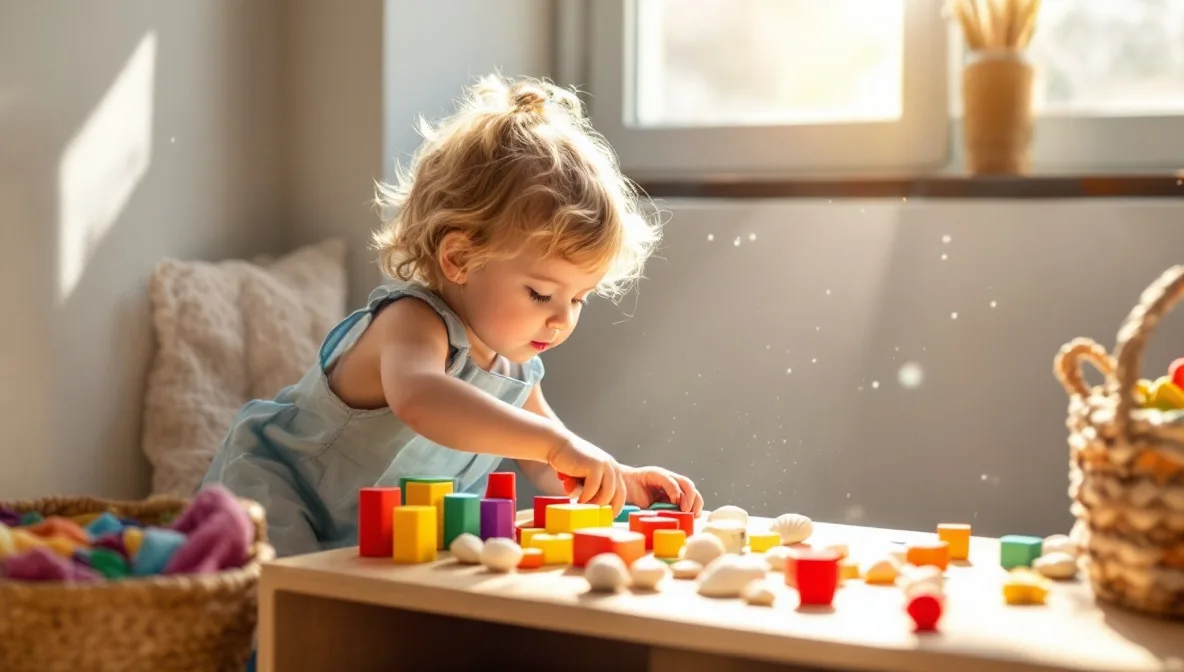
How to create a Montessori environment at home on budget is one of the most common questions I hear from parents wanting to nurture independence and concentration in their children. The good news: you don't need expensive Montessori materials or a teacher certification to build a purposeful, child-led space. With thoughtful planning and inexpensive materials you likely already have—or can source affordably—you can set up a learning environment that respects your child's natural development and fits your family's finances.
Key Takeaways
- Montessori at home requires low shelves, open-ended toys, and child-sized tools—not branded materials or expensive kits.
- Repurpose household items like wooden spoons, glass jars, and fabric scraps into developmentally appropriate learning activities.
- Organize by activity station (practical life, sensorial, academics) to encourage independence and focus.
- Start small with one area and expand gradually; a clutter-free, intentional space matters more than quantity.
- Safety and accessibility are non-negotiable; ensure shelves are stable, materials are non-toxic, and your child can reach everything independently.
Understand the Core Principles First
Before you buy anything, it helps to grasp what makes a space truly Montessori—and what doesn't. The Montessori method, developed by educator Dr. Maria Montessori, centers on child-led learning, concrete materials, and purposeful activity. A Montessori environment invites the child to choose work, complete it with minimal adult direction, and return it independently. This mindset costs nothing; expensive shelving units and branded puzzles do not.
The focus is on real-life skills and sensorial exploration, not screen time or passive entertainment. A child aged 2 to 6 learns by doing: pouring water, sorting objects by size, arranging flowers, folding fabric. These activities build concentration, fine motor control, and a sense of order. You can facilitate all of this with items from your kitchen, garden, and thrift stores—no subscription boxes or proprietary curriculum required.
Set Up Your Space: Low Shelves and Accessibility
The physical layout is the foundation. Children in a Montessori home need to access materials independently, which means shelves, baskets, and activity trays must be at their eye level and within arm's reach. This is non-negotiable.
Budget-Friendly Shelving Options
- Wooden crates or storage cubes (often £15–40 per unit) stacked horizontally to create low, open shelves. Stable, child-friendly, and easily expandable.
- Repurposed bookcases from charity shops or secondhand marketplaces. Remove doors if present; sand and seal if needed for safety.
- Low IKEA units like the Kallax or Expedit range (around £40–80). These are durable, stable, and designed to lie flat for young children.
- Wooden pallets (often free from builders or warehouses) sanded smooth and mounted securely to walls or placed flat for a rustic look.
Whichever you choose, ensure the shelf is stable and cannot tip forward. A child leaning on or climbing an unstable shelf is a genuine safety risk. Use wall brackets or anchors if recommending wall mounting, and test weight capacity carefully.
Stock Your Shelves with Affordable, Open-Ended Materials
Now for the items that go on your shelves. The secret to a budget-friendly Montessori environment is recognizing that many household items and repurposed materials work just as well as expensive kits. Here's how to fill your space affordably:
Practical Life Activities (Age 18 Months–5 Years)
Practical life teaches your child real-world skills. Use materials from your home:
- Wooden spoons, measuring cups, and small bowls for scooping and pouring activities (rice, pasta, lentils, sand).
- Old fabric scraps, soft cloths, and worn-out clothes for folding and sorting exercises.
- A low step stool or wooden platform so your child can reach the kitchen sink; this enables independent hand-washing and dish rinsing.
- Small watering cans or spray bottles (£2–5 from pound shops) for plant care and water play.
- A child-sized cleaning set: child-safe broom, dustpan, and cloth from budget retailers. Montessori children clean up their own spaces.
- Basket of clothespins and fabric scraps for a DIY hanging activity.
Sensorial Materials (Age 2–5 Years)
Sensorial exploration sharpens the senses and builds concentration. Most items cost nothing or pennies:
- Natural loose parts: stones, shells, twigs, pine cones, and acorns collected from parks or gardens.
- Colored glass jars or clear bottles filled with dried pasta, beans, or rice for sorting and matching.
- Wooden blocks in various shapes (or homemade from scrap wood) for stacking and spatial reasoning.
- Fabric swatches in different textures (cotton, silk, burlap, velvet) for tactile discrimination.
- A shallow tray with kinetic sand or play dough for molding and tactile play.
Academics: Language and Math (Age 3–6 Years)
Once your child shows interest, introduce foundational skills affordably:
- Sandpaper letters: DIY these by gluing coarse sandpaper onto cardboard cards in letter shapes (under £5 for supplies).
- Wooden beads and string for counting and threading (pound-shop beads work well).
- Number cards and counters made from cardstock and household objects (buttons, dried beans).
- Chalkboard or whiteboard with erasable markers for early writing practice (cheaper than workbooks).
Organization by Activity Station
A cluttered shelf overwhelms a child and invites chaos. Organize materials into clear activity stations, each presented on a low tray or in a basket. This visual clarity helps your child understand what's available and builds decision-making skills.
| Activity Station | Materials | Typical Age | Budget Setup Cost |
|---|---|---|---|
| Pouring & Scooping | Wooden spoon, small bowls, rice or pasta in container | 18 months–3 years | £0–5 |
| Folding & Care | Fabric scraps, small towel, basket | 2–4 years | £0–3 |
| Sensorial Exploration | Natural objects, shells, stones, textured fabrics | 2–5 years | £0–5 |
| Fine Motor (Threading) | Beads, string or shoelace, tray | 3–5 years | £2–6 |
| Language Introduction | Sandpaper letters, sound picture cards | 3–5 years | £3–8 |
Rotate activities every 4–6 weeks to maintain freshness and fit your child's evolving interests. A material that didn't engage your 2.5-year-old may captivate them at 3. Importantly, rotating materials keeps your shelves calm and prevents decision paralysis.
Source Materials Affordably
Stocking a Montessori home on a real budget requires smart sourcing. Here's where to find quality materials without breaking the bank:
- Charity and thrift shops: wooden puzzles, picture books, child-sized kitchen tools, baskets, and shelving units. Budget £1–3 per item.
- Secondhand online markets (Vinted, Facebook Marketplace, eBay): larger pieces like low shelves, step stools, and storage. Often available free or for a few pounds.
- Pound shops and budget retailers: spray bottles, small containers, baskets, wooden spoons, and basic craft supplies.
- Your garden and local environment: free natural loose parts—stones, shells, leaves, twigs, acorns. These are among the most valuable sensorial materials.
- Recycled household items: glass jars, wooden spoons, old fabric, cardboard, buttons, and egg cartons.
Avoid the trap of buying new "Montessori-branded" materials just because they have the label. A real Montessori environment prioritizes simple, open-ended materials over expensive kits. The goal is independence and discovery, not consumption.
Start Small and Build Gradually
The biggest mistake parents make is trying to do everything at once. Start with one activity station—perhaps practical life pouring or folding—and observe how your child engages. Add new areas only when the existing ones are well-integrated and your child is ready. A small, intentional shelf with five carefully chosen activities will serve your child far better than a large, cluttered space.
Your first month's budget might be £15–30 (mainly for a low shelf unit and basic sensorial items). Over the next three months, gradually add materials as you observe your child's emerging interests and as you source secondhand pieces. This paced approach is kinder to your wallet and gives your child time to deeply explore each material.
For more detailed guidance on setting up Montessori activities affordably, consider trusted parenting resources and real examples from families doing this successfully.
Frequently Asked Questions
Do I need to buy expensive Montessori materials to create a Montessori environment at home?
No. The Montessori method emphasizes child-led learning and purposeful activity, not branded products. Household items, natural materials, and thoughtfully organized spaces achieve the same developmental goals at a fraction of the cost. Expensive materials do not guarantee engagement or learning.
What age is best to start setting up a Montessori environment?
You can begin introducing simple practical-life activities (like pouring and wiping) as early as 18 months. Toddlers aged 2–3 benefit most from sensorial exploration and real-life tasks. By age 3–4, you can gradually introduce pre-academic materials like letters and numbers. There's no rigid timeline; follow your child's readiness and interests.
How much should I expect to spend on a budget Montessori home setup?
A basic setup with low shelving, practical-life materials, and sensorial items costs £30–80 initially. Over a full year, a thoughtfully built environment might run £80–150 if you source secondhand and repurpose household items. Compare this to expensive early-learning programs or toy subscriptions, and you'll see the real value.
Is a small apartment or corner of a room enough for a Montessori environment?
Absolutely. A Montessori environment thrives on calm and order, not size. A single low shelf in a quiet corner of a bedroom or living room works beautifully. Even a small space invites focus and independence. Quality and intentionality matter far more than square footage.
How do I know if my child is ready to move on to a new activity or material?
Watch for signs of mastery and boredom. If your child completes a task repeatedly without struggle and begins to ignore it, they're ready for something new. Conversely, if an activity is too difficult, set it aside for a few weeks and reintroduce it later. Your child's natural cues are your best guide—not age charts or curriculum timelines.
Creating a Montessori environment at home on budget is genuinely achievable and deeply rewarding. You're not investing in expensive systems; you're building a space where your child feels capable, respected, and free to learn at their own pace. Start with one shelf, fill it with materials you already have or find affordably, and watch your child's focus and independence flourish. The most powerful learning tool isn't a branded box—it's a parent who believes in their child's ability to discover the world.



Comments 0
Please Sign in to leave a comment.
No comments yet. Be the first to share your thoughts!