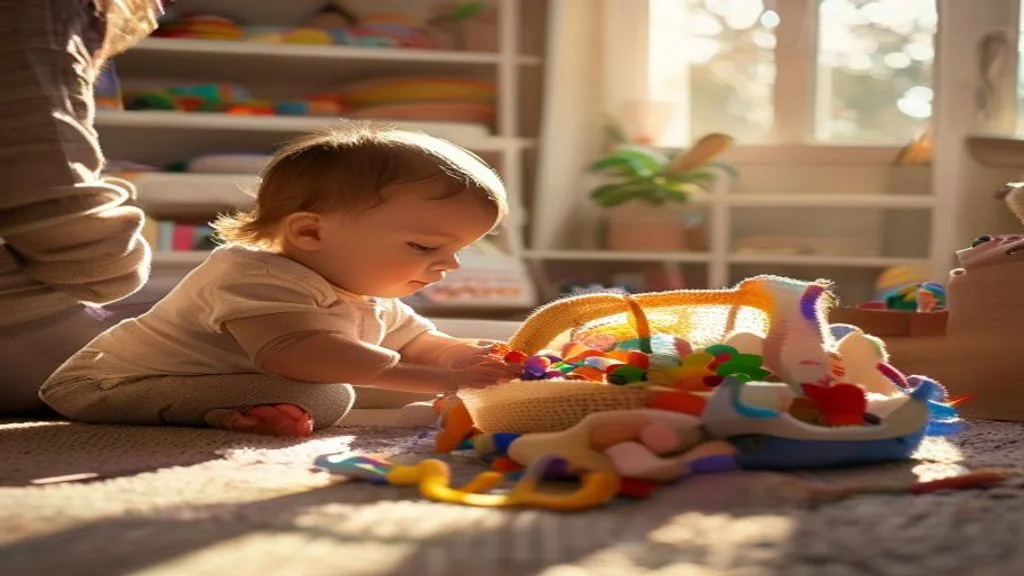
What age to start toddler busy bags? Most experts recommend introducing busy bags around 9 to 12 months, when your child develops the coordination and curiosity to engage with age-appropriate activities independently. Busy bags—portable containers filled with screen-free activities—build fine motor skills, encourage focused play, and save your sanity during travel, errands, or quiet time at home. This guide walks you through exactly what to include at each developmental stage, from 9 months through age 3, plus safety essentials and DIY ideas you can make today.
Key Takeaways
- Start busy bags at 9–12 months when pincer grasp develops; always supervise and check items for choking hazards
- Rotate activities monthly and refresh contents every 4–6 weeks to sustain independent play interest
- Include sensory, fine motor, and open-ended play items; avoid small detachable parts for children under 3
- DIY busy bags cost $5–15 per bag using household items like pasta, fabric scraps, and pipe cleaners
- Travel busy bags differ from home bags—prioritize compact, quiet activities for planes, cars, and waiting rooms
Why Busy Bags Matter at Every Age
Busy bags aren't just a parental lifesaver; they're a developmental tool that supports your toddler's growing independence and cognitive skills. Between 9 months and 3 years, children experience rapid growth in hand-eye coordination, problem-solving, and concentration span. Activities tucked into a busy bag—like threading beads, sorting by color, or manipulating textures—strengthen these emerging abilities.
Beyond development, busy bags create a predictable, contained play experience that helps toddlers focus for 10–20 minutes without screen time. For parents managing a restaurant visit, a flight, or a sibling's appointment, a well-stocked bag buys you genuine peace and models to your child that engaging activities exist everywhere.
Starting Busy Bags at 9–12 Months: Safety First
The 9-month mark is typically when babies develop the pincer grasp—the ability to pick up small objects between thumb and forefinger—and the curiosity to explore. However, choking hazard safety is non-negotiable. According to the U.S. Consumer Product Safety Commission, any object smaller than a toilet paper tube (roughly 1.25 inches in diameter) poses a risk for children under 3 years old.
Before you assemble your first busy bag, inspect every item for:
- Detachable parts (beads that pop off, buttons, small lids)
- Sharp edges, splinters, or broken plastic
- Strings or ribbons longer than 7 inches
- Anything covered in loose paint or coating
Always supervise your child during busy bag play, especially in the 9–18 month range. Busy bags are not a substitute for attentive parenting; they're a tool to support independent exploration while you're nearby.
Month-by-Month Busy Bag Contents: 9 Months to 3 Years
Here's a practical breakdown of what works at each stage, organized by developmental milestones:
9–11 Months: Sensory Exploration Bags
At this age, babies are mouthing everything, so soft, washable items dominate. Focus on textures and cause-and-effect.
- Silicone muffin liners in bright colors (crinkly, safe to mouth, easy to grasp)
- Fabric scraps in different textures—velvet, corduroy, cotton, fleece—sewn into a small pouch
- Wooden spoon or soft silicone spatula (safe chewing, good grip)
- Crinkly paper or cellophane inside a sealed, clear plastic pouch (supervise closely)
- Soft fabric books with high-contrast images
- Baby-safe shakers: plastic containers filled with dried pasta (sealed tightly with tape)
12–15 Months: Fine Motor & Shape Recognition
Around 12 months, toddlers begin dropping objects intentionally and showing interest in cause-and-effect. Shape sorting toys and stacking activities become engaging. Introduce small shape sorters designed specifically for this age (no loose pieces).
- Soft shape sorters or silicone shape-matching toys
- Stacking rings (confirm the ring diameter is larger than 1.25 inches)
- Board books featuring textures, tabs, or lift-flaps
- Plastic snap beads specifically marketed for 12+ months (verify no pieces smaller than 1.25 inches)
- Pipe cleaners in pastel colors (twisted into loops or spirals; supervise—not for mouthing)
- Reusable sticker books or window cling stickers (a perfect quiet activity)
18–24 Months: Problem-Solving & Independence
Your 18-month-old is developing language, independence, and the ability to follow simple instructions. Activities that involve matching, sorting, or removing and placing items shine here.
- Magnetic tiles or blocks (if no small pieces separate)
- Busy boards with latches, zippers, and buttons
- Color sorting games (buttons or blocks sorted into containers by color)
- Clothespins and a container to clip them to (excellent fine motor practice)
- Play dough in sealed containers with rolling tools (optional; supervise)
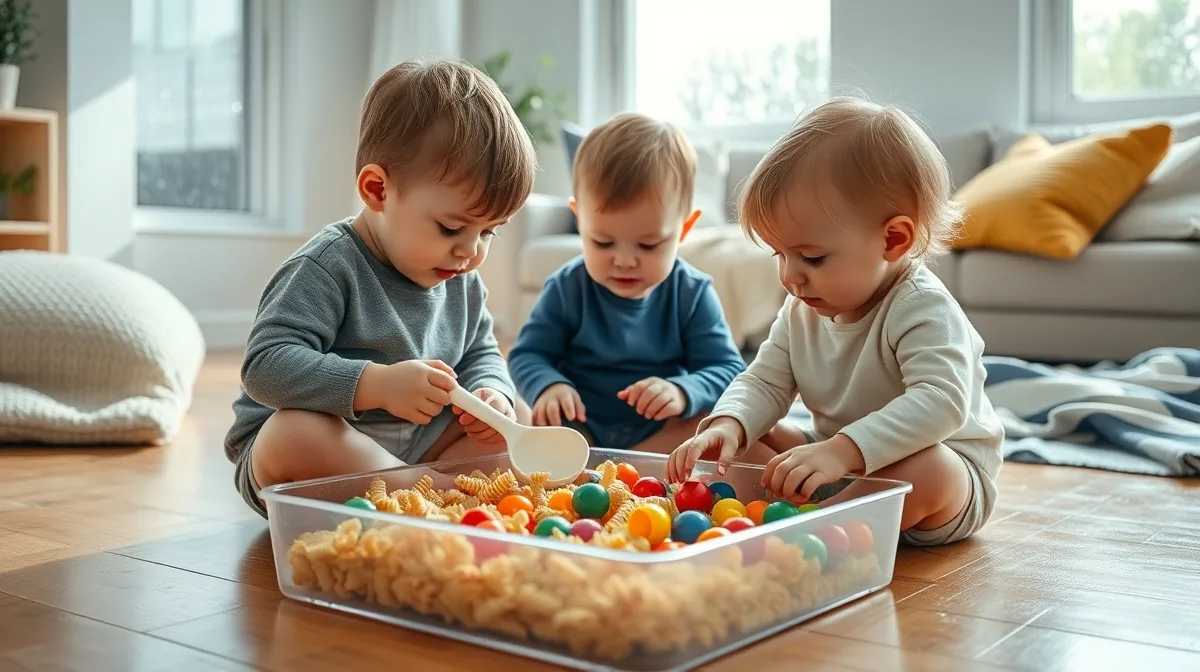
- Dry pasta or dried beans in a sensory bin with scoops and funnels (contained, supervised play)
- Reusable sticker packs featuring animals or vehicles
2–3 Years: Creative & Imaginative Play
Toddlers at this stage have longer attention spans (15–20 minutes) and enjoy pretend play, art, and more complex problem-solving. A busy bag for a 2-year-old might include:
- Small notepads and chunky crayons or colored pencils
- Play food and a small plate or basket for pretend cooking
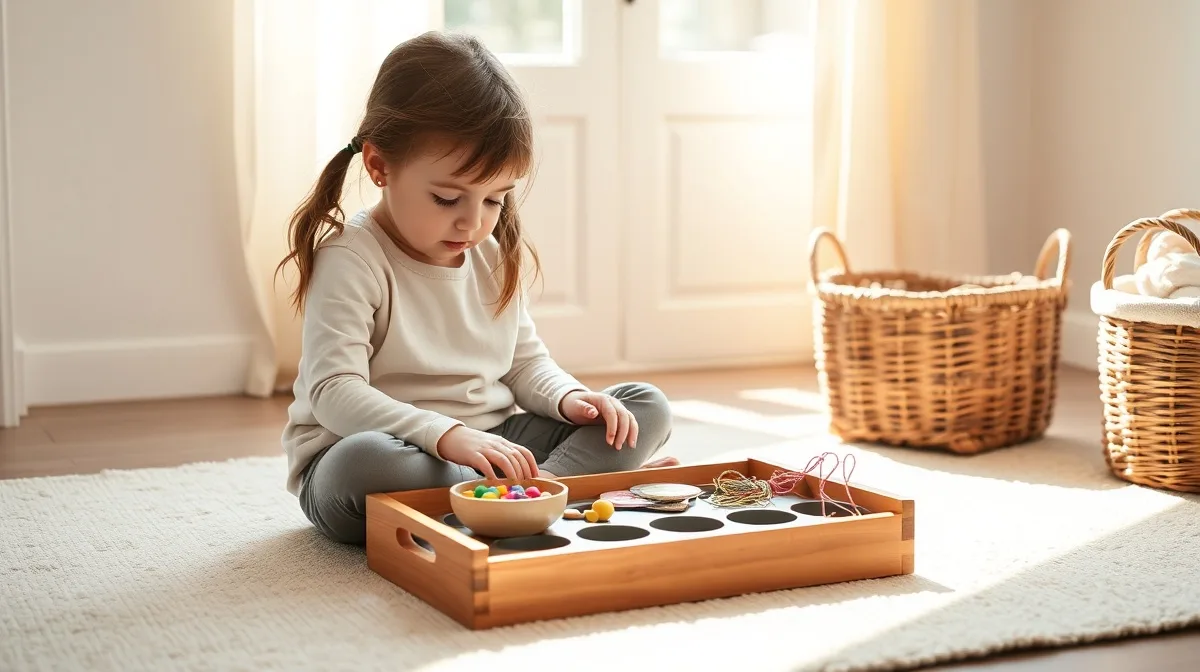
- Pipe cleaner sculptures and simple threading cards
- Puzzles with 4–8 large, chunky pieces
- Picture-matching games you make with printed photos
- Dry-erase books with reusable markers
- Quiet-time bags specifically for restaurants: small figurines, vehicles, or animals for narrative play
Travel Busy Bags vs. Home Busy Bags: What's Different
Travel busy bags have different constraints than at-home bags. Space is limited, activities must be quiet (no loud rattles on an airplane), and items need to stay contained if spilled.
| Criteria | Home Busy Bag | Travel/On-the-Go Busy Bag |
|---|---|---|
| Size | Medium drawstring bag or canvas pouch | Small ziplock bags or toiletry organizer |
| Mess potential | Can include loose items, sensory bins with dried pasta | Only sealed or contained items; no loose beads or beans |
| Sound level | Shakers, crinkly paper, musical toys OK | Quiet only—stickers, books, pipe cleaners, puzzles |
| Duration | 30+ minutes of independent play | 15–20 minutes; rotate items mid-trip |
| Ideal items | Sensory play, shape sorters, fine motor projects | Reusable stickers, notepads, cloth books, magnetic tiles |
For airplane toddler snacks or restaurant waits, pack activities in individual ziplock bags or pouches that you reveal one at a time to stretch novelty and interest. Window cling stickers, dry-erase boards, and reusable activity books are travel MVPs because they take almost no space and keep children engaged in confined settings.
DIY Busy Bag Ideas: Save Money & Personalize
You don't need to buy expensive busy bag kits. Homemade busy bags cost $5–15 per bag and let you customize contents to your child's interests and developmental stage. Here are realistic, tested ideas:
Budget-Friendly DIY Projects
- Sensory shaker jars: Fill small plastic bottles with dried rice, pasta, or pom-poms. Seal with super glue and tape. Cost: $1–2 per jar.
- Pipe cleaner sculptures: Offer bundled pipe cleaners in a small pouch. Toddlers twist, bend, and create shapes. Cost: $1 for a pack of 25.
- Fabric scrap sensory pouch: Sew or glue different fabric textures into a small drawstring bag. Cost: free–$2 (use scrap fabric).
- Clothespin color sorting: Paint or wrap clothespins in bright colors; provide a container to clip them onto. Cost: $1–3.
- Pasta threading: Paint dried pasta shapes with non-toxic paint; provide thick string or yarn for threading. Cost: $2–4.
- Homemade matching game: Print pictures (animals, vehicles), laminate or cover with clear packing tape, and create a matching memory game. Cost: free–$3.
Browse detailed DIY busy bag tutorials from child development experts for step-by-step visual guides. Community forums like Reddit's parenting communities share real-world busy bag contents that actually work.
Toy Rotation & Keeping Busy Bags Fresh
The novelty of a busy bag peaks after 2–3 weeks of regular use. Rotate items every 4–6 weeks to reignite interest without buying new toys constantly. Keep a storage bin with 2–3 "backup" busy bags that aren't in active rotation. When your child loses interest, swap one out.
This strategy also extends the life of each activity—a pipe cleaner craft your 18-month-old ignored in month two might captivate them at month four. Rotation is especially smart for busy bags you made yourself, since the effort-to-novelty ratio is high.
Frequently Asked Questions
What age is best to start giving babies busy bags?
The ideal age is 9–12 months, when your baby develops a pincer grasp and can safely manipulate larger objects. Always supervise and ensure all items are larger than 1.25 inches to prevent choking hazards.
Can 9 month olds play with busy bags safely?
Yes, if you carefully curate contents for texture and cause-and-effect exploration (silicone muffin liners, fabric scraps, wooden spoons) and supervise constantly. At 9 months, babies are still mouthing everything, so avoid small or hard items entirely.
What should I put in a busy bag for a 12 month old?
A 12-month-old busy bag thrives with soft shape sorters, stacking rings, board books, pipe cleaners, and reusable sticker books. Focus on activities that build fine motor skills and color recognition, avoiding any pieces smaller than 1.25 inches.
What are the best on-the-go busy bag activities for 2 year olds?
Travel bags for 2-year-olds should include quiet items: reusable sticker books, dry-erase boards with markers, magnetic tiles, cloth books, notepads with chunky crayons, and small puzzles with 4–8 pieces. Keep items in individual ziplock bags and reveal them gradually.
How do I make a DIY busy bag for a toddler on a budget?
Use household items: sealed pasta shakers ($1–2), pipe cleaners ($1), painted clothespins for sorting ($2–3), fabric scraps sewn into pouches, and homemade matching games printed and laminated. Most DIY bags cost under $5 and can be refreshed seasonally with items from craft stores or your recycling bin.
Starting your child with busy bags at 9–12 months sets the stage for independent, screen-free play that lasts well into the preschool years. The beauty of busy bags is that they grow with your toddler—simply refresh contents as developmental skills change. Whether you're heading to a doctor's office, a long car ride, or creating a quiet time ritual at home, a thoughtfully packed busy bag filled with safe, developmentally matched activities gives your toddler purposeful play and gives you the breathing room every parent deserves.

Comments 0
Please Sign in to leave a comment.
No comments yet. Be the first to share your thoughts!