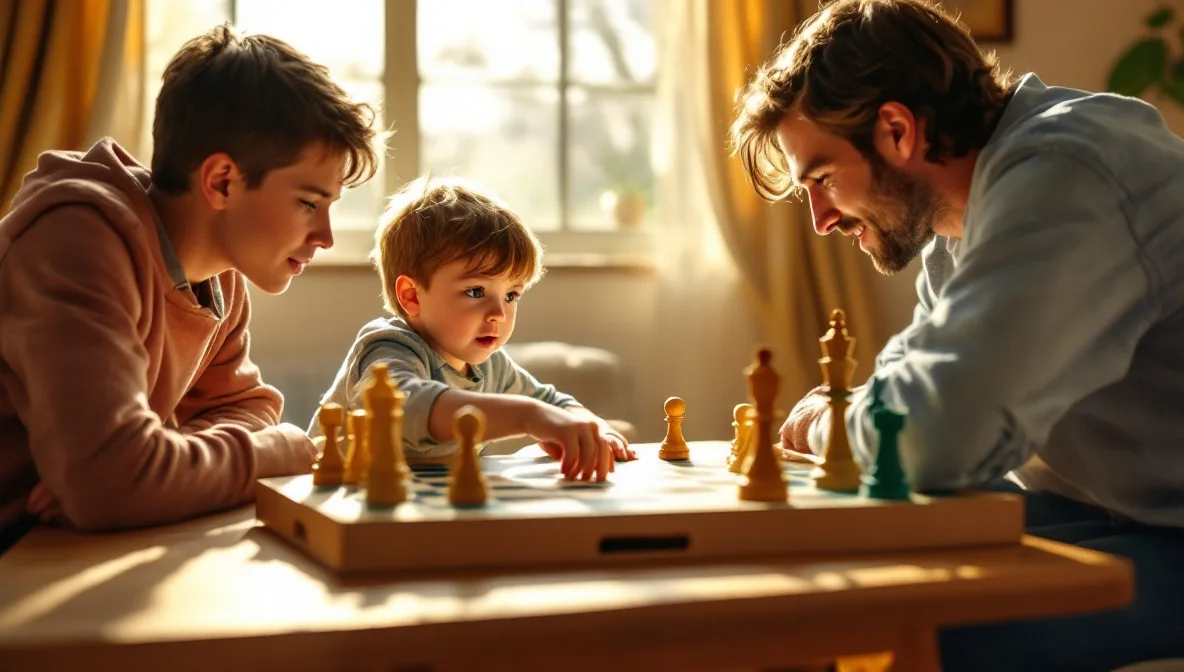
What age can a smart boy start learning chess? Rather than a fixed number, the answer depends on cognitive readiness and genuine interest—though most children show the foundational skills needed between ages 5 and 7. Many chess experts and child development specialists agree that readiness matters far more than age, and when you pair the right approach with your child's enthusiasm, even a 5-year-old can grasp the basics, while an 8-year-old just discovering chess is far from too late to develop serious skill.
Key Takeaways
- Cognitive readiness (abstract thinking, patience, turn-taking) trumps a specific age in determining when your boy is ready for chess.
- The best age to start learning chess for kids typically falls between 5 and 7, when abstract reasoning and focus naturally develop.
- Using the rook-first method and a giant floor chessboard makes chess accessible and engaging for younger learners.
- Interest and parental involvement matter more than early start age; a motivated 8-year-old progresses faster than a reluctant 6-year-old.
- A few key readiness signs—following multi-step instructions, managing frustration, and enjoying turn-taking games—predict success more reliably than IQ alone.
Readiness Over Age: The Real Framework for Starting Chess
Many parents ask, "When should my child start chess?" as if there's a magic birthday. In reality, the readiness + interest framework outweighs chronological age. Your child doesn't need to be a "smart boy" in the academic sense; he needs specific cognitive and emotional capacities that develop gradually and unevenly across childhood.
According to Kaabil Kids' research on chess and brain development, the window for optimal chess learning opens once a child can sustain attention for 15–20 minutes, follow three-step instructions without constant reminding, and manage losing a game without a meltdown. These capacities typically emerge between ages 5 and 6, but some children show them at 4, while others need to be 7 or older.
Signs Your Child Is Ready to Learn Chess
Rather than waiting for a birthday, watch for these concrete readiness markers:
- Follows multi-step instructions—He can execute a task like "Put on your shoes, get your backpack, and wait by the door" without you repeating each step.
- Engages in turn-taking games—He enjoys games like Snakes and Ladders, Tic-Tac-Toe, or simple board games where he waits for his turn and acknowledges your move before taking his own.
- Shows early abstract thinking—He understands that a pawn represents a soldier or that a game piece stands for something imaginary; he grasps "if-then" logic ("If I move here, then you can capture me").
- Manages frustration reasonably—He can lose a game without a prolonged tantrum and is curious about why he lost rather than just upset.
- Asks questions about games and rules—Spontaneous curiosity about how things work—including game mechanics—signals readiness for a rule-rich activity like chess.
- Sustains focus on one activity—He can work on a puzzle, draw, or play a game for at least 15 minutes without constant redirection.
A 5-year-old boy with these signs will likely thrive at chess; a 7-year-old without them may struggle or lose interest fast. The inverse is equally true: a bright 8-year-old who checks all these boxes is not too late and will often progress quickly because his cognitive toolkit is more developed.
Age-by-Age Readiness Guide: Can a 5-Year-Old Learn Chess Effectively?
The question "Can a 5 year old learn chess?" deserves a clear answer: yes, but with the right method. At this age, your approach matters more than the age itself.
| Age Range | Typical Readiness Signs | Recommended Starting Method |
|---|---|---|
| 4–5 years | Some show turn-taking skills; abstract thinking emerging; short attention span (10–15 min) | Giant floor chessboard; rook-first method; games with only 2–3 piece types |
| 6–7 years | Solid focus and follow instructions; early strategy grasp; handle losing better | Standard board with parental guidance; rook and pawn games; simple tactics puzzles |
| 8+ years | Strong abstract reasoning; sustained focus; competitive drive; social awareness | Full rules; beginner lessons; clubs and online platforms; strategy and endgame study |
If you're wondering "is 7 years old too late for chess?" the answer is definitively no. A 7-year-old who has just discovered chess often learns the full rule set in weeks and can begin playing competitive games within months. By contrast, a 5-year-old may take months to master piece movement and understand basic tactics, but both can reach the same level of skill by age 10—the older starter simply caught up faster.
The Rook-First Method: Making Chess Accessible for Younger Learners
The rook-first method is one of the most underrated strategies for teaching chess to children under 6. Instead of explaining all 32 pieces and their unique movements at once, you begin with just the rook—a piece that moves in straight lines. This approach reduces cognitive overload and lets your child play real games within minutes, not weeks.
Here's how it works:
- Week 1: Teach only the rook. Play "Rook Wars"—two rooks on an empty board, trying to capture each other. Your son learns attacking, defense, and basic spatial reasoning in a game that's immediately fun.
- Week 2–3: Add the pawn. Now he learns how pawns move forward one square (or two on their first move) and capture diagonally. Play games with rooks and pawns only.
- Week 4+: Introduce the bishop, queen, and remaining pieces one at a time, always playing real games rather than lectures.
Smartick's guide to chess for kids emphasizes that this incremental method prevents the frustration and confusion many young learners experience when overwhelmed by a full 64-square board and 16 pieces moving in different directions.
Giant Floor Chessboard: A Game-Changer for Early Learners
A giant floor chessboard—typically 8×8 feet with oversized cardboard or foam pieces—transforms how young children (ages 4–6) interact with chess. Instead of staring at a small board from across a table, your son steps onto the board, stands beside each piece, and physically moves them. This tactile, spatial experience cements understanding of piece movement and turn-taking in a way a standard board cannot.
Benefits of using a giant floor board:
- Your child's body is engaged, not just his eyes and hands—learning feels like play, not instruction.
- He naturally understands diagonals, ranks, and files because he's walking them.
- Group play becomes easier; two children can play while others watch and learn on the sidelines.
- It accommodates younger kids' fine motor development—large pieces are easier to grip and move than standard chess pieces.
- The novelty factor keeps engagement high, especially in the crucial first weeks when interest is being formed.
Many schools and chess clubs now use floor boards for children under 7; if you can't buy one, you can DIY a version using a plastic shower curtain marked with a grid and foam pool noodles cut into piece shapes.
Interest-Driven Learning: Why Your Child's Motivation Matters Most
A common mistake is pushing chess on a child because parents believe it's "good for him," only to abandon lessons when the child resists. Interest is not a luxury—it's the primary engine of chess progress. A child who begs to play beats a "smart boy" who feels chess is something adults want him to do.
Some signs your child has genuine interest:
- He asks to play or mentions chess unprompted.
- He wants to watch chess videos or chess-playing content.
- He plays chess games against a sibling or friend repeatedly without being told to do so.
- He's curious about your own games or asks questions about chess rules and strategy.
If your 6-year-old isn't showing these signs but you think he might enjoy chess, introduce it playfully—invite him to watch a fun, animated chess video, or challenge him to a simple game with just rooks and pawns on a fun board. Let curiosity lead. Some children blossom in chess at 5; others discover it at 10 and never look back. Both paths are valid.
The Role of Patience and Frustration Management
Chess involves losing—often and early. A child who can't handle losing a game without distress is not yet ready for serious chess play, regardless of age. Frustration tolerance is a skill that develops with maturity and experience, and it's often the limiting factor before abstract thinking is.
To build this capacity before or alongside chess lessons, play simpler games (Tic-Tac-Toe, Snakes and Ladders) where you occasionally let him win, gradually making games more competitive. Model good sportsmanship yourself—celebrate when he wins a game, talk positively about losses ("You moved your rook here; next time you might try moving it there to protect your pawn"), and never use chess as a punishment or comparison tool ("Your sister learned chess faster than you").
According to community discussions on chess for children, the parents whose kids thrive longest in chess are those who frame the game as fun and learning, not achievement. That psychological foundation lasts far longer than early start age.
Frequently Asked Questions
What is the best age to start learning chess for boys?
The best age falls between 5 and 7 for most children, but readiness matters more than age. Look for signs like the ability to follow multi-step instructions, sustain focus for 15 minutes, and manage losing without a tantrum. Some boys thrive at 4; others are readier at 8.
Can a 5-year-old boy learn to play chess effectively?
Yes, a 5-year-old can learn chess using the rook-first method and a giant floor chessboard, which reduce cognitive overload. He'll likely focus on one or two piece types at first rather than all 32, but real learning and enjoyment are absolutely possible at this age.
Is it too late to start chess at 7 or 8 years old?
It is not too late. A 7- or 8-year-old with strong focus and curiosity often learns the full rule set faster than a younger child and can reach intermediate skill within 6–12 months of serious practice. Starting at this age is still considered ideal by many coaches.
How do I know if my child is ready to learn chess?
Watch for readiness signs: he follows three-step instructions, enjoys turn-taking games, understands simple if-then logic, manages losing without extended tantrums, and can focus on one activity for at least 15 minutes. These matter far more than his age or IQ score.
Should I start with the rook or pawn when teaching a child chess?
Start with the rook. The rook-first method teaches piece movement using a simple, straight-line piece, then gradually adds the pawn, bishop, queen, and king. This prevents the overwhelm of learning 16 different pieces and their moves all at once.
Choosing when your son starts learning chess is less about hitting a magic age and more about recognizing the moment when curiosity, patience, and focus come together. Whether that moment arrives at 5, 7, or 9, the foundations you build—playful learning, resilience in losing, and genuine interest—will shape his chess journey far more than his starting age ever could. Start with the rook, use a fun board, follow his lead, and watch his confidence grow.

Comments 0
Please Sign in to leave a comment.
No comments yet. Be the first to share your thoughts!