
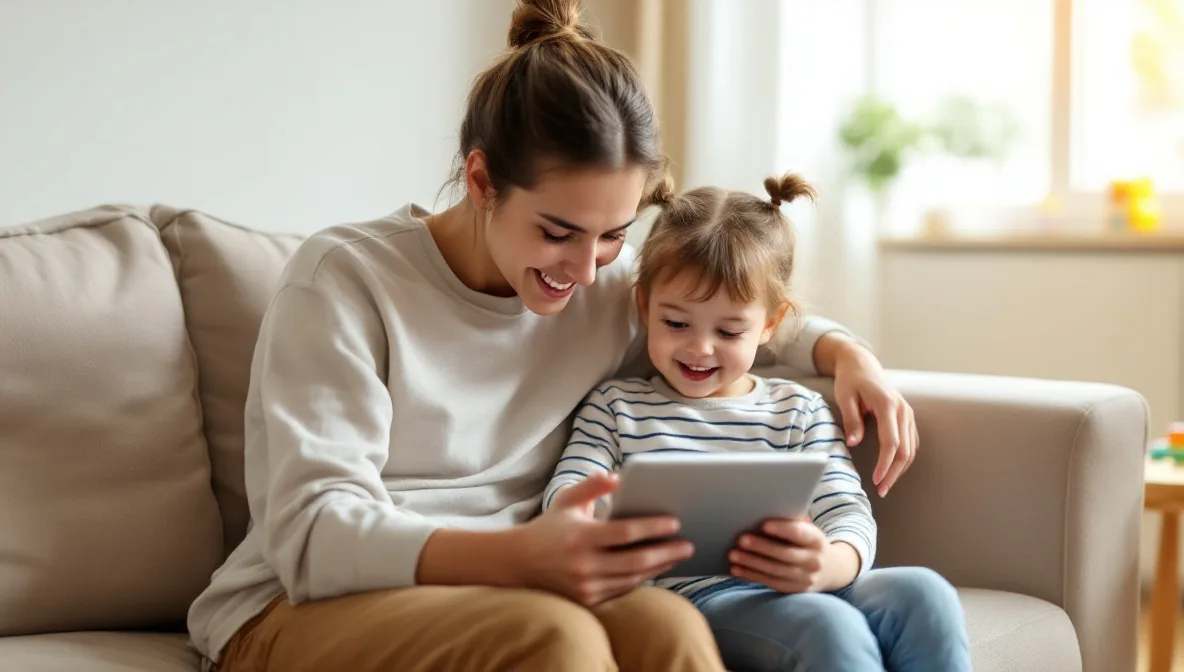
How much screen time for 3 year old per day? The American Academy of Pediatrics (AAP) and World Health Organization (WHO) both recommend a maximum of one hour per day of high-quality programming for children ages 3 to 5, with an essential qualifier: a parent or caregiver must watch alongside your child. This single hour—when paired with your active engagement—replaces the outdated "two hours daily" guidance and reflects current research into developmental, behavioral, and sleep impacts. If your 3-year-old is currently watching more, you're not alone: studies show the average preschooler consumes 2 to 3 hours daily, often in the background. The good news is that even modest reductions, combined with intentional co-viewing, can meaningfully improve focus, sleep quality, and emotional regulation.
Key Takeaways
- AAP and WHO both recommend maximum 1 hour per day of quality content for ages 3–5, with parent co-viewing mandatory.
- Co-viewing isn't optional: when you watch together and talk about what you see, the educational and developmental benefits increase significantly.
- Background TV—shows playing while your child plays or eats—counts toward the limit and can delay language development and disrupt focus.
- High-quality programs (PBS Kids, Sesame Street, Daniel Tiger's Neighborhood) are purposefully designed for learning; generic entertainment has minimal benefit.
- Screen time competes directly with sleep, physical play, and face-to-face interaction—the three pillars of healthy 3-year-old development.
AAP and WHO Screen Time Recommendations for 3-Year-Olds
Both major health organizations have tightened their guidance in recent years. The AAP explicitly states that children ages 3 and older can benefit from quality programming, but only up to one hour daily, and only when a parent engages alongside them. The WHO similarly recommends no more than one hour per day for children aged 3 to 4 years, emphasizing that sleep and physical activity must take priority.
Why the shift from older recommendations? Research published over the past five years has demonstrated correlations between excessive screen time and delayed language acquisition, reduced physical fitness, sleep disruption, and increased anxiety in young children. The magic ingredient isn't the program itself—it's you. Co-viewing transforms passive consumption into an interactive learning experience because you can pause, ask questions, connect the story to your child's real life, and model enthusiasm for the characters and lessons.
Understanding Background TV and Its Hidden Effects
One of the most underestimated screen time culprits is background television. Many families have the TV on during meals, playtime, or household routines, assuming their child isn't really watching. Research shows otherwise. According to developmental pediatrics resources, background TV fragments a young child's attention even when they're not directly focused on it, disrupting language development and reducing the quality of their play.
A 3-year-old's brain is wired to detect movement and sound, so a flickering screen in the corner of a room pulls cognitive resources away from the conversation you're having or the blocks they're stacking. If your household relies on background TV for a sense of company or routine, consider replacing it with music, audiobooks, or podcasts during those times instead.
What Counts as Screen Time for Your 3-Year-Old?
Screen time includes any content viewed on a device: television, tablets, smartphones, computers, and streaming services. Video calls—such as FaceTime with a grandparent—are a meaningful exception because they involve real two-way interaction and emotional connection, not passive viewing. However, one-way video content (even "educational" YouTube videos) counts toward your daily limit.
The distinction between "educational" and "entertainment" screens matters. Programs like Sesame Street and Daniel Tiger's Neighborhood are intentionally designed with child development experts and feature repetition, predictable formats, and prosocial messages. A random YouTube video of someone unboxing toys, by contrast, offers little developmental value and may include rapid cuts or aggressive content that dysregulates young children. When you select content, always preview it first or stick to established educational broadcasters.
How to Co-View Effectively and Boost Learning
Co-viewing isn't about sitting silently beside your child. Here's how to make the hour count:
- Pause and talk. Stop the show every few minutes and ask: "Why do you think she's sad?" or "What would you do?" This turns passive watching into conversation.
- Connect to real life. If your child watches a character learn to share, bring it up at snack time: "Remember how Daniel shared his toy? You shared your crayons with your friend today!"
- Use the remote. Skip ads, mute loud sections, and rewind to revisit a favorite moment or clarify something confusing.
- Limit distractions. Put your phone away so your child feels your full presence and sees that they matter more than notifications.
- Choose the time wisely. Schedule screen time when your child is alert and receptive—not right before bed (blue light disrupts melatonin) or when they're already tired or overstimulated.
Screen Time Limits and Sleep: Why They're Connected
Screen exposure within one to two hours of bedtime delays sleep onset and reduces sleep quality, even on a subconscious level. The blue light from tablets and televisions suppresses melatonin production, the hormone that signals your body to wind down. A well-rested 3-year-old is calmer, more emotionally resilient, and better able to focus—benefits that far outweigh an extra episode.
Aim to finish all screens by 7:00 or 7:30 p.m., and keep devices out of the bedroom. If you're using a screen during daytime and your child is within the one-hour daily limit, you're supporting their biology. If screens creep into evenings, you're competing against sleep, and sleep will lose.
Practical Tips for Managing Daily Screen Time Without Conflict
Reducing screen time is easier when you build the change gradually and offer compelling alternatives. Sudden elimination often triggers resistance and frustration for both parent and child.
- Set a visual timer. Use a kitchen timer or a child-friendly app (like Time Timer) so your 3-year-old sees the countdown and understands when the show will end. This builds emotional preparation and reduces surprise upset.
- Create a family media plan. Agree as a household what content is allowed, when screens are off-limits (meals, car rides, one hour before bed), and what the transition looks like when time is up. Write it down or draw pictures and post it where everyone sees it.
- Offer engaging alternatives. If screens have been filling idle time, replace that time with blocks, painting, pretend play, outdoor exploration, or a special one-on-one activity. A 3-year-old who is bored will ask for screens; a child who's engaged won't.
- Model the behavior. If your child sees you glued to your phone during the day, asking them to limit screens feels hollow. When you model intentional, moderate device use, children internalize that balance is normal.
- Praise effort, not perfection. On days when you exceed the one hour, don't spiral into guilt. Notice the effort: "Yesterday we watched only 45 minutes—that's great. Let's try that again today."
Screen Time and Physical Activity: A Critical Balance
The WHO recommends that 3-year-olds get at least 180 minutes (three hours) of physical activity per day, including vigorous movement like running, climbing, and dancing. When screens consume even 60 minutes, they directly displace time that could be spent moving. Every hour watching is an hour not spent building muscle, balance, and cardiovascular fitness—capacities that set the foundation for lifelong health.
Beyond fitness, physical play develops confidence, spatial awareness, and emotional regulation. A child who spends their afternoon building with blocks or running in the yard sleeps better, feels more capable, and has better focus during learning time. If your 3-year-old's day is very sedentary, scaling back screen time and replacing it with outdoor play or active indoor games will have ripple effects across sleep, mood, and behavior.
Frequently Asked Questions
What is the AAP recommended screen time for a 3-year-old per day?
The AAP recommends a maximum of one hour per day of high-quality programming for children ages 3 and older, and only with parent co-viewing. This means sitting with your child and engaging with the content, not leaving the TV on in the background while you attend to other tasks.
How much screen time is safe for a 3-year-old according to WHO?
The World Health Organization recommends no more than one hour daily for children ages 3 to 4 years. The WHO also emphasizes that this one hour should not replace sleep or physical activity, which remain the top priorities for healthy development.
Should parents watch TV with their 3-year-old and why?
Yes, absolutely. Co-viewing is not just recommended—it's essential to maximizing any developmental benefit. When you watch alongside your child and talk about what you see, you help them understand the story, connect it to their own experience, and learn language in context. Without parent engagement, the screen is just flickering light and sound.
What happens if a 3-year-old watches more than 1 hour of screen time per day?
Exceeding one hour occasionally won't cause harm, but consistent overuse is associated with delayed language development, reduced physical fitness, sleep disruption, and increased behavior challenges. The effects are cumulative, so a child watching 2–3 hours daily (the current average) is at greater risk for these outcomes than a child staying within limits.
Are there exceptions to the screen time limit for 3-year-olds, like video chats?
Yes. Real-time video calls with family members—such as FaceTime or Zoom with grandparents—involve genuine two-way interaction and emotional connection, so they're generally not counted the same way as passive viewing. However, one-way video content (even on "educational" apps) should still count toward your daily limit.
Managing screen time for your 3-year-old doesn't require perfection—it requires intention. Start with the one-hour guideline, make co-viewing a non-negotiable rule when screens are on, and fill the freed-up time with play, movement, and face-to-face connection. Your child's developing brain, sleep quality, and sense of security will thank you.


Comments 0
Please Sign in to leave a comment.
No comments yet. Be the first to share your thoughts!