
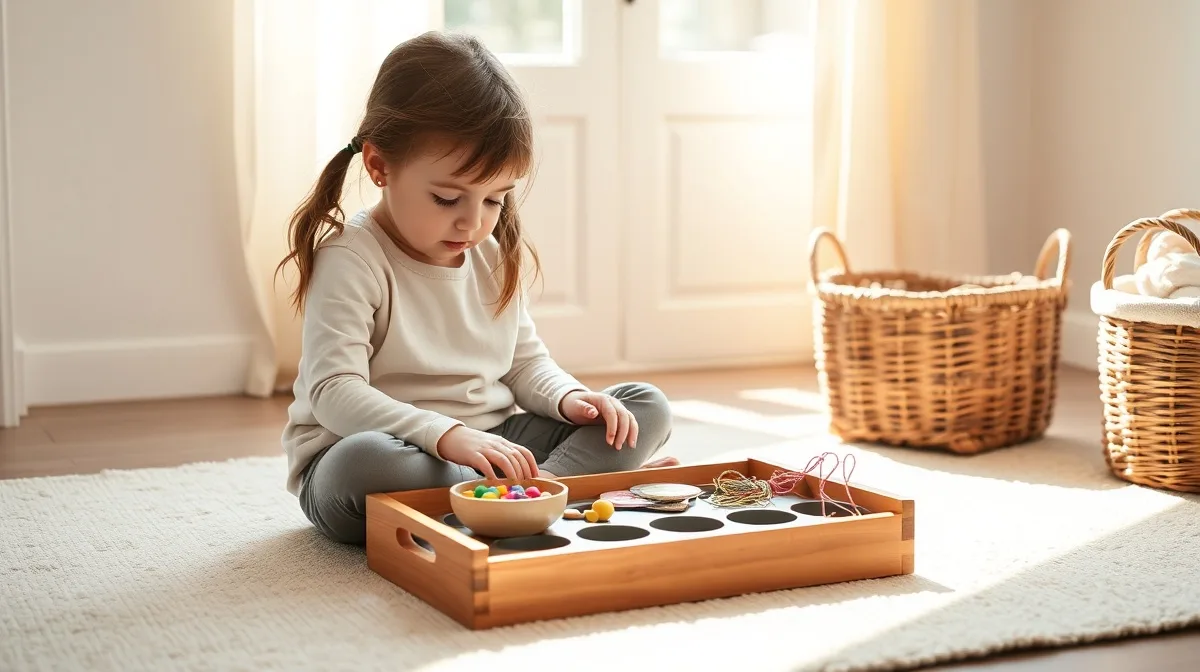
Screen-free quiet time activities for toddlers give your child a chance to play independently while you tackle household tasks or simply pause. These activities build focus, fine motor skills, and the kind of calm that lasts far longer than any screen time, and they require minimal prep or cleanup. This guide shares 30+ proven activities, a simple rotation system that breaks quiet time into 10-minute chunks, and the treasure basket method that keeps engagement high without the mess.
Key Takeaways
- A rotating quiet time basket system keeps activities fresh and prevents boredom across multiple short sessions.
- Low-mess, low-prep activities—like pom-pom sorting, sticker play, and threading—sustain toddler focus for 20–30 minutes daily.
- Breaking quiet time into three 10-minute activity chunks helps toddlers sustain attention better than one long activity.
- Fine motor and sensory play during quiet time builds independence and developmental skills without screens.
- A consistent quiet time routine, started early, teaches toddlers to self-entertain and gives parents predictable daily breaks.
What Is Quiet Time and Why It Matters for Toddlers
Quiet time is a daily period of independent, screen-free play where your toddler engages with activities alone (or near you, working silently). It differs from nap time because your child stays awake and active, but it mirrors the calm and focus benefits of rest. For toddlers aged 18 months to 4 years, a consistent 20–30 minute quiet time routine builds concentration, encourages solo play skills, and gives you uninterrupted time for your own tasks.
Experts recommend quiet time as part of a balanced daily rhythm. According to research in child development, toddlers who engage in structured independent play develop stronger problem-solving abilities and delayed gratification. The activities in this guide strengthen fine motor control, sensory awareness, and the quiet focus that screens actually interrupt.
The 10-Minute Rotation: Breaking Quiet Time into Chunks
One of the biggest mistakes parents make is expecting a toddler to sit with one activity for 30 minutes straight. Instead, rotate through three 10-minute activity blocks during your quiet time window. This approach keeps attention high, reduces frustration, and actually trains your child's focus muscles over time.
Here's how it works: Set a gentle timer. At 10 minutes, signal a transition (a quiet bell, a soft song, or simply moving the tray). Remove the first activity and introduce the second. At 20 minutes, transition again. By minute 30, your child has cycled through three different activities and feels accomplished rather than restless. This rhythm mirrors how toddler brains naturally shift engagement, so you're working with their wiring, not against it.
Building Your Quiet Time Treasure Basket: Low-Mess, High-Engagement Activities
A treasure basket is a curated collection of loose parts and open-ended materials that rotate weekly or biweekly. The beauty is simplicity: no batteries, no screens, minimal pieces to lose, and genuine surprise when items rotate back. Here are the core activities to build your basket rotation.
Sensory Sorting and Fine Motor Play
- Muffin tin sorting: Fill a standard muffin tin with small items in each cup (pom-poms, buttons, beads, pasta shapes, magnetic tiles, pipe cleaner pieces). Give your toddler tweezers, tongs, or clothespins and let them move items between cups. This builds pincer grip and hand strength.
- Pom-pom push holes: Poke small holes in the plastic lid of a container (or use an existing toy with holes). Let your toddler push pom-poms through. Satisfying, quiet, endlessly repeated.
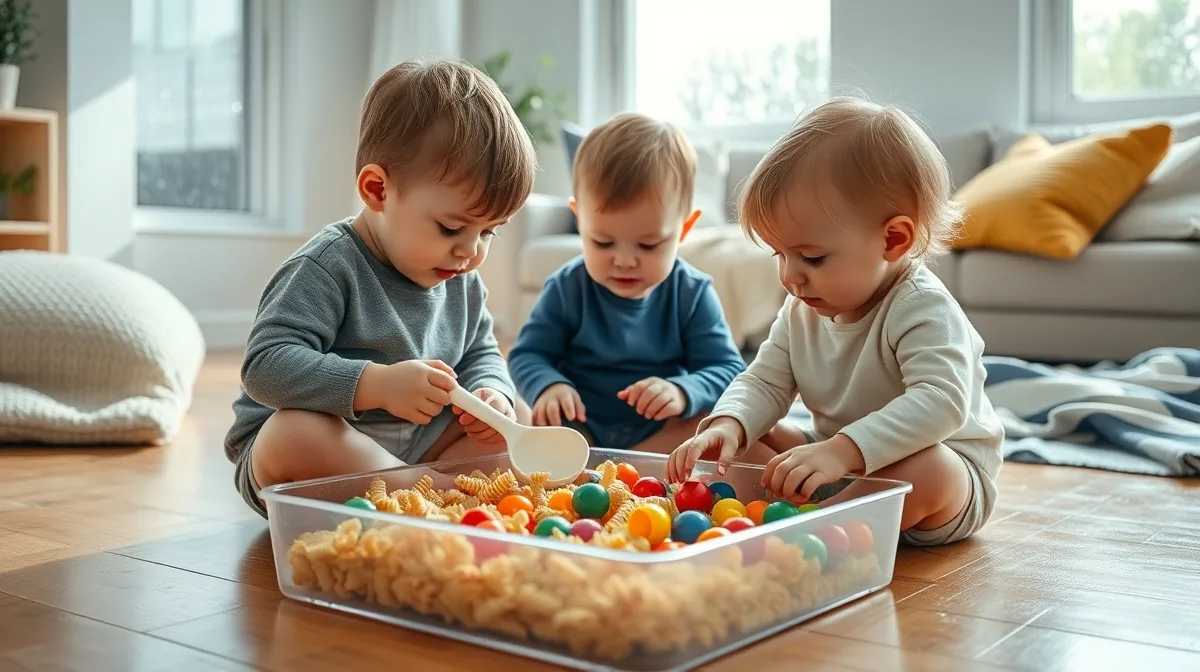
- Sensory bins for quiet time: A shallow bin with dried pasta, rice, or kinetic sand plus small scoops, funnels, and cups. Pair with trays underneath to contain mess. This is sensory play without the chaos.
- Sticker play: Large, chunky toddler stickers on paper or cardboard. Older toddlers can try sticking and unsticking; younger ones just love the tactile repetition and bright colors.
Threading, Building, and Cardboard Crafts
- Snack necklace threading: String Cheerios, penne pasta, or large cereal onto yarn with tape-wrapped ends. (Edible threading is motivation for engagement and low waste.)
- Loose parts play: Wooden blocks, cardboard tubes, plastic containers, and natural items (stones, leaves, acorns if age-appropriate). No instructions, just open-ended exploration.
- Cardboard box crafts: Cut holes in boxes for posting shapes or balls, or let your child decorate with stickers and markers. Older toddlers can create simple "lava course obstacle" structures with pillows and cushions.
- Magnetic tile building: If your toddler is past mouthing age, magnetic tiles are quiet, stackable, and hold attention for surprisingly long stretches.
Audiobook Quiet Time and Alternative Sensory Ideas
Not every quiet time activity needs to be hands-on. Audiobook quiet time paired with coloring, sticker work, or building allows your child to listen while playing. Choose age-appropriate books from services like Audible or your library's app. A 15-minute audiobook with a simple activity creates genuine quiet while still meeting your child's need for engagement.
Additional low-mess ideas: playdough (control mess with a defined play surface), water play in a shallow tray with cups and funnels, window cling stickers, large laminated dot-to-dot pages with dry-erase markers, and threading cards with string or yarn.
Starting Your Quiet Time Routine: Step-by-Step Setup
Begin small and be consistent. Here's how to establish the habit:
- Pick a time: Choose a daily window when your toddler is least tired—often mid-morning or early afternoon. Consistency matters more than duration at first.
- Prepare your space: Set up a small, contained area with a low table, tray, or cushion on the floor. Keep it near you initially so your toddler feels secure and you can monitor safety.
- Start with 10 minutes: Don't aim for 30 immediately. Begin with one simple activity for 10 minutes. Praise effort and calmness ("You played so nicely and quietly").
- Add a signal: Use a visual timer, a soft chime, or a song to mark transitions. Toddlers respond well to predictable cues.
- Rotate activities weekly: Refresh your treasure basket every 7–10 days. Reintroducing an old activity feels brand new to a toddler's brain.
- Extend gradually: After 2–3 weeks at 10 minutes, try two 10-minute blocks back-to-back. Build to three blocks over a month or more.
No-Mess Quiet Time Ideas for Small Spaces
If you live in a compact home or worry about cleanup, choose activities that contain mess naturally. Quiet time ideas for toddlers work best when they're designed to stay on a tray or within a defined boundary. Here's a quick reference:
| Activity | Mess Level | Space Needed | Best Age Range |
|---|---|---|---|
| Sticker play | None | Small table or lap | 18 months–4 years |
| Threading beads | Low (beads roll) | Small tray | 2–4 years |
| Pom-pom sorting in muffin tin | Very low | Small table | 2–4 years |
| Magnetic tiles | None | Small floor space | 2–4 years |
| Sensory bin with tray underneath | Medium (contained) | One chair space | 18 months–3 years |
| Playdough on silicone mat | Low | Small table | 2–4 years |
| Audiobook + coloring | Minimal | Chair or cushion | 2–4 years |
For truly minimalist setups, focus on threading, stickers, magnetic tiles, and audiobooks—these four alone can sustain quiet time across an entire week of rotation.
Supporting Independent Play Skills Over Time
The goal of screen-free quiet time isn't just giving you a break; it's teaching your toddler to entertain themselves, a skill that supports confidence and resilience later. Here's how to strengthen independent play:
- Resist the urge to "help" or redirect every few minutes. Let your child explore, struggle slightly, and solve small problems.
- Use minimal language during quiet time—no questions like "What are you making?" Just observe and smile.
- When your toddler brings you a finished activity, acknowledge it warmly but keep quiet time moving. Save detailed conversation for after.
- Offer quiet time in a space where they can see you (but not easily interrupt). Knowing you're nearby without needing to engage builds security.
- Celebrate the routine, not just the outcome: "You did quiet time for 30 whole minutes today—I'm proud of how calm you were."
According to child development research, toddlers who practice independent play in short, structured blocks show measurable improvements in focus and self-regulation within 4–6 weeks.
Frequently Asked Questions
What are the best screen-free quiet time activities for a 2-year-old?
For 2-year-olds, prioritize large motor refinement and sensory play: muffin tin sorting with pom-poms, threading large beads, sticker play, pom-pom push holes, and sensory bins with pasta or kinetic sand. Keep pieces chunky (choking hazard-free) and activities simple with clear outcomes.
How do I start a quiet time routine for my toddler?
Begin with 10 minutes at a consistent daily time, using just one simple activity (stickers or sorting). Set a visible timer, praise your child's calmness, and repeat daily. After 2–3 weeks, extend to 20 minutes with two activity blocks. Consistency and patience matter far more than duration.
What can my toddler do independently for 30 minutes without screens?
Use the 10-minute rotation method: three different activities, each 10 minutes, with a gentle transition signal between them. Pair sensory sorting with threading, add audiobook time, and include one building or loose parts play activity. Rotation keeps engagement high for the full 30 minutes.
How long should toddler quiet time last?
Start with 10–15 minutes and gradually extend to 20–30 minutes as your child's focus improves. Most toddlers aged 2–4 can sustain 25–30 minutes of quiet time with activity rotation. Don't rush—consistency at shorter durations builds the habit faster than forcing longer sessions.
What are some no-mess quiet time ideas for toddlers?
Sticker play, threading with taped yarn ends, pom-pom sorting in muffin tins, magnetic tile building, audiobook time with coloring, and window cling stickers are nearly mess-free. Use trays to contain any small pieces, and you'll minimize cleanup while maximizing engagement.
Starting a screen-free quiet time routine takes patience, but the payoff—calm, independent play and your own uninterrupted time—is real and lasting. Begin with one 10-minute activity block, rotate your treasure basket weekly, and trust that your toddler's brain is building genuine focus and competence, not just passing time. You're not just keeping them busy; you're laying the groundwork for lifelong independence and self-directed play.


Comments 0
Please Sign in to leave a comment.
No comments yet. Be the first to share your thoughts!