
Free summer activities for toddlers at home rainy day don't have to mean screen time or expensive craft kits. The rain arrives on a Saturday in July, the backyard is off-limits, and your 18-month-old is restless—so what now? The answer: with items already in your kitchen and living room, you can set up sensory play, obstacle courses, dance parties, and treasure hunts that will hold your toddler's attention for hours, cost nothing, and often teach them something about how the world works.
Key Takeaways
- Match activities to your toddler's energy level right now (high-energy dance vs. calm sensory play) rather than forcing a rigid schedule.
- Sensory bins, blanket forts, and homemade obstacle courses are free and developmentally rich because they let toddlers explore textures, movement, and spatial thinking.
- Rainy days are perfect for messy play—finger painting, water play in the tub, and playdough—because cleanup is easier when you're already indoors.
- Safety supervision, age-appropriate tools (soft foam blocks, not hard ones), and simple setup mean less stress for you and more engaged play from your child.
- A mood-based selector helps you choose the right activity in seconds: fussy and restless? Pick high-energy freeze dance. Tired but bored? Try quiet mirror play or sensory bins.
Why Rainy Days Are Actually Perfect for Free Toddler Play
When the rain traps you indoors, many parents feel the pressure to entertain—or guilt sets in. But rainy summer days are actually ideal moments for slow, focused sensory exploration that toddlers rarely get during a busy outdoor-play week. A toddler absorbed in a sensory bin filled with rice or pasta for thirty minutes is developing fine motor control, practicing scooping and pouring, and building concentration. The lower light and cozy indoor space also naturally calm high-energy toddlers, making this the right time for mess-making activities you'd avoid outside on a sunny day.
Many parents find that one or two well-chosen activities, rotated halfway through the day, work better than a packed schedule. Your 2-year-old doesn't need twelve options; she needs depth of play—time to really explore one thing. Rain gives you permission to slow down.
The Mood-Based Activity Selector: Find the Right Game in Seconds
Rather than scrolling through a generic list, use your toddler's current mood to pick instantly. Here's how to match the activity to the moment:
| Your Toddler's Mood | Best Free Activities | Why It Works |
|---|---|---|
| High-energy, restless, climbing the walls | Freeze dance, indoor obstacle course, scavenger hunt | Burns physical energy safely indoors and satisfies the urge to move. |
| Fussy, overwhelmed, or overstimulated | Sensory bin, playdough, blanket fort, quiet water play | Calms the nervous system through repetitive, tactile exploration. |
| Bored but tired, wants engagement without intensity | Mirror play, finger painting, raindrop observation, bubble bath cars | Holds attention with novelty but keeps energy low. |
| Messy-play mood (usually late morning or early afternoon) | Sensory bins, water play, playdough, finger painting | Indoors means quick cleanup, so go ahead and embrace the mess. |
The real skill is checking in with your child—not your agenda—before you choose. A 20-month-old who's been calm all morning might crave dance; the same child after lunch might need the quiet repetition of a sensory bin.
High-Energy Rainy Day Activities: Burn Movement Safely Indoors
Freeze Dance and Music Movement
Play any song your toddler likes (or a nursery rhyme) and dance together. When the music stops, everyone freezes. Restart and repeat. This works for ages 18 months and up and requires zero setup. In practice, many parents find that even five minutes of freeze dance can shift a restless toddler's mood. It's also teaching body awareness and listening skills—your child hears the music stop and responds with her whole body.
Indoor Obstacle Course
Use cushions, blankets, foam blocks, and rolled towels to create a simple path your toddler crawls under, over, and around. For a 2-year-old, this might be a pillow to step over, a tunnel made of blankets draped over chairs, and a cushion to jump on. Keep it soft and low—no hard edges or heights above knee level. Toddlers love repeating the same course ten times in a row, which builds leg strength, balance, and spatial awareness. Common mistake: making it too complicated. A simple three-station course is better than an elaborate maze; toddlers want to succeed and repeat, not problem-solve.
Indoor Scavenger Hunt
Hide five toys around one room (under a cushion, behind the couch, in a basket) and let your toddler find them one by one. For younger toddlers (18–24 months), make the hiding places obvious; for 2.5–3 year-olds, you can hide them a bit more sneakily. This combines movement, problem-solving, and the joy of discovery. It also teaches your child that objects still exist even when hidden—a cognitive milestone called object permanence.
Calm Sensory Play: The Backbone of Rainy Day Routines
Sensory Bins with Household Items
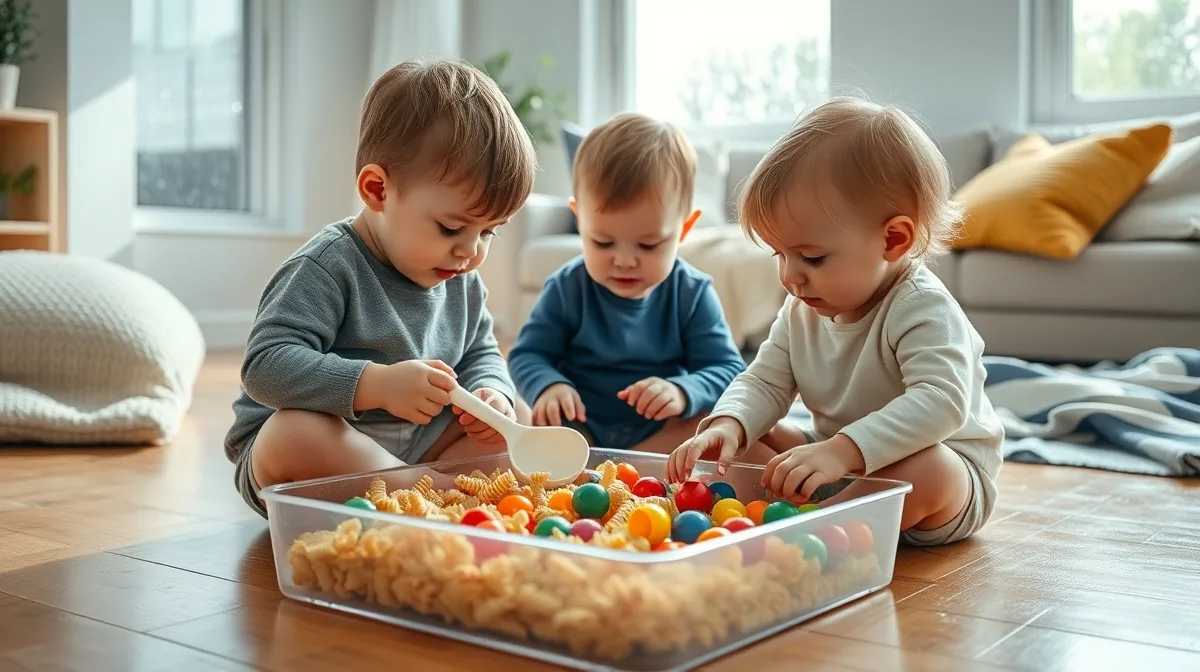
A sensory bin is a shallow container (a baking pan, storage box, or even a cake pan) filled with safe, touchable material. You fill it with items already at home—dried pasta, uncooked rice, dried beans, crumpled paper, or kinetic sand if you have it—and let your toddler scoop, pour, and explore for 20–40 minutes. Add small safe objects like plastic cups, wooden spoons, measuring spoons, or toy cars to increase engagement.
Safety note: Always supervise closely. Dried rice or beans pose a choking hazard for toddlers who still mouth objects, so if your child is under 18 months or still exploring objects with her mouth, use only larger pasta shapes or crumpled tissue paper. Wipe down hands after play. This activity teaches fine motor skills (pinching, scooping), cause-and-effect (pour the rice, watch it fall), and provides the calm, repetitive sensory input that helps an anxious or overstimulated toddler regulate.
Indoor sensory activities for toddlers are developmentally rich because they let children explore texture and movement at their own pace, without adult direction. In practice, many parents find that a sensory bin is the single most reliable rainy-day tool because it buys focused, quiet playtime.
Playdough Play
Homemade playdough costs almost nothing and lasts for months. Mix two cups of flour, one cup of salt, and two cups of water in a pot over medium heat, stirring constantly for 3–5 minutes until it forms a ball. Add a few drops of food coloring if you like. Cool, then store in an airtight container. Toddlers aged 2 and up can squeeze, roll, poke, and flatten dough for extended periods. This builds hand strength and is deeply calming. Younger toddlers (15–21 months) may still eat it, so skip this if your child hasn't moved past mouthing.
Quiet, Creative Activities for Tired-But-Bored Afternoons
Finger Painting
Washable finger paint or homemade paint (a tablespoon of flour, a few drops of food coloring, and a tablespoon of water) on paper or newspaper keeps toddlers engaged while sitting down. A 18-month-old will smear and experiment; a 3-year-old may start to represent things ("that's a bird"). It's low-pressure art that develops gross motor control (big arm movements), color awareness, and creative expression. Lay newspaper under the paper for easy cleanup, and dress your toddler in clothes you don't mind staining.
Mirror Play and Self-Recognition
Sit with your toddler in front of a mirror and make faces, point to body parts, or just watch each other. For a 2-year-old, this is a form of quiet engagement and self-learning. Around age 2, toddlers begin to understand that the reflection is themselves—a significant cognitive milestone. Narrate what you see: "I see your nose. I see your smile." This also builds vocabulary and body awareness in a calming way.
Raindrop Observation
Sit by a window and watch the rain together. Ask simple questions: "Do you see the raindrops? Are they going fast or slow?" You might put your hand on the glass (or press a toy car window) and watch droplets race down. This teaches observation, cause-and-effect, and nature awareness—and requires absolutely no materials. For some toddlers, this quiet looking is exactly what they need on an overstimulated afternoon.
Messy Play: Embrace the Rain and Get the Water Play In
Bubble Bath with Toys
Fill the tub with a few inches of warm water, add a splash of bubble bath or dish soap, and let your toddler play with toys—foam letters, plastic boats, soft balls—for 15–20 minutes. This is sensory play, water exploration, and safety practice (learning to be comfortable in water) all at once. A 2-year-old might pour water from one cup to another, float toys, or practice gentle splashing. Supervision is essential. Always stay within arm's reach, never leave your toddler alone in or near water, and keep the water depth shallow (2–3 inches).
Blanket Fort and Pretend Play
Drape blankets over a couch or chairs to create a fort. Your toddler crawls inside, sits quietly, or plays with toys in the enclosed space. For some children, this cozy, slightly enclosed space is deeply calming. Others use it for imaginative play—"this is my house" or "we're hiding from the rain." It takes five minutes to set up and teaches spatial reasoning. Common mistake: making it too complicated or enclosed. Toddlers feel safer when they can see out and there's an easy exit.
Educational Play That Doesn't Feel Like Learning
Rainy day indoor sensory activities naturally build skills. Free summer activities for toddlers develop fine and gross motor control, language, and problem-solving when they're play-based and child-led. A sensory bin teaches scooping and pouring (math and science foundation). A scavenger hunt teaches object permanence and following directions. Freeze dance teaches body awareness and listening. You don't need flashcards or worksheets on a rainy day—you need play.
For toddlers aged 2–3, adding one learning moment can deepen play. As your toddler plays with pasta in a sensory bin, you might casually name colors: "I see the yellow pasta." No pressure, no quiz—just language modeling. In practice, many parents find that this kind of incidental learning sticks better than formal instruction and keeps play joyful.
The Common Mistake: Overscheduling and Overstimulation
The biggest trap on a rainy day is trying to fill every moment. You set up a sensory bin, then a craft, then a scavenger hunt, then a snack, then a video, rotating every 10 minutes. By noon, your toddler is overwhelmed and fussy. Instead, plan for two or three activities maximum, each lasting 20–40 minutes. One high-energy activity (dance or obstacle course), one quiet sensory activity (sensory bin or playdough), and perhaps one low-key creative moment (finger painting or mirror play). That's enough. Let your toddler choose to repeat an activity or move between them. The goal isn't exhaustion—it's engagement and calm.
Quick Setup and Safety Checklist
- Clear the play space of small choking hazards (coins, small toy parts, hard candies).
- Lay down newspaper or a plastic tablecloth under any messy activity.
- Have water and a bowl or sink nearby for quick cleanup of hands.
- Stay within supervising distance during water play, sensory bins, and obstacle courses.
- Use soft materials (foam blocks, pillows, cushions) for indoor obstacle courses—no hard edges at toddler head height.
- Change clothes into stain-proof or old clothing if messy play is planned.
- Keep sessions to 20–40 minutes per activity; toddlers' attention spans are real.
Frequently Asked Questions
What are free rainy day activities for toddlers at home?
Sensory bins filled with dried pasta or rice, homemade playdough, freeze dance, indoor obstacle courses, finger painting, blanket forts, scavenger hunts, and bubble baths with toys are all free and require only items you already have at home. Choose based on your toddler's current mood and energy level.
How do I keep a toddler entertained on a rainy summer day indoors?
Match one or two activities to your toddler's mood: high-energy kids need dancing or climbing; fussy kids need calm sensory play like sensory bins or playdough; bored-but-tired kids respond to quiet engagement like mirror play or raindrop watching. Rotate activities every 20–40 minutes rather than overscheduling the entire day.
How do you make a sensory bin for a toddler with household items?
Fill a shallow container (baking pan, storage box, or cake tin) with safe household items: dried pasta, uncooked rice, dried beans, crumpled paper, or kinetic sand. Add small objects like plastic cups, wooden spoons, or toy cars. Always supervise—rice and small beans are choking hazards for toddlers under 18 months who still mouth objects. Wipe hands afterward.
Can toddlers play outside in the rain safely?
Light rain is generally safe for toddlers in warm summer weather; they can splash in puddles and explore. However, heavy rain, lightning, or cool temperatures make outdoor play risky. Check the forecast and dress warmly if playing in light rain. When heavy rain arrives, move play indoors with the activities in this article.
What are good indoor obstacle courses for toddlers?
Use soft materials: a pillow to step over, a blanket draped over chairs to crawl under, a cushion to balance on, and rolled towels to navigate around. Keep each station simple and low (no higher than knee level). Toddlers love repeating the same course many times, so one three-station course works better than a complicated maze. Always supervise and use soft edges.
Rainy summer days don't require expensive activities or constant entertainment. With a sensory bin, some music, a blanket, and your presence, your toddler has everything needed for a calm, engaged, developmentally rich afternoon at home. The rain gives you permission to slow down and let your child explore—which is often exactly what both of you need.


Comments 0
Please Sign in to leave a comment.
No comments yet. Be the first to share your thoughts!