Best mess free sensory play for toddlers combines tactile exploration with minimal cleanup—and it's easier to set up than you might think. Sensory play is critical for young children's development, helping them understand textures, colors, and how objects respond to touch, but the aftermath doesn't have to take an hour to clean. This guide brings you 10 proven, low-mess sensory activities that fit into bags, bathtubs, and sealed containers, so your toddler stays engaged while you stay sane.
Key Takeaways
- Ziplock bag sensory play and bathtub activities are the fastest, easiest cleanup options for busy parents.
- Taste-safe sensory ingredients (pasta, rice, beans, kinetic sand) let babies and younger toddlers explore safely even if they mouth materials.
- Categorizing activities by cleanup time (wipe-clean vs. rinse-ready) helps you choose based on your energy level that day.
- Fine motor skills, texture exploration, and vestibular system engagement all happen during sensory play—no mess required.
- A mess-control checklist ensures every sensory activity stays contained from setup to storage.
Why Sensory Play Matters—Even When Time Is Short
Sensory play activates multiple areas of your toddler's brain at once. As they touch, squeeze, and manipulate different textures, they're strengthening fine motor skills, building neural pathways for learning, and developing body awareness. The vestibular system—which helps with balance and spatial understanding—gets stimulated when children scoop, pour, and move materials, even inside a sealed bag.
The challenge, of course, is that sensory bins traditionally involve rice, kinetic sand, or water that ends up on your floor, in your rug, and (somehow) behind the refrigerator. Mess free sensory play addresses this directly by containing the materials while preserving all the developmental benefits. You're not cutting corners; you're just being smart about containment.
The 10 Best Mess Free Sensory Activities for Toddlers
1. Ziplock Bag Sensory Play (Wipe-Clean)
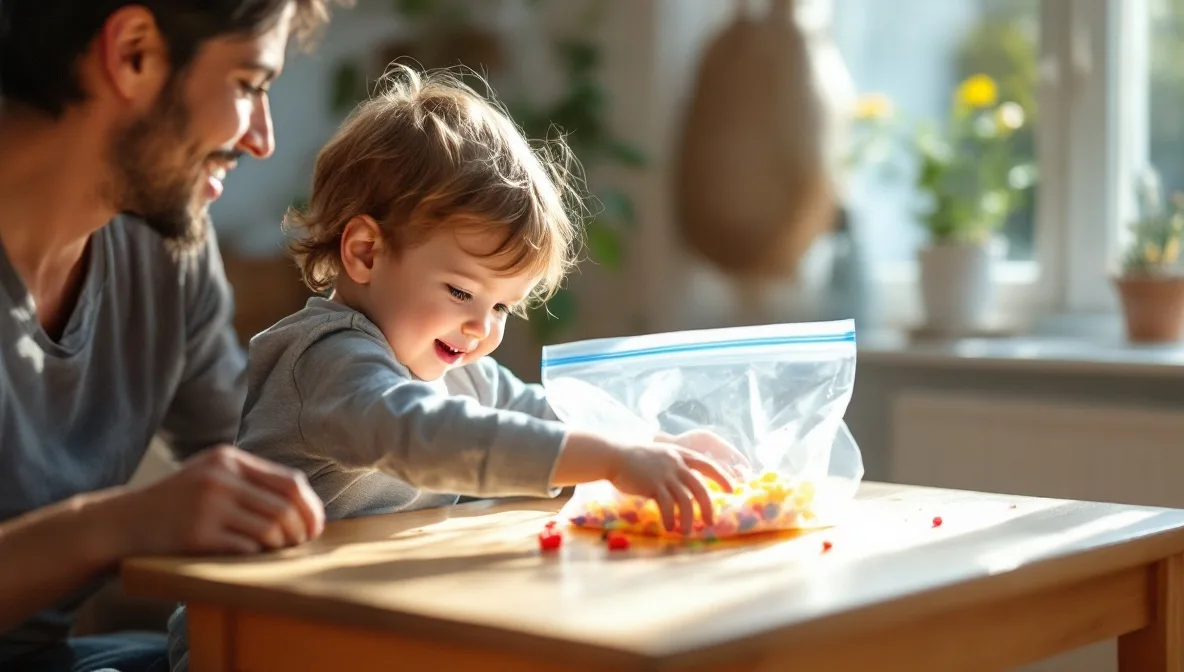
Fill a gallon-size ziplock bag with kinetic sand, colored rice, or dried pasta. Seal it completely, then tape it to your table or window so it won't slip. Your toddler can press, squish, and move the materials inside—all contained. This works beautifully for ages 12 months and up (always supervise). Cleanup is literally one wipe of the table.
Variations include adding water to create colored gels, freezing materials inside for an extra sensory surprise, or layering different textures. You can also use smaller sandwich bags taped to cardboard for a color-mixing bag activity—add two primary colors of paint or food coloring, seal tightly, and let your toddler watch the colors blend without touching the paint directly.
2. Bathtub Sensory Play with Toys and Foams (Rinse-Ready)
The bathtub is your secret weapon for sensory play with minimal stress. Let your toddler (18 months and up) explore safe bath toys, foam letters, sponges, and floating objects while the water's in. You can add a drop of food coloring to the bathwater for color exploration, or scatter plastic eggs filled with rice for gentle noise-making. Because everything is contained by the tub's walls and drains easily, you avoid the "sensory materials ground into the living room carpet" scenario.
For younger toddlers (12–18 months), stick to bath toys and soft items. Older toddlers (2–3 years) can enjoy pouring water between containers, squeezing sponges, and discovering cause-and-effect without you worrying about water damage. This setup also doubles as bath time, saving you an activity slot.
3. Taste-Safe Sensory Bins with Edible Materials (Wipe-Clean)
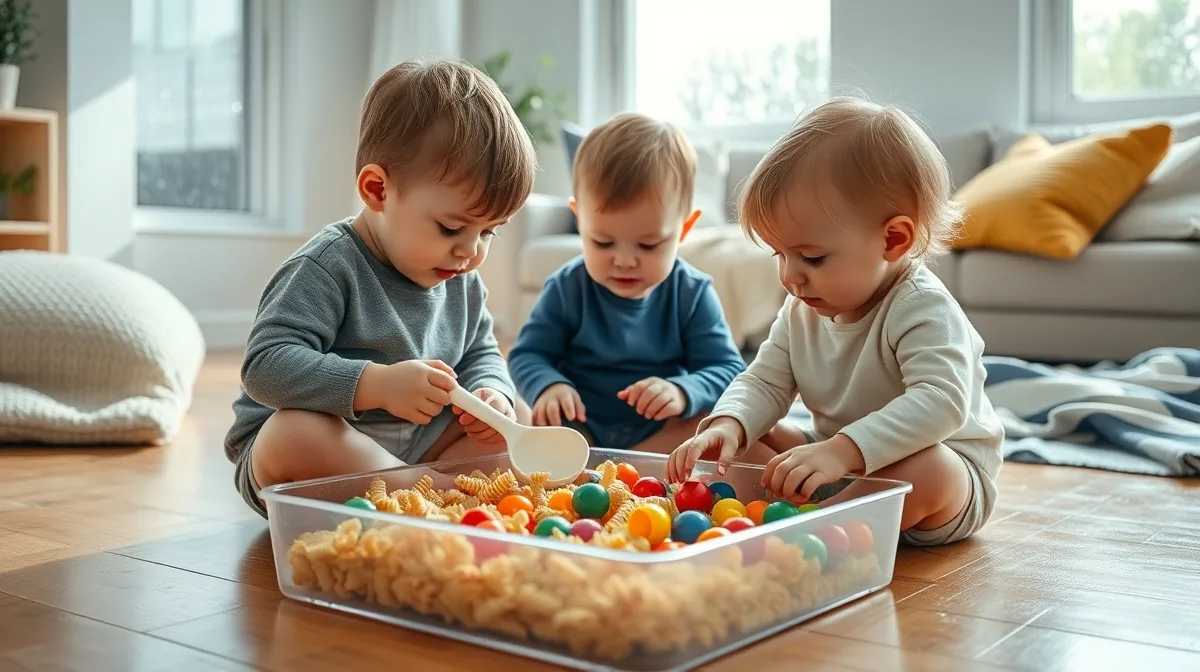
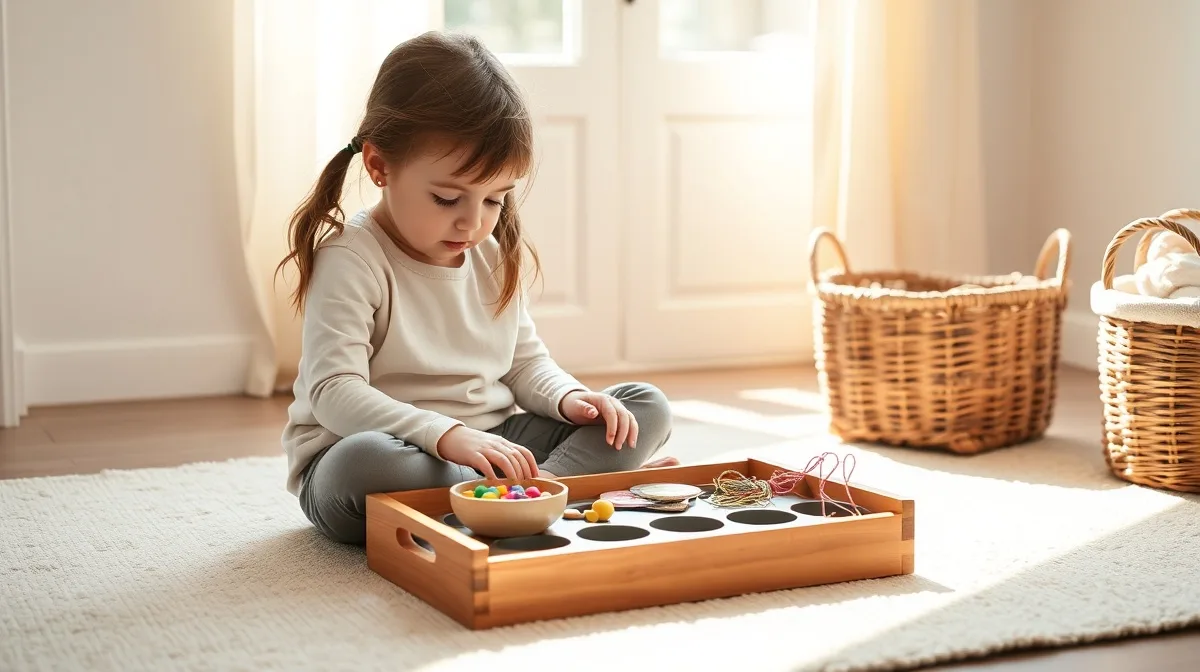
If your child still mouths objects, taste-safe sensory materials are non-negotiable. Use dried pasta shapes (penne, wheels, shells), cooked rice, or kinetic sand in a shallow, wide tray or low bin. You can add plastic scoops, spoons, and cups so your toddler practices fine motor skills while scooping and pouring. The entire bin can be set on a large rimmed baking sheet for extra containment; any spill lands on the sheet, not your floor.
Other taste-safe fillers include mini marshmallows (fresh, they're soft and appealing), shredded paper, and cotton balls. These are especially good for toddlers under 2 years who are still exploring the world with their mouths but are ready for more sophisticated sensory input than typical toys offer.
4. Color-Mixing Sensory Bags (Wipe-Clean)
Create color-mixing bags by filling ziplock bags with clear hair gel or hand sanitizer, then adding washable food coloring in two or three primary colors. Seal the bag completely and tape it securely to a window or table. As your toddler squishes the bag, they'll watch blue and yellow combine into green—a stunning, mess-free introduction to color theory. This activity works beautifully for ages 18 months to 4 years.
The gel or hand sanitizer never leaves the bag, so there's zero mess. If you want even more sensory input, add a few small beads or pom-poms inside—they'll float and move as your child manipulates the bag, adding a vestibular and visual component.
5. Water Painting Sensory Play (Wipe-Clean)
Give your toddler a cup of plain water, a paintbrush or sponge, and a chalkboard, dark wooden fence, or black poster board propped outside. As they paint with water, the surface darkens, showing their marks instantly. This mimics painting without any actual paint to spill, stain, or eat. On a warm day, the water evaporates as they work, giving them immediate visual feedback that their strokes disappear.
Water painting engages fine motor control, color and shape understanding, and cause-and-effect learning. It's perfect for ages 18 months and up and requires nothing but water and a surface—no cleanup beyond letting the board dry.
6. Shaving Cream Sensory Tray (Rinse-Ready)
Spread a thin layer of shaving cream directly onto a shallow rimmed baking sheet or low tray. Your toddler (2 years and up) can swirl, pat, and draw in it with their fingers. Add a few drops of food coloring for a color-mixing element. This offers wonderful tactile input—the foam is soft, cool, and changes as they manipulate it.
Shaving cream does contain chemicals, so supervise closely and ensure your child doesn't ingest it. Rinse hands immediately after play. The cleanup is fast: wipe the tray, rinse out, and you're done. Many sensory experts recommend baby-safe foam or whipped cream as an even gentler alternative if your child is a frequent mouth-explorer.
7. Sensory Bag with Kinetic Sand and Toys (Wipe-Clean)
Fill a ziplock bag with kinetic sand (store-bought or homemade using flour, oil, and water) and add small plastic animals, figurines, or beads. Seal and tape it down. Your toddler will bury, dig out, and discover the hidden items—engaging their fine motor skills and problem-solving abilities. Kinetic sand never dries out and stays contained inside the bag.
This activity is excellent for kids 18 months and up. The "burying and finding" dynamic mirrors real digging play but happens entirely inside a sealed container, making it perfect for apartments or rainy days when outdoor sandbox time isn't an option.
8. Cotton Ball Sensory Bin with Tweezers (Wipe-Clean)
Fill a shallow bin with white cotton balls and give your toddler child-safe tweezers, tongs, or even wooden clothespins. Challenge them to pick up the cotton balls and place them into smaller cups or containers. This is outstanding for fine motor development—the precision needed to grasp tweezers and pick up soft objects strengthens the exact muscles required for pencil grip later on.
Cotton balls are soft, safe if mouthed (though not ideal to eat), and create zero mess. For toddlers 2 years and up, this activity can hold attention for 15–20 minutes. You can also add a light table underneath for visual sensory enrichment, turning a simple activity into a glitter-free sensory experience.
9. Colander Sculpture and Sensory Play (Rinse-Ready)
Set a colander (a large mesh strainer) over a tray or bathtub and let your toddler (18 months and up) fill it with water, dried pasta, or soft pom-poms. The materials fall through the holes, creating a cause-and-effect experience. For even more fun, fill the colander with cooked spaghetti or soft-cooked pasta shapes—the sensory input is rich, and cleanup happens when you rinse the colander.
This activity engages the vestibular system (through pouring and movement), fine motor skills (scooping and dropping), and spatial awareness. It works indoors over a towel or outdoors, and the cleanup takes seconds.
10. Sealed Sensory Bottles with Beads and Glitter-Free Materials (Wipe-Clean)
Create glitter-free sensory play by filling clear plastic water bottles with water, beads, pasta, or foam packing peanuts. Seal the caps with hot glue so nothing spills. Your toddler can shake, roll, and observe the materials moving inside. This is especially great for younger toddlers (12–18 months) who love sound and movement but haven't yet mastered the fine motor demands of other activities.
Sensory bottles provide vestibular input, auditory stimulation, and visual tracking—all sealed inside a spill-proof container. Cleanup is nonexistent since everything stays contained. You can make several bottles with different materials and sounds, letting your child explore different sensory experiences without worry.
How to Set Up Mess Free Sensory Play: A Step-by-Step Approach
The setup matters as much as the activity itself. Here's a practical framework:
- Choose your containment method first. Will this be a ziplock bag (wipe-clean), bathtub (rinse-ready), or tray (quick sweep)? Your choice determines where and how long cleanup takes.
- Gather sensory materials and tools. Decide on fillers (kinetic sand, rice, cotton balls, pasta) and exploration tools (scoops, spoons, tweezers, brushes). Make sure everything is age-appropriate and safe.
- Protect your surfaces. Use a large rimmed baking sheet, old towel, or plastic tablecloth under the activity zone. This catches spills instantly and defines the play boundary for your child.
- Set a timer or transition cue. Sensory play for toddlers is most engaging in 10–20 minute windows. Use a song, visual timer, or simply announce "cleanup time" so transitions are predictable.
- Involve your child in cleanup. Let your toddler help wipe, pour water, or place items back in storage. This extends the learning and builds responsibility (even for 18-month-olds, who can hold a cloth and wipe).
Mess-Control Checklist: Your Parent-Friendly Reference
| Activity | Cleanup Time | Age | Best For |
|---|---|---|---|
| Ziplock Bag Sensory (sand, rice) | Wipe-clean (2 min) | 12 mo+ | Fine motor, texture exploration |
| Bathtub Play | Rinse-ready (drain) | 12 mo+ | Vestibular, water exploration |
| Taste-Safe Bins | Wipe-clean (3–5 min) | 12 mo+ | Mouthers, safe exploration |
| Color-Mixing Bags | Wipe-clean (1 min) | 18 mo+ | Color theory, visual learning |
| Water Painting | Air-dry (0 min) | 18 mo+ | Fine motor, cause-and-effect |
| Shaving Cream Tray | Rinse-ready (2 min) | 2 yo+ | Tactile, color mixing |
| Kinetic Sand Bags | Wipe-clean (1 min) | 18 mo+ | Fine motor, problem-solving |
| Cotton Ball Bin with Tweezers | Wipe-clean (2 min) | 2 yo+ | Pincer grip, concentration |
| Colander Play | Rinse-ready (1 min) | 18 mo+ | Cause-and-effect, vestibular |
| Sealed Sensory Bottles | Wipe-clean (0 min) | 12 mo+ | Sound, movement, visual tracking |
Taste-Safe Sensory Materials and Safe Substitutions
If your toddler is still in the "everything goes in the mouth" phase (12–18 months), stock these trustworthy fillers: uncooked pasta, white rice, dried beans (whole, never crushed), kinetic sand, cooked rice, and mini marshmallows. Avoid small beads, glitter, foam bits, and essential oils until your child is clearly past mouthing behaviors.
For activities that traditionally use paint or glitter, swap in food coloring mixed with water or hand lotion, rock candy sprinkles (melted down), or natural dyes made from food scraps. This keeps the sensory richness intact while removing the toxicity risk. Many mess-free sensory bin resources recommend thoroughly vetting any materials that might touch mouths, especially for children under 2 years.
Why Glitter-Free Sensory Play Is Your Best Friend
Glitter is the sensory parent's nemesis—it clings to hair, clothes, skin, and mysteriously reappears in your home for months. Glitter-free sensory play doesn't mean boring; it means using alternatives that give the same visual sparkle without the cleanup nightmare. Kinetic sand with mica powder, pom-poms, beads, or even a light table underneath cotton balls creates visual interest without the micro-particles.
Look for activities on resources dedicated to less-mess sensory play to find dozens of glitter-free alternatives. Your carpets (and sanity) will thank you.
Sensory Bags for On-the-Go: Portable Mess-Free Play
One of the sneakiest benefits of ziplock bag sensory play is portability. Seal a sensory bag, tape it securely to a portable lap tray or plastic clipboard, and you've got a mess-free activity for restaurants, waiting rooms, or long car rides. Older toddlers (2–3 years) can hold a sealed bag on their lap while you drive, engage with it quietly, and you maintain 100% cleanliness and zero distraction from the road.
Pack 2–3 different sensory bags in a small bag for travel. Color-mixing bags, kinetic sand bags, and sealed sensory bottles all work beautifully in car seats or high chairs. This strategy has saved countless parents during long waits and outings.
Frequently Asked Questions
What are the best mess free sensory play ideas for toddlers?
Ziplock bag sensory play, bathtub activities, sealed sensory bottles, water painting, and cotton ball bins with tweezers are the top five, according to this article. Each offers texture exploration, fine motor practice, and developmental benefits with either zero cleanup or just a quick wipe or rinse. Choose based on your toddler's age and what cleanup method feels most doable on that day.
How do you make sensory play less messy for toddlers?
Contain materials in sealed bags, bathtubs, or trays; use large rimmed baking sheets to catch spills; lay down towels or plastic tablecloths; and choose taste-safe, non-staining ingredients. The key is setting up your play space so that spills land on a surface you're prepared to clean rather than your floor or furniture.
Are there taste safe sensory play activities that are mess free?
Absolutely. Dried pasta bins, uncooked rice in sealed bags, cooked rice in low trays, and kinetic sand are all taste-safe and can be contained easily. Cotton balls, mini marshmallows, and sealed sensory bottles also work. Always supervise toddlers under 2 years closely, especially if mouthing is still frequent.
What sensory activities can toddlers do in a ziplock bag?
Color-mixing bags with gel and food coloring, kinetic sand with hidden toys, water-based sensory play, and layered pasta or rice are all excellent for ziplock bags. Seal the bag completely, tape it to a table or window, and your toddler can press, squish, and manipulate the materials inside without anything spilling. Cleanup is one wipe.
How can toddlers play with glitter without it getting everywhere?
The best strategy is to skip glitter entirely and use glitter-free alternatives like kinetic sand with mica powder, pom-poms, beads in sealed bottles, or light table activities with non-glittery materials. If you do use glitter, confine it to sealed sensory bottles or add it to thick gel inside ziplock bags, ensuring it never leaves the container.
Sensory play doesn't have to mean an hour of cleanup or glitter in your hair weeks later. These 10 best mess free sensory play activities for toddlers bring rich texture, color, and learning moments to your child's day while keeping your home calm and contained. Start with one activity that fits your lifestyle—maybe ziplock bags on a Tuesday or bathtub play on Friday—and watch your toddler's engagement grow. You're giving them the sensory input their developing brains crave, and you're keeping your sanity intact. That's a win on both sides.
Comments 0
Please Sign in to leave a comment.
No comments yet. Be the first to share your thoughts!