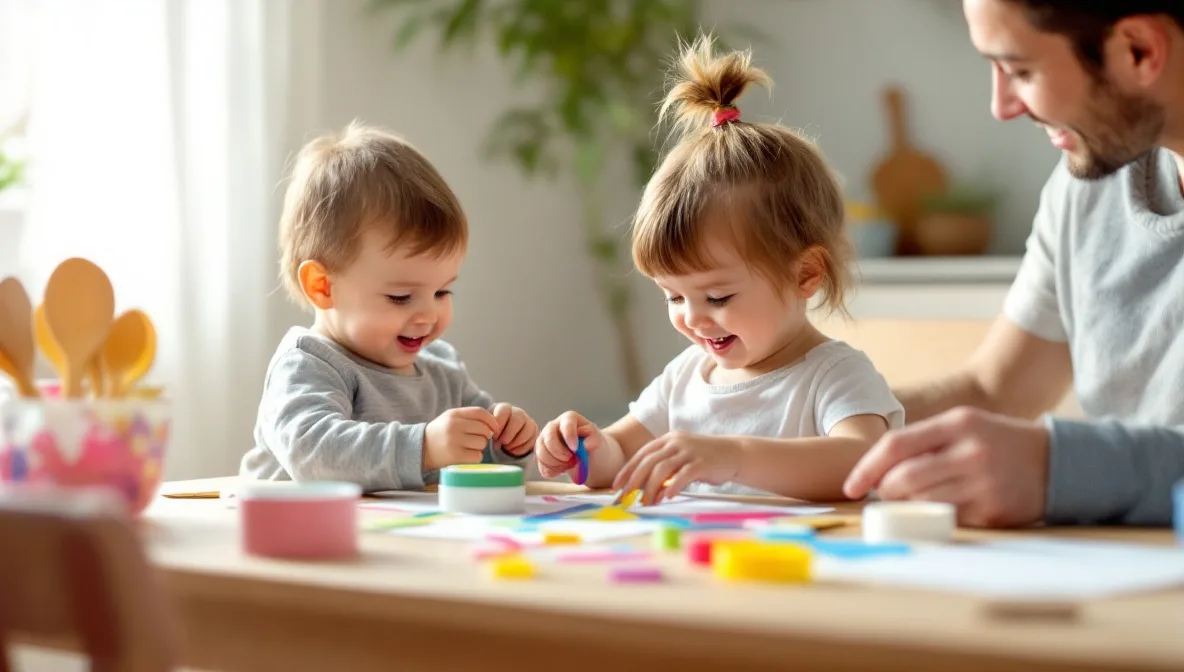
Easy zero prep crafts for toddlers 2 year old are activities you can start within seconds using items you already have at home. If you're tired of elaborate setups, complex instructions, and spending hours prepping materials before your toddler loses interest, this guide is for you. Below, you'll find seven genuinely zero-prep craft ideas that build fine motor skills, encourage sensory play, and keep your 2-year-old engaged—no cutting, gluing, or kitchen table takeover required.
Key Takeaways
- Zero-prep crafts use only household items and start instantly, perfect for busy parents.
- These activities build fine motor skills, color recognition, and texture exploration in 2-year-olds.
- Masking tape, paper, plastic bowls, and wooden spoons are your secret weapons for mess-free toddler art.
- The best no-setup activities can be cleaned up in under five minutes.
- Sensory play with household items is just as developmentally valuable as traditional crafts.
Why Zero-Prep Crafts Matter for Your 2-Year-Old
At age two, your toddler's attention span typically lasts 5 to 15 minutes, depending on the activity and the child. The longer you spend setting up, the fewer minutes remain for actual play and learning. Zero-prep activities respect this reality and let you jump straight into engagement. Unlike traditional crafts that require cutting card stock, organizing supplies, or waiting for glue to dry, these activities start the moment you grab a roll of masking tape or a handful of plastic containers.
According to child development research, sensory play and simple art activities boost fine motor skills and color recognition in toddlers. You don't need fancy materials to achieve this. Household items—many of which your toddler has never explored—offer the texture, color, and novelty that keep little hands busy.
The 7 Best Zero-Prep Crafts Using Household Items
1. Masking Tape Lines and Shapes
This is perhaps the easiest no-prep craft for 2-year-olds. Grab a roll of masking tape and stick strips directly onto a large sheet of white or colored paper, or even onto your kitchen tile floor (it peels off cleanly). Create straight lines, zigzags, circles, or simple shapes. Let your toddler tear small pieces and stick them down themselves, or peel tape off the paper and replace it—both actions build fine motor strength. Your child can also place toy cars along the tape "roads" or use washable markers to color sections. The setup time is zero; the engagement is genuine.
2. Pot-and-Pan Sorting and Stacking
Pull out plastic bowls, metal pots, wooden spoons, and silicone spatulas from your kitchen. Arrange them on the floor or low table and let your toddler explore: stacking pots inside one another, matching lids to containers, drumming with spoons, or filling bowls with water at the sink (if you're comfortable with a little water play). This sensory activity teaches cause-and-effect, spatial awareness, and introduces basic sorting concepts—all without a single craft supply purchased.
3. Water Play with Kitchen Containers
Fill a shallow basin or the bathtub with a few inches of water, then provide measuring cups, small plastic bottles, funnels, and containers from your recycling bin. Your toddler will pour, splash, and explore water's properties for 20 to 30 minutes with zero prep. Place towels nearby and accept that wet clothes are part of the fun. Water activities build sensory awareness and engage toddlers deeply—many child development specialists recognize water play as one of the most naturally absorbing activities for this age group.
4. Crumpled Paper Texture Art
Ask your toddler to crumple newspaper, office paper, or tissue paper into balls. Then tape or glue these balls onto a large sheet of paper to create a textured collage. The crumpling motion alone develops fine motor control, while the final artwork is genuinely tactile. No pre-cutting required; no complex assembly. Your child crumples, you help stick, and within 10 minutes you have wall-worthy art made from recycling.
5. Sticky Tape Mosaics
Roll small pieces of painter's or masking tape into balls (sticky side out) and attach them to a sheet of white card or poster board. Now let your toddler place small objects onto the sticky balls: colored paper scraps, foam stickers (if you have them), leaves, or torn pieces of tissue. Alternatively, use the tape as a base and let your child press their hands or feet onto it (with washable paint or just plain). The beauty here is that no setup beyond finding tape is needed, yet the activity encourages color mixing, texture exploration, and creative decision-making.
6. Nature Texture Rubbings and Collections
Walk outside with your toddler and collect smooth stones, leaves, twigs, and bark. Back indoors, place leaves under a sheet of thin paper and let your child rub a crayon across the top to reveal the leaf's texture underneath. Or simply let them arrange their nature finds on paper, tape them down, and create a collage. This combines outdoor play with quick indoor craft in minutes flat, teaching texture exploration and nature appreciation simultaneously.
7. Sticker and Marker Freedom Play
If you keep reusable stickers or foam stickers around, give your toddler a large paper and a stack of stickers. They can peel and stick for as long as their interest lasts—peeling itself strengthens fine motor control. Pair stickers with washable markers and let them draw freely alongside. No instruction, no right or wrong; just creative expression. This approach aligns with child-led learning and keeps setup to zero.
Quick Comparison: Zero-Prep vs. Traditional Toddler Crafts
| Aspect | Zero-Prep Crafts | Traditional Crafts |
|---|---|---|
| Setup Time | 0–2 minutes | 10–20 minutes |
| Materials Needed | Household items only | Specialty supplies, glue, scissors |
| Mess Factor | Minimal to moderate | High (glitter, paint, markers) |
| Cleanup Time | 2–5 minutes | 15–30 minutes |
| Fine Motor Benefit | Strong (peeling, tearing, placing) | Strong (cutting, gluing, drawing) |
| Sensory Engagement | Excellent (texture, water, sound) | Good (paint, glue textures) |
Mess-Free Crafts for Toddlers: Keeping It Tidy
One of the biggest barriers to doing crafts with 2-year-olds is the aftermath. Mess-free crafts sidestep this worry entirely. Masking tape activities, pot sorting, nature collections, and sticker play produce little to no mess. Water play creates moisture but no lasting stains. If you want to minimize cleanup even further, lay down a plastic sheet or old shower curtain before starting, or work directly in the bathroom where spills don't matter. Many parents find that once they start with zero-prep, mess-free crafts, they actually do more craft activities with their toddler because the cost—in time and stress—is so low.
Building Skills While You Play: What Your 2-Year-Old Is Learning
When your toddler peels masking tape, they're strengthening the small muscles in their fingers and hands—a key step toward pre-writing skills and future pencil control. When they pour water or match lids to pots, they're exploring cause-and-effect and spatial relationships. Color recognition develops as they place colored paper on tape or arrange nature items by hue. Sensory play—touching smooth stones, crumpled paper, or cool water—builds neural pathways linked to learning and emotional regulation.
These learning outcomes happen naturally through play, without flashcards or formal instruction. Experts recognize that open-ended, low-pressure craft and sensory activities are ideal for toddlers because they encourage exploration rather than "right" answers. Your toddler succeeds every time they engage, not just when a craft looks perfect.
Zero-Prep Activity Ideas Using Specific Household Items
- Masking or painter's tape: Lines, shapes, stickers, tape removal play
- Paper rolls (toilet or paper towels): Stacking, inserting objects, taping together, rolling
- Egg cartons: Sorting small toys or buttons by color, building structures
- Plastic food containers: Nesting, stacking, water play, pretend cooking
- Wooden spoons and metal pots: Drumming, sensory exploration, kitchen band play
- Newspaper and tissue: Tearing, crumpling, collages
- Washable markers and paper: Free drawing, color exploration
- Natural items (leaves, sticks, stones): Texture rubbings, nature collages, sorting by size
Frequently Asked Questions
What are some zero prep crafts for 2 year olds?
Masking tape line art, pot-and-pan sorting, water play with kitchen containers, crumpled paper collages, nature texture rubbings, sticker play, and sticky tape mosaics are all genuinely zero-prep. Each uses items already in your home and starts within seconds of grabbing materials.
How can I do art with my toddler without a mess?
Choose tape-based crafts, dry sensory activities like nature collections and sticker play, or water play contained in a basin or tub. Skip glitter, paint, and marker activities if mess is a major concern, and always use washable markers when you do draw.
Are there any no setup activities for toddlers that use kitchen items?
Yes—pot-and-pan matching, plastic container nesting, water play with measuring cups and funnels, and wooden spoon drumming are all instant activities that live in your kitchen. Pull them out, let your toddler explore, and put them back when done.
What household items can I use for easy toddler crafts?
Masking tape, paper, plastic bowls and containers, wooden spoons, paper towel rolls, newspaper, leaves, sticks, stones, washable markers, and stickers are all effective. Any safe, non-toxic item your toddler can handle, peel, stick, pour, or arrange works as a craft material.
How do I keep a 2 year old engaged with simple crafts?
Keep activities short (5 to 15 minutes), allow free exploration without instructions, offer choices ("tape or stickers?"), and join in the play yourself. Toddlers engage longest when activities are open-ended, low-pressure, and feel like play rather than a lesson.
The beauty of easy zero prep crafts for toddlers 2 year old is that they fit real life: busy mornings, rainy afternoons, and moments when you need a break from screens. You don't need a craft room, a shopping list, or an hour of planning. Grab masking tape or a bowl of water, sit down with your toddler, and watch them explore. The mess is minimal, the setup is instant, and the developmental benefits are genuine. Start today—your toddler is ready, and so are you.
Comments 0
Please Sign in to leave a comment.
No comments yet. Be the first to share your thoughts!