
Easy crafts for kids at home with household items are a parent's secret weapon for keeping children engaged on rainy days, weekends, or whenever you need a creative break. The best part? You probably already have everything you need tucked away in drawers, closets, and the recycling bin.
Creating with your kids doesn't require expensive supplies or elaborate setups. When you raid your pantry and craft drawer, you unlock endless possibilities for imaginative play and hands-on learning. Let's explore practical ways to transform ordinary household items into extraordinary craft experiences.
Why Household Item Crafts Are Perfect for Kids
Crafting with things around your home offers surprising benefits beyond entertainment. Kids develop problem-solving skills when they figure out how to repurpose a toilet paper tube or transform a plastic bottle. They practice fine motor skills while gluing, cutting, and assembling, which supports their overall development.
There's also a wonderful environmental lesson built in—children learn that creativity doesn't depend on buying new stuff. They see firsthand how recycling materials gives items a second life, fostering eco-consciousness from an early age. Plus, the cost savings mean you can say yes to craft time without guilt or expense.
When kids create with household items, there's less pressure for perfection. A jar becomes whatever they imagine it to be. That freedom encourages genuine creative expression rather than anxious attempts to match Pinterest-perfect examples.
Paper and Cardboard Craft Ideas
Paper products are goldmines for creative projects. Toilet paper tubes, paper towel rolls, newspaper, and cardboard boxes form the foundation of countless activities. Your child can roll tubes into binoculars, stack and decorate boxes into robot costumes, or tear newspaper for papier-mâché projects.
Paper bags transform into puppets with marker faces and yarn hair. Egg cartons become bug habitats, paint palettes, or storage organizers. Rolled newspaper can be painted and assembled into a sturdy fort structure that kids will play in for hours.
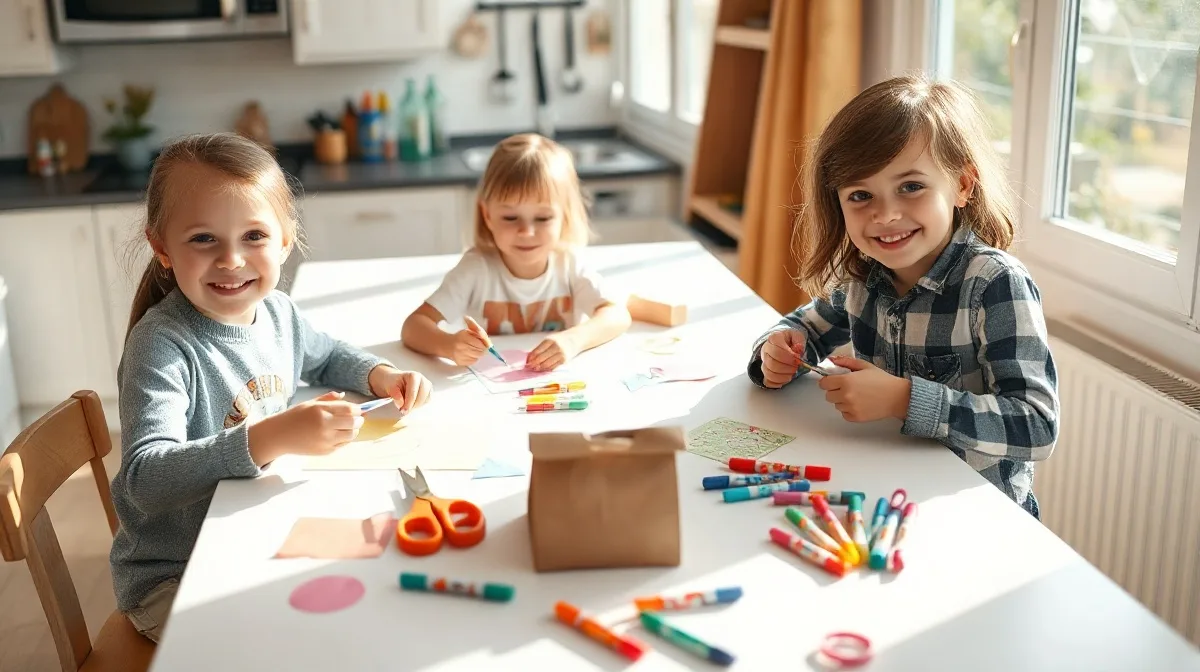
Consider making paper plate masks, painted paper bag puppets, or collages from magazine cutouts. Simple craft ideas often require just paper, markers, and glue, making them accessible anytime inspiration strikes.
Kitchen and Pantry Craft Supplies
Your kitchen holds remarkable craft potential. Pasta shapes can be glued onto paper to create mosaics or jewelry. Rice and beans work beautifully for sensory bottles or painted collages. Flour mixed with water creates homemade playdough or paste for texture work.
Food coloring transforms basic salt dough into vibrant decorations. Cookie cutters help shape salt dough creations. Empty spice jars, tin cans, and glass jars become painted containers for storing treasures or gifting homemade creations.
Buttons, thread, and fabric scraps from your sewing supplies add dimension to projects. Old socks stuff into simple puppets. Aluminum foil and plastic wrap offer interesting textures and reflective properties that fascinate young makers. Everyday kitchen items unlock dozens of craft possibilities when you look at them through a creative lens.
Fabric, String, and Textured Materials
Dig through your fabric scraps, old t-shirts, and worn-out clothing for rich textures and colors. Kids enjoy weaving fabric strips through cardboard frames or making fabric collages. Old socks become stuffed animals when filled with crumpled newspaper and sewn shut—no sewing machine required.
String, yarn, and thread open doors to nature art and macramé projects for older kids. Create yarn paintings on cardboard by arranging strings into patterns and gluing them down. Cotton balls become fluffy clouds in landscape paintings or fuzzy animals in mixed-media creations.
Pipe cleaners, if you have them, twist into bugs and animals. Twine and natural string work for painting techniques that create interesting patterns and textures.
Recyclables and Found Objects
Bottles, plastic containers, and aluminum cans shouldn't go straight to recycling without a creative look first. Plastic bottles become vases, bird feeders, or sensory bottles filled with rice and glitter. Tin cans transform into painted planters or pencil holders.
Bottle caps become game pieces, paint palettes, or decorative elements glued onto cardboard. Newspaper and magazines provide material for collage, papier-mâché, and paper weaving. Cereal boxes can be cut, decorated, and constructed into organizers or building materials.
Look around your home and ask yourself: what could this become? That broken necklace could decorate a picture frame. Those old buttons could form a mosaic. Household scraps inspire endless creative projects for children of all ages.
Natural Materials and Outdoor Elements
Leaves, twigs, stones, and pinecones collected on walks provide wonderful craft materials. Press flowers and leaves between wax paper for sun catchers. Arrange stones or pebbles into patterns or paint them with faces and designs.
Sticks become picture frames, building structures, or wand props for imaginative play. Dried grass and flowers work in collages. Sand or dirt can be mixed with glue for textured paintings. Bird feathers, bark, and moss add organic beauty to mixed-media projects.
Frequently Asked Questions
What's the easiest craft to do with kids using things at home? Paper and marker crafts are the simplest—just have your child draw or decorate paper plates, make puppets from paper bags, or create a collage from magazine cutouts.
How do I organize household craft supplies so they're ready to use? Keep a bin or box with paper, markers, glue, scissors, and containers of buttons or pasta. Store paper scraps and cardboard tubes in a separate recycling station so they're visible and tempting.
Are household item crafts safe for toddlers? Yes, with supervision. Avoid small choking hazards like buttons and dried beans for children under three, and always supervise glue and scissors use regardless of age.
Can I involve my kids in gathering craft supplies? Absolutely! Let kids collect items from recycling, select fabric scraps, or pick stones and leaves on walks—gathering supplies is part of the fun and teaches resourcefulness.
What if my child loses interest in a craft project? That's perfectly normal and fine. Keep unfinished projects in a drawer to revisit later, or simply move on to something new. The process matters more than completion.
The magic of easy crafts for kids at home with household items lies in rediscovering the creative potential in everyday objects. You don't need special supplies or fancy materials—you need curiosity, permission to be messy, and time together. So grab that pile of recycling, pull out some markers, and let the creativity flow. Your kids will remember these moments far longer than they'd remember any store-bought craft kit.


Comments 0
Please Sign in to leave a comment.
No comments yet. Be the first to share your thoughts!